

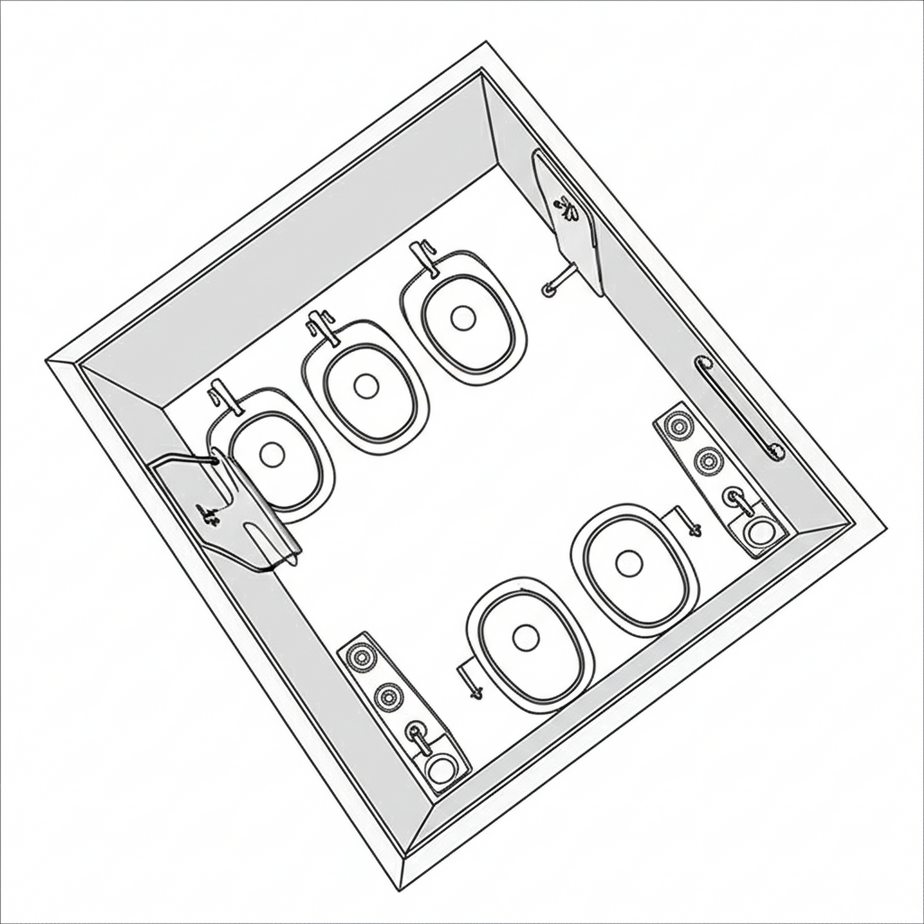
ADA Compliant Commercial Bathroom Renovation Guide 2025
Key Takeaways
- ADA compliance requires specific door widths (32″ minimum), grab bar placement, and clearance zones to avoid costly fines up to $4,000
- Commercial bathroom renovation costs range $180-$280 per square foot for mid-range projects, with ADA upgrades adding 15-25% to total budget
- High-traffic fixtures like sensor-activated faucets, wall-mounted toilets, and antimicrobial surfaces reduce maintenance while ensuring durability
- Modern office bathroom trends emphasize touchless technology, biophilic design elements, and sustainable materials for enhanced user experience
- Slip-resistant porcelain tile, luxury vinyl plank, and sealed concrete offer optimal durability for commercial restroom flooring applications
Commercial bathroom renovations represent one of the most critical investments for business owners, combining legal compliance requirements with user experience and operational efficiency. With ADA violations carrying fines up to $4,000 and potential lawsuits, ensuring proper accessibility compliance isn’t optional—it’s essential for business continuity and reputation protection.
Beyond compliance, today’s commercial bathrooms serve as brand touchpoints that influence customer perception and employee satisfaction. From healthcare facilities requiring antimicrobial surfaces to corporate offices implementing touchless technology, the modern commercial restroom balances functionality, durability, and design aesthetics.
This comprehensive guide addresses the five most critical aspects of commercial bathroom renovation: ADA compliance requirements, accurate cost planning, fixture selection for high-traffic environments, current design trends, and durable flooring solutions. Whether you’re planning a complete renovation or targeted improvements, understanding these elements ensures your project delivers maximum ROI while meeting all regulatory standards.
Professional ADA Compliant Commercial Bathroom Renovation Services
ADA compliant commercial bathroom renovation services encompass comprehensive accessibility upgrades that ensure your facility meets federal requirements while creating an inclusive environment for all users. These specialized services address critical compliance elements including proper door widths, turning radii, fixture positioning, and grab bar installation according to the latest ADA Standards for Accessible Design.
Professional renovation teams begin with thorough accessibility audits to identify non-compliant elements in existing facilities. Door openings must measure at least 32 inches when opened to 90 degrees, while clear floor space requirements demand 30 by 48-inch rectangles in front of each fixture. Toilet positioning requires specific clearances: 16 to 18 inches from the centerline to adjacent walls, with grab bars positioned precisely 33 to 36 inches above finished floor height.
Expert renovation services also address sink accessibility, ensuring rim heights don’t exceed 34 inches and providing knee clearance of at least 27 inches high, 30 inches wide, and 11 to 25 inches deep. Mirror placement follows strict guidelines with reflecting surfaces starting no higher than 40 inches above the floor. Proper turning space of 60-inch diameter circles or T-shaped areas enables wheelchair maneuverability throughout the facility.
Beyond basic compliance, professional services incorporate universal design principles that benefit all users. This includes selecting appropriate hardware, ensuring proper lighting levels, and implementing wayfinding elements that assist users with various disabilities. Quality renovation providers also handle permitting processes, coordinate inspections, and provide documentation proving ADA compliance—essential protection against potential litigation and ensuring your business maintains accessibility standards that demonstrate commitment to inclusive customer service.
Commercial Bathroom Renovation Cost Per Square Foot Breakdown
Commercial bathroom renovation costs typically range from $180 to $280 per square foot for mid-range projects, with ADA compliance modifications adding 15-25% to base renovation expenses. Budget-conscious renovations may start around $120 per square foot, while high-end commercial installations can reach $400-500 per square foot depending on fixture quality, finishes, and complexity of accessibility modifications.
ADA compliance specifically impacts pricing through required structural modifications. Door widening projects cost $800-1,500 per opening, while grab bar installation ranges from $150-300 per bar including proper backing reinforcement. Accessible toilet replacement runs $600-1,200 per unit, with height-adjustable sinks adding $800-1,500 to renovation budgets. Flooring modifications for slip resistance and proper drainage typically add $8-15 per square foot to material costs.
Permit costs represent additional expenses ranging from $150 to $600 based on project scope and local jurisdictions. Inspection fees ensure safety and ADA compliance verification, with failing initial inspections potentially adding $200-500 in re-inspection costs. Professional design services for ADA compliance planning typically cost 10-15% of total project budgets but prevent costly mistakes and ensure first-time approval.
Regional variations significantly impact pricing, with urban markets commanding 20-30% premiums over rural areas. Labor costs fluctuate based on local contractor availability and union requirements. Smart budgeting allocates 10-15% contingency funds for unexpected structural issues commonly discovered during commercial renovations. When planning space planning for accessibility compliance, investing in professional design services upfront typically saves 20-30% in total project costs by avoiding rework and ensuring efficient layouts that maximize functionality within ADA requirements.
Best Fixtures for High-Traffic Commercial Bathrooms
High-traffic commercial bathrooms demand fixtures engineered for durability, hygiene, and consistent performance under heavy usage. Sensor-activated fixtures represent the gold standard for commercial applications, eliminating touch points while ensuring water conservation and reducing maintenance requirements. Commercial-grade sensor faucets with solid brass construction and vandal-resistant designs typically withstand 500,000+ activation cycles.
Toilet selection focuses on pressure-assisted flush systems that deliver consistent performance while conserving water. Wall-mounted toilets offer superior cleaning access and meet ADA height requirements more easily than floor-mounted units. Stainless steel fixtures provide optimal durability and antimicrobial properties essential for high-volume facilities. Commercial toilet paper dispensers should feature high-capacity designs with theft-resistant mechanisms and easy refilling access.
Sink specifications prioritize non-porous surfaces like solid surface materials or commercial-grade stainless steel that resist staining and bacterial growth. Undermount installations eliminate crevices where bacteria accumulate, while integrated overflow systems prevent flooding during peak usage periods. Hand dryer selection emphasizes HEPA filtration, fast dry times under 15 seconds, and noise levels below 80 decibels to maintain comfortable environments.
Soap dispensers require touchless operation with high-capacity reservoirs holding 1,000+ activations. Antimicrobial coatings on dispenser surfaces provide additional protection in healthcare and food service environments. Mirror systems benefit from shatter-resistant acrylic or tempered glass construction with anti-fog coatings. Grab bars must meet commercial load requirements of 250 pounds in any direction, with stainless steel construction providing corrosion resistance and easy cleaning. Quality fixtures in restaurant design applications must also meet health department requirements for commercial food service operations, ensuring compliance across multiple regulatory frameworks.
Modern Commercial Bathroom Design Trends for Office Spaces
Contemporary office bathroom design emphasizes wellness, sustainability, and employee experience while maintaining professional aesthetics. Biophilic design elements including living walls, natural lighting, and organic textures create calming environments that reduce workplace stress. Large-format tiles in neutral palettes provide sophisticated backdrops while minimizing grout lines for easier maintenance and cleaner appearances.
Technology integration transforms office restroom experiences through smart fixtures and environmental controls. Occupancy sensors optimize lighting and ventilation based on usage patterns, while air quality monitoring systems maintain optimal conditions automatically. Digital displays provide building information, wellness tips, or company communications, maximizing touchpoint opportunities for employee engagement.
Sustainable materials drive modern commercial specifications, with recycled content tiles, low-VOC finishes, and water-efficient fixtures supporting corporate environmental goals. LED lighting systems with daylight sensors reduce energy consumption while providing optimal illumination for tasks and safety. Touchless technology extends beyond faucets to include soap dispensers, towel dispensers, and door hardware, supporting hygiene protocols established during recent health awareness periods.
Privacy enhancements address employee comfort through floor-to-ceiling partitions, improved acoustic treatments, and strategic layout planning. Gender-neutral design approaches accommodate diverse workplace populations while maximizing space efficiency. Color psychology influences selections, with calming blues and greens promoting relaxation while energizing accent colors maintain professional vibrancy.
Luxury amenities differentiate premium office environments through features like individual climate controls, premium hand lotions, and high-end finishes that reflect corporate brand values. When integrated with comprehensive retail design principles, office bathroom spaces become extensions of brand experience, reinforcing company culture and employee satisfaction while maintaining functional efficiency required for high-traffic commercial applications.
Common Mistakes to Avoid in ADA Bathroom Renovations
Even well-intentioned commercial bathroom renovations can fall short of ADA compliance due to common oversights. Understanding these frequent mistakes helps ensure your project meets all requirements from the start.
Improper grab bar placement ranks as the most frequent violation. Grab bars must be positioned 33-36 inches above the floor, with specific mounting requirements for wall reinforcement. Many contractors install them at incorrect heights or fail to provide adequate wall backing.
Insufficient toilet clearance creates accessibility barriers. ADA standards require 60 inches of clear floor space in front of toilets and 18 inches minimum from the centerline to side walls. Cramped layouts often overlook these critical measurements.
Wrong mirror and sink heights prevent wheelchair users from accessing facilities comfortably. Mirrors must be mounted with the bottom edge no higher than 40 inches, while sinks require 29-inch minimum knee clearance underneath.
Door width violations occur when contractors measure closed doors instead of the required 32-inch clear opening when doors are open to 90 degrees. This mistake can necessitate costly door frame modifications.
Non-compliant floor surfaces create slip hazards and mobility challenges. Flooring must provide stable, firm surfaces with slip resistance ratings that meet ADA guidelines, particularly in wet areas around sinks and hand dryers.
Frequently Asked Questions
How to make a commercial bathroom ADA compliant?
Making a commercial bathroom ADA compliant requires ensuring 32-inch minimum door openings, proper toilet clearances (60 inches in front, 18 inches from centerline to walls), grab bars mounted 33-36 inches high with wall reinforcement, and sinks with 29-inch knee clearance. Professional design and permitting ensure all requirements are met correctly.
What is the most common ADA violation in commercial bathrooms?
Improper grab bar placement represents the most frequent ADA violation in commercial bathrooms. This includes incorrect mounting heights, inadequate wall reinforcement, or positioning that doesn’t meet the required distances from toilets and walls.
What triggers ADA compliance requirements in bathroom renovations?
ADA compliance is triggered when renovations exceed 20% of the facility’s value or involve alterations to primary function areas. Any substantial bathroom renovation in commercial buildings typically requires full ADA compliance, regardless of the building’s original construction date.
What are the ADA requirements for commercial building bathrooms?
Commercial buildings must provide accessible routes to bathrooms, 32-inch minimum door clearances, proper toilet and sink clearances, grab bars with specific mounting requirements, and accessible mirrors and dispensers. At least 5% of bathroom stalls must be ADA compliant, with one ambulatory accessible stall required when six or more stalls are provided.
How much does it cost to renovate a commercial bathroom for ADA compliance?
ADA compliant commercial bathroom renovations typically range from $180-$280 per square foot for mid-range projects, with costs varying based on existing conditions, required structural modifications, and fixture selections. Permit costs add $150-$600 depending on project scope and local requirements.
Do all commercial bathrooms need to be ADA compliant?
All newly constructed commercial bathrooms must be ADA compliant, while existing facilities require compliance when undergoing substantial renovations. Buildings constructed before 1991 may have different requirements, but any modifications typically trigger current ADA standards.
How long does an ADA bathroom renovation take?
ADA compliant bathroom renovations typically require 2-4 weeks for completion, including permitting, demolition, construction, and final inspections. Complex projects involving structural modifications or multiple bathrooms may extend to 6-8 weeks depending on scope and approval timelines.
Transform Your Commercial Space with Expert ADA Compliance
Creating ADA compliant commercial bathrooms requires expertise in current regulations, proper space planning, and quality construction practices. From understanding grab bar specifications to selecting appropriate fixtures and flooring, every detail impacts both compliance and user experience. The investment in professional ADA bathroom renovation services protects your business from costly violations while demonstrating your commitment to accessibility and inclusion.
Successful ADA compliance goes beyond meeting minimum requirements—it creates welcoming, functional spaces that serve all users with dignity and independence. Whether you’re planning a complete bathroom overhaul or targeted improvements, working with experienced commercial design professionals ensures your project meets current standards while maximizing your investment value.
Ready to ensure your commercial bathrooms meet ADA standards while enhancing your brand experience? Our team specializes in turnkey commercial bathroom renovations that combine compliance expertise with innovative design solutions. From initial space planning through final inspections, we handle every aspect of your project with precision and professionalism. Schedule a Free Consultation today to discuss your ADA compliance needs and discover how we can transform your commercial restrooms into accessible, attractive spaces that serve your business goals.