

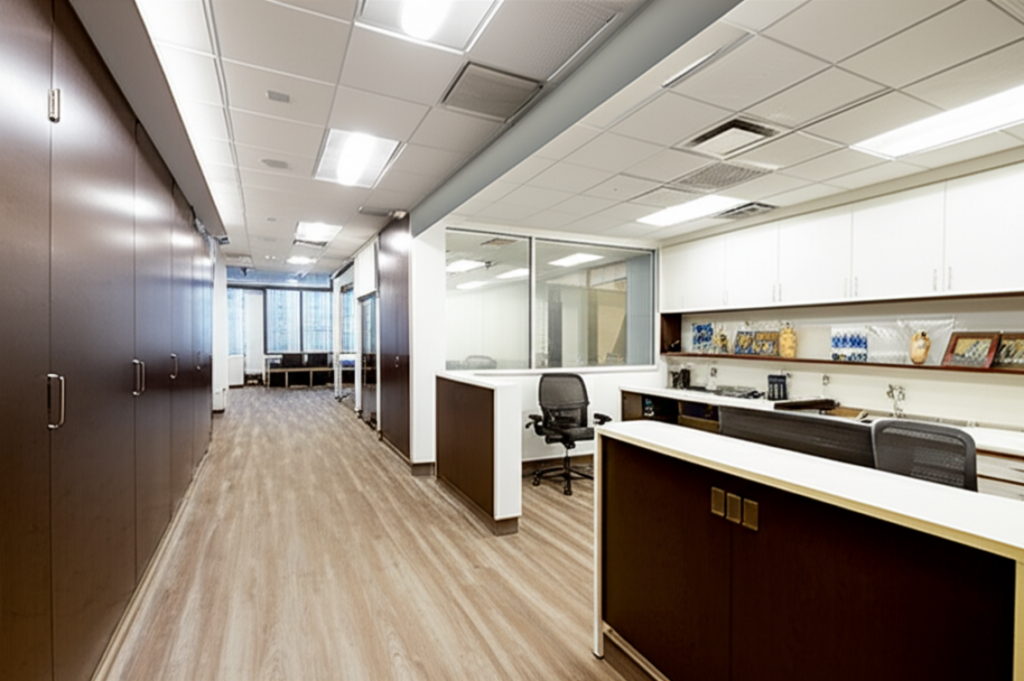
Modern Medical Office Design: 2025 Trends & Best Practices
Key Takeaways
- Hospitality-inspired aesthetics are replacing sterile clinical environments to improve patient comfort and satisfaction
- Smart technology integration, including interactive screens and intelligent lighting, enhances both patient experience and operational efficiency
- Strategic space planning with optimized patient flow reduces wait times and improves HIPAA compliance
- Modern medical offices trade at $300-$500 per square foot, making design ROI critical for property value
- Avoiding common design mistakes like inadequate reception areas and poor traffic patterns can significantly impact practice success
The medical office landscape is undergoing a dramatic transformation in 2025, driven by evolving patient expectations and advancing healthcare technology. Today’s patients expect more than clinical excellence—they demand environments that feel welcoming, comfortable, and technologically sophisticated. This shift represents both a challenge and an opportunity for healthcare providers, property developers, and investors looking to create spaces that attract patients, retain staff, and maximize operational efficiency.
Modern medical office design has moved far beyond the sterile, institutional environments of the past. With medical office properties trading at $300-$500 per square foot in premium markets, the design decisions you make today directly impact both patient satisfaction scores and long-term property value. From hospitality-inspired aesthetics to smart technology integration, the most successful medical facilities are those that prioritize the complete patient experience while optimizing clinical workflows.
In this comprehensive guide, we’ll explore the most impactful design trends shaping medical offices in 2025, examine proven strategies for maximizing both patient satisfaction and operational efficiency, and reveal the common design mistakes that can undermine your investment. Whether you’re planning a new facility, renovating an existing space, or repositioning a medical property, these insights will help you create a competitive advantage in today’s experience-driven healthcare market.
Understanding Modern Medical Office Design
Modern medical office design represents a fundamental shift from the sterile, institutional environments of the past to welcoming, patient-centered spaces that prioritize comfort, efficiency, and healing. This approach integrates evidence-based design principles with contemporary aesthetics to create environments that reduce patient anxiety while optimizing clinical workflows and staff productivity.
At its core, modern medical office design embraces the hospitality-inspired aesthetic, moving away from cold, clinical atmospheres toward warm, residential-like environments. This transformation acknowledges that healthcare is fundamentally a service industry where patient experience directly impacts satisfaction scores, treatment outcomes, and practice growth. The design philosophy centers on creating spaces that feel more like upscale hotels or spas rather than traditional medical facilities.
Key characteristics of modern medical office design include open, naturally-lit spaces with strategic wayfinding systems, technology integration throughout the patient journey, and flexible layouts that can adapt to changing medical practices and equipment needs. The approach also emphasizes infection control through material selection and spatial planning, while maintaining an aesthetically pleasing environment that supports both patient comfort and clinical functionality.
This design methodology extends beyond mere aesthetics to encompass operational efficiency. Modern medical offices incorporate advanced HVAC systems for optimal air quality, smart lighting solutions that adjust to natural circadian rhythms, and acoustic design that ensures privacy while reducing noise pollution. The result is a comprehensive environment that supports healing, reduces stress, and creates positive associations with healthcare experiences for patients of all ages.
Benefits of Modern Medical Office Design for Healthcare Practices
Implementing modern medical office design delivers measurable returns on investment through improved patient satisfaction, increased staff productivity, and enhanced practice reputation. Healthcare facilities that embrace contemporary design principles typically see patient satisfaction scores increase by 15-25%, directly correlating with improved online reviews and referral rates that drive practice growth.
From an operational standpoint, modern design optimizes clinical workflows by reducing staff movement and improving efficiency. Strategic space planning minimizes bottlenecks in patient flow, reduces wait times, and allows healthcare providers to see more patients per day without compromising care quality. This efficiency translates to increased revenue potential while reducing operational stress on medical staff.
Patient anxiety reduction represents another significant benefit, with studies showing that well-designed healthcare environments can lower stress hormones and improve treatment compliance. Modern medical offices achieve this through biophilic design elements, natural lighting, and comfortable furnishings that create a calming atmosphere. Reduced patient anxiety leads to better health outcomes, fewer missed appointments, and improved patient retention.
The design approach also supports staff recruitment and retention in an increasingly competitive healthcare job market. Medical professionals prefer working in environments that reflect their expertise and professionalism, and modern office design helps attract top talent while reducing turnover costs. Additionally, flexible design elements allow practices to adapt to new technologies and treatment modalities without requiring complete renovations, protecting long-term investment value.
Energy efficiency represents a crucial financial benefit, with modern medical offices incorporating LED lighting systems, smart HVAC controls, and sustainable materials that reduce operating costs by 20-30% compared to traditional designs. These savings compound annually while supporting environmental sustainability goals that resonate with both patients and staff.
The Modern Medical Office Design Process
The modern medical office design process begins with comprehensive space planning that analyzes patient flow patterns, clinical workflows, and regulatory requirements to create efficient, compliant layouts. This initial phase involves detailed consultation with healthcare providers to understand specific practice needs, patient demographics, and future growth projections. Professional designers conduct thorough site analysis to optimize natural lighting, accessibility, and integration with existing building systems.
Following space planning approval, the design team develops detailed architectural and interior design plans that incorporate modern aesthetics with functional requirements. This phase includes selection of materials that meet healthcare-grade durability and infection control standards while maintaining visual appeal. Color psychology plays a crucial role, with designers selecting palettes that promote calm and healing while maintaining the professional atmosphere essential for medical practices.
Technology integration occurs throughout the design process, with provisions for electronic health records systems, patient communication platforms, and telemedicine capabilities. Modern medical offices require robust IT infrastructure, including high-speed internet, secure wireless networks, and charging stations positioned strategically throughout patient and staff areas. Professional space planning ensures these technological elements enhance rather than complicate the patient experience.
The construction and installation phase emphasizes minimal disruption to ongoing medical operations when renovating existing facilities. Professional project management coordinates with healthcare schedules to maintain patient care continuity while implementing design improvements. This includes phased construction approaches, temporary space solutions, and careful attention to infection control during construction activities.
Quality assurance and final commissioning involve thorough testing of all systems, verification of regulatory compliance, and staff training on new technologies and workflows. The process concludes with post-occupancy evaluation to ensure design objectives are met and identify any adjustments needed for optimal functionality.
Modern Medical Office Design in San Antonio & Central Texas: Local Market Insights
The San Antonio-Austin corridor represents one of the fastest-growing healthcare markets in the United States, with the region’s population expansion driving unprecedented demand for modern medical facilities. This growth, spanning from San Antonio through New Braunfels, San Marcos, and into Austin, creates unique opportunities for healthcare practices to establish competitive advantages through superior facility design. The 100-mile radius around San Antonio encompasses diverse communities with varying demographics and healthcare needs, requiring adaptable design solutions that serve both urban and rural populations.
Central Texas healthcare real estate commands premium pricing, with top-tier medical office properties trading in the $300-500 per square foot range, reflecting the market’s recognition of quality healthcare infrastructure value. This investment level demonstrates the region’s commitment to healthcare excellence and creates opportunities for practices to differentiate themselves through modern design that justifies premium positioning. The competitive landscape includes major health systems expanding throughout the corridor, making distinctive facility design crucial for independent practices and specialty clinics.
The region’s technology sector influence, particularly from Austin’s presence, drives patient expectations for integrated digital experiences within healthcare facilities. Central Texas patients increasingly expect the same technological sophistication they encounter in retail and hospitality environments, making modern medical office design essential for practice success. This tech-savvy population appreciates innovative features like digital wayfinding, online check-in systems, and interactive patient education displays.
Climate considerations unique to Central Texas influence design decisions, with emphasis on energy-efficient cooling systems, natural light management, and materials that withstand the region’s temperature variations. Similar to how retail design must account for local climate conditions, medical office design in this region requires specialized knowledge of local building codes, energy efficiency standards, and patient comfort expectations. The growing medical tourism market, driven by the region’s reputation for healthcare excellence and lower costs compared to coastal markets, creates additional opportunities for practices that invest in modern, welcoming facility design that appeals to out-of-state patients seeking quality care in comfortable environments.
Common Mistakes to Avoid in Modern Medical Office Design
Even well-intentioned medical office renovations can fall short of their potential when common design mistakes derail the project. Understanding these pitfalls helps ensure your investment delivers the patient experience and operational efficiency your practice deserves.
Inadequate Reception and Waiting Area Planning represents the most frequent oversight in medical office design. Many practices underestimate the space requirements for patient flow, leading to cramped waiting areas that create stress rather than comfort. The reception area serves as the first impression of your practice, yet insufficient planning often results in poor sight lines, inadequate privacy for patient check-in, and bottlenecks during peak hours.
Poor Traffic Flow and Workflow Design disrupts daily operations and patient satisfaction. When designers fail to map out how patients, staff, and providers move through the space, the result is inefficient pathways that waste time and create confusion. This includes insufficient consideration of ADA compliance, narrow hallways that impede equipment movement, and poor placement of clinical areas relative to support functions.
Overlooking Future Growth and Flexibility creates expensive limitations down the road. Medical practices evolve, adding new services, equipment, or providers. Designs that don’t account for adaptability often require costly renovations within just a few years of opening.
Insufficient Attention to HIPAA Compliance can result in privacy violations and regulatory issues. Sound transmission between exam rooms, inappropriate sight lines to patient information, and inadequate security measures for protected health information represent serious design oversights.
Ignoring Brand Experience and Patient Psychology misses the opportunity to differentiate your practice and reduce patient anxiety. Sterile, institutional environments no longer meet patient expectations for healthcare experiences.
Frequently Asked Questions
What are the office design trends for 2025?
Medical office design trends for 2025 emphasize hospitality-inspired aesthetics, biophilic design elements, and smart technology integration. Practices are moving toward warmer, residential-style environments with natural materials, improved acoustics, and flexible spaces that adapt to changing healthcare delivery models.
How to create a modern office design?
Creating a modern medical office design requires balancing functionality with patient comfort through strategic space planning, contemporary materials, and technology integration. Focus on efficient workflows, natural lighting, and creating distinct zones for different activities while maintaining HIPAA compliance and accessibility standards.
How much does it cost to build a modern medical office?
Medical office construction and renovation costs vary significantly based on location, size, and complexity, typically ranging from $200-$500 per square foot for quality build-outs. Factors include specialized medical equipment requirements, HVAC systems, technology infrastructure, and regulatory compliance needs.
How to decorate a medical office?
Medical office decoration should prioritize patient comfort while maintaining professionalism through carefully selected artwork, calming color palettes, and comfortable furnishings. Incorporate natural elements, ensure easy maintenance of materials, and create visual interest without overwhelming the clinical environment.
What are some common design mistakes you’ve learned to avoid?
The most critical mistakes include inadequate space planning for patient flow, poor acoustics that compromise privacy, insufficient storage solutions, and overlooking future growth needs. Additionally, many practices underestimate the importance of technology infrastructure and fail to create distinct zones for different practice functions.
How long does a medical office renovation take?
Medical office renovations typically require 3-6 months from design through completion, depending on scope and permitting requirements. Complex projects involving structural changes, specialized medical systems, or extensive technology upgrades may extend the timeline, making detailed project planning essential.
What permits are required for medical office construction?
Medical office projects typically require building permits, electrical permits, plumbing permits, and often special healthcare facility permits depending on services provided. Fire department approvals, ADA compliance verification, and health department inspections may also be required based on local regulations and practice type.
Transform Your Medical Practice with Strategic Design
Modern medical office design represents far more than aesthetic improvement—it’s a strategic investment in patient satisfaction, operational efficiency, and practice growth. The trends shaping 2025 emphasize creating healing environments that reduce patient anxiety while supporting clinical workflows and staff productivity. From hospitality-inspired aesthetics to smart technology integration, today’s medical offices must balance human-centered design with regulatory compliance and operational demands.
The most successful medical office projects begin with comprehensive planning that considers patient flow, staff efficiency, future growth, and brand differentiation. Whether you’re planning a complete renovation, tenant improvement, or new construction, the complexity of modern medical office design requires expertise in healthcare regulations, technology integration, and patient psychology.
Your medical office design directly impacts patient retention, staff satisfaction, and ultimately, your practice’s financial performance. Don’t leave this critical investment to chance. Professional design expertise ensures your project meets regulatory requirements, optimizes operational efficiency, and creates the patient experience that sets your practice apart in an increasingly competitive healthcare market.
Ready to transform your medical practice with strategic design? Schedule a Free Consultation to explore how professional medical office design can enhance your patient experience, improve operational efficiency, and position your practice for long-term success. Our turnkey solutions handle every aspect from initial planning through final permitting, ensuring your project delivers measurable results on time and within budget.