

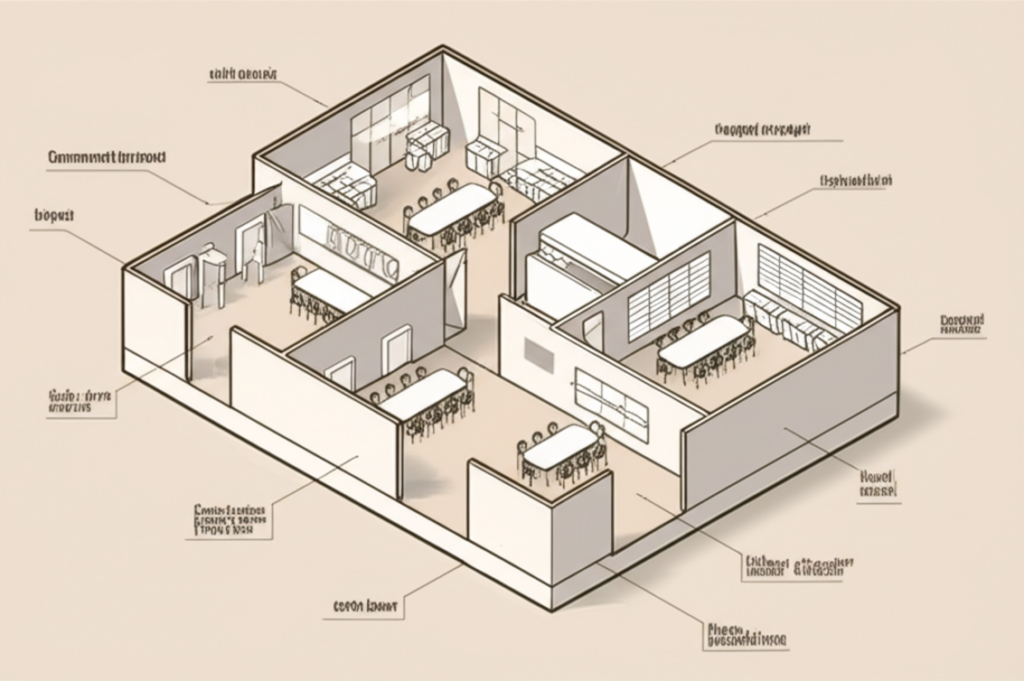
Restaurant Layout Planning: Design Strategies That Drive Revenue
Key Takeaways
- Strategic restaurant layout planning can increase revenue by 15-25% through optimized table placement and customer flow
- Poor layout design is one of the top 5 mistakes that cost restaurants money through inefficient operations and reduced seating capacity
- Effective space allocation balances front-of-house dining areas with back-of-house operations for maximum profitability
- Modern restaurant layouts must integrate technology, accessibility compliance, and flexible seating arrangements for 2025 market demands
- Professional layout planning prevents costly redesigns and ensures optimal workflow from day one of operations
Your restaurant’s layout is the silent architect of your success—or failure. While most restaurant owners focus on menu development and marketing, the physical design of your space quietly determines everything from customer satisfaction to staff efficiency and ultimately, your bottom line.
Poor restaurant layout planning is among the most common and costly mistakes in the industry. Cramped dining areas, inefficient kitchen workflows, and awkward customer flow patterns don’t just frustrate guests—they directly impact your revenue potential. Conversely, strategic layout planning can increase your revenue by 15-25% through optimized seating capacity, improved table turnover, and enhanced operational efficiency.
In this comprehensive guide, you’ll discover the essential strategies for restaurant layout planning that drive results. From understanding space allocation principles to avoiding common design pitfalls, we’ll walk you through the proven methods that successful restaurateurs use to create spaces that work as hard as they do. Whether you’re opening your first location or redesigning an existing space, these insights will help you build a restaurant that maximizes both customer experience and profitability.
Understanding Restaurant Layout Planning
Restaurant layout planning is the strategic process of designing and organizing your restaurant’s physical space to maximize both operational efficiency and customer satisfaction. This comprehensive approach goes far beyond simply arranging tables and chairs – it involves carefully orchestrating the flow of customers, staff, and service throughout your entire establishment to create a seamless dining experience that drives revenue.
At its core, effective restaurant layout planning considers three critical zones: the front-of-house (dining area, bar, waiting area), back-of-house (kitchen, storage, staff areas), and service corridors that connect them. Each zone must be designed with specific objectives in mind. The front-of-house focuses on customer comfort, ambiance, and table turnover rates, while the back-of-house prioritizes workflow efficiency, food safety, and staff productivity. The service areas ensure smooth transitions between these spaces without disrupting the guest experience.
Modern restaurant layout planning also incorporates advanced considerations such as accessibility compliance, technology integration points for POS systems and digital ordering, and flexible spaces that can adapt to different service styles or peak periods. The planning process must account for local building codes, fire safety regulations, and health department requirements while maintaining the restaurant’s brand identity and operational goals.
Industry data shows that restaurants with well-planned layouts can increase table turnover by 15-25% compared to poorly designed spaces. This improvement directly translates to higher revenue potential, as the same square footage can accommodate more customers throughout service periods. Additionally, strategic layout planning reduces staff movement time by up to 30%, leading to faster service and improved customer satisfaction scores.
Benefits of Strategic Layout Planning for Restaurant Owners
The financial impact of thoughtful restaurant layout planning extends far beyond initial design costs, delivering measurable returns that compound over time. Restaurants that invest in professional layout planning typically see immediate improvements in operational efficiency, with many owners reporting 20-30% reductions in service times during peak periods. This enhanced efficiency directly correlates to increased table turnover rates, allowing establishments to serve more customers without expanding their physical footprint.
From a revenue optimization perspective, strategic layout planning enables restaurants to maximize their seating capacity while maintaining comfortable guest experiences. Professional designers understand how to balance table sizes with typical party compositions – avoiding the common mistake of filling spaces with four-tops when your customer base frequently includes parties of two or six. This optimization can increase revenue per square foot by 15-40%, depending on the restaurant’s service style and target demographic.
Operational benefits extend to staff productivity and job satisfaction. Well-planned layouts reduce unnecessary movement, minimize collision points between servers and kitchen staff, and create clear sight lines for management oversight. These improvements lead to faster service delivery, reduced staff fatigue, and lower turnover rates. Many restaurant owners report that improved layouts contribute to better staff morale and more consistent service quality.
The long-term advantages include enhanced brand perception and customer loyalty. Guests notice when a restaurant flows smoothly – from comfortable seating arrangements to quick service delivery. Strategic layout planning also future-proofs your investment by incorporating flexibility for menu changes, seasonal variations, or evolving service models. Professional restaurant design services ensure that these benefits are maximized through expert space planning and industry-specific knowledge.
The Restaurant Layout Planning Process
The restaurant layout planning process begins with a comprehensive analysis of your business model, target customers, and operational requirements. Professional designers start by evaluating your menu complexity, service style, peak capacity needs, and staff workflows to establish the foundation for all design decisions. This initial assessment includes reviewing your business plan, understanding your target demographics, and analyzing comparable successful restaurants in your market segment.
Space allocation follows industry-proven ratios that vary by restaurant type. Full-service restaurants typically dedicate 60-65% of their space to dining areas, 25-30% to kitchen and prep areas, and 10-15% to storage, restrooms, and service corridors. Quick-service establishments often allocate more space to kitchen operations (35-40%) while reducing dining area requirements. These ratios serve as starting points that are then customized based on your specific operational needs and local market conditions.
The design development phase involves creating detailed floor plans that optimize traffic flow patterns for both customers and staff. This includes positioning the host station for optimal guest greeting and crowd control, designing service stations that minimize server travel time, and ensuring kitchen layouts support your menu’s preparation requirements. Advanced 3D visualization tools help restaurant owners see exactly how their space will function before construction begins, allowing for adjustments that prevent costly mistakes.
Implementation planning addresses the practical aspects of bringing your design to life, including contractor coordination, permit acquisition, and phased construction schedules that minimize business disruption. Professional space planning services manage these complex logistics while ensuring compliance with all regulatory requirements. The process concludes with staff training on the new layout and systems integration to ensure your team can maximize the benefits of the improved design from day one.
Restaurant Layout Planning Trends in the US Market
The US restaurant industry is experiencing a significant shift toward flexible, technology-integrated layouts that can adapt to changing consumer preferences and operational demands. Multi-functional spaces have become increasingly popular, with restaurants designing areas that can transition from casual dining during lunch to more intimate evening experiences, or accommodate both dine-in and delivery/takeout operations efficiently. This trend reflects the industry’s response to evolving consumer behaviors and the need for operational resilience.
Technology integration has moved beyond simple POS placement to encompass comprehensive digital ecosystems within restaurant layouts. Modern designs incorporate charging stations at tables, digital menu boards with dynamic pricing capabilities, and designated areas for delivery driver pickup that don’t disrupt the dine-in experience. Smart kitchen layouts now include IoT sensors for inventory management and energy-efficient equipment placement that reduces operational costs while improving food quality consistency.
Sustainability considerations are driving layout innovations across the country, with restaurants incorporating energy-efficient lighting systems, improved HVAC designs that reduce consumption, and waste management areas that support comprehensive recycling programs. These green initiatives often qualify for tax incentives and appeal to environmentally conscious consumers, creating both cost savings and marketing advantages.
The rise of ghost kitchens and hybrid restaurant models has influenced traditional restaurant layout planning, with many establishments now incorporating dedicated delivery preparation areas and separate customer pickup zones. This trend allows restaurants to serve multiple revenue streams from a single location while maintaining distinct service experiences for different customer types. Industry projections suggest that restaurants incorporating these flexible layout strategies are positioning themselves for sustained growth in an increasingly competitive market, with many reporting 25-35% improvements in overall operational efficiency compared to traditional single-purpose designs.
Common Mistakes to Avoid
Even well-intentioned restaurant owners can make critical layout planning errors that undermine their business success. Understanding these common pitfalls helps you avoid costly mistakes that can impact both customer satisfaction and operational efficiency.
Poor Workflow Planning: The most damaging mistake is ignoring the natural flow between kitchen, service areas, and dining spaces. When servers must navigate obstacles or take circuitous routes, service slows down and staff efficiency plummets. This directly impacts table turnover rates and customer satisfaction.
Mismatched Table Sizing: Filling your restaurant with four-tops might seem efficient, but it creates revenue losses when you can’t accommodate larger parties or waste space on solo diners. Smart restaurants use a mix of table sizes that match their actual customer demographics and party size patterns.
Cluttered Host Stations: A disorganized greeting area creates immediate negative impressions and bottlenecks during peak hours. Your host station should be spacious enough for staff to work efficiently while maintaining a welcoming atmosphere for arriving guests.
Exposed Service Areas: Customers don’t want to see dirty dishes, food prep areas, or staff break rooms. Strategic placement of service areas maintains the dining atmosphere while ensuring operational efficiency.
Inadequate Ventilation Planning: Poor air circulation affects both customer comfort and staff working conditions. Proper ventilation systems prevent odors from migrating between areas and maintain comfortable temperatures throughout your space.
Frequently Asked Questions
Are restaurant prices going up in 2025?
Yes, restaurant prices continue to rise due to increased labor costs, supply chain pressures, and inflation. However, smart layout planning can help offset these pressures by improving operational efficiency and table turnover rates. Strategic design choices can reduce labor needs while enhancing the customer experience, helping maintain profitability without excessive price increases.
What is the restaurant industry forecast for 2025?
The restaurant industry is expected to continue recovering and adapting to new consumer preferences in 2025. Technology integration, flexible dining spaces, and efficiency-focused layouts will be crucial for success. Restaurants that invest in strategic layout planning and operational optimization will be better positioned to thrive in the evolving market.
What are the menu design trends in 2025?
Menu design trends for 2025 focus on simplified layouts, digital integration, and strategic item placement to drive sales. Clean, readable designs with highlighted signature items and strategic pricing psychology are becoming standard. These menu trends work hand-in-hand with layout planning to create cohesive customer experiences.
How do you avoid the 5 worst kitchen design mistakes?
Avoid these critical kitchen design errors: poor workflow planning, inadequate ventilation, wrong equipment sizing, insufficient storage, and ignoring safety protocols. Professional kitchen layout planning ensures proper work triangles, adequate prep space, and efficient service flow. Each element must work together to create a safe, efficient cooking environment.
What are some common kitchen layout mistakes that can hinder food preparation?
Common kitchen layout mistakes include placing prep areas too far from storage, creating bottlenecks in high-traffic zones, and inadequate spacing between equipment. Poor placement of dishwashing stations and insufficient counter space also significantly impact food preparation efficiency. Professional layout planning addresses these issues systematically.
How much space should I allocate for dining versus kitchen areas?
The typical restaurant allocates 60-70% of space to dining areas and 30-40% to kitchen and service areas. However, this ratio varies by restaurant type and service style. Fast-casual concepts may need larger kitchen spaces, while fine dining establishments might prioritize more spacious dining areas for enhanced customer experience.
What’s the ideal table spacing for maximum revenue?
Optimal table spacing balances maximum seating capacity with customer comfort and staff efficiency. Industry standards suggest 18-24 inches between chair backs when seated, with wider spacing for upscale establishments. The key is finding the sweet spot that maximizes covers per service while maintaining the ambiance appropriate for your concept and price point.
How can layout planning reduce labor costs?
Strategic layout planning reduces labor costs by minimizing unnecessary staff movement, creating efficient service stations, and optimizing kitchen workflow. Well-designed layouts allow servers to handle more tables effectively and enable kitchen staff to prepare food faster. This efficiency translates directly to reduced labor hours and improved profitability.
Conclusion
Effective restaurant layout planning is the foundation of a profitable dining establishment. From optimizing traffic flow and maximizing seating capacity to creating efficient kitchen workflows and memorable customer experiences, every design decision impacts your bottom line. The strategies outlined in this guide—from strategic space allocation and smart technology integration to avoiding common design pitfalls—provide a roadmap for creating spaces that drive revenue while enhancing operational efficiency.
Remember that successful restaurant layout planning requires balancing multiple factors: customer comfort, staff efficiency, regulatory compliance, and brand identity. The investment in professional design planning pays dividends through increased table turnover, reduced labor costs, improved customer satisfaction, and ultimately, higher profits. Whether you’re launching a new concept or renovating an existing space, the principles of strategic layout planning remain consistent across all restaurant types and markets.
Don’t leave your restaurant’s success to chance. Professional layout planning expertise can help you avoid costly mistakes while maximizing your space’s revenue potential. Our team specializes in creating restaurant designs that balance operational efficiency with exceptional customer experiences, ensuring your investment delivers measurable returns. Schedule a Free Consultation today to discover how strategic layout planning can transform your restaurant concept into a thriving, profitable business that stands out in today’s competitive market.