

Mastering the Interior Design Specification Process
Key Takeaways
- A detailed interior design specification is crucial for project success, minimizing errors and budget overruns.
- Stay ahead of the curve by incorporating the latest 2025 design trends, including warm minimalism and silver accents.
- Understand the costs associated with interior design, from hourly rates to percentage-based fees, to plan your budget effectively.
- Avoid common design pitfalls such as neglecting scale, prioritizing aesthetics over function, and following trends blindly.
- Prestige 360 offers comprehensive, turnkey interior design solutions within a 100-mile radius of San Antonio, ensuring your vision becomes reality.
In the competitive commercial landscape of San Antonio, Austin, and the Texas Hill Country, a meticulously crafted interior design specification is more than just a document—it’s the blueprint for your brand’s physical manifestation. Whether you’re developing an RV resort, repositioning a commercial property, or planning a tenant improvement in a bustling office building, the interior design specification defines the project’s scope, quality, and budget.
Without a clear and comprehensive specification, projects are susceptible to costly mistakes, delays, and a final product that fails to meet your expectations. Imagine a restaurant design that neglects functionality for aesthetics, or a retail space with mismatched furniture that detracts from the customer experience. These errors can negatively impact your bottom line and brand reputation.
This guide will equip you with the knowledge to navigate the interior design specification process effectively. You’ll learn how to define project requirements, incorporate the latest design trends, understand cost considerations, and avoid common pitfalls. Discover how Prestige 360’s turnkey solutions can transform your commercial space into a powerful asset that drives success within a 100-mile radius of San Antonio. We’ll cover everything from space planning to the latest design trends to help you craft a space that is both beautiful and functional. Let’s dive in.
What is Interior Design Specification?
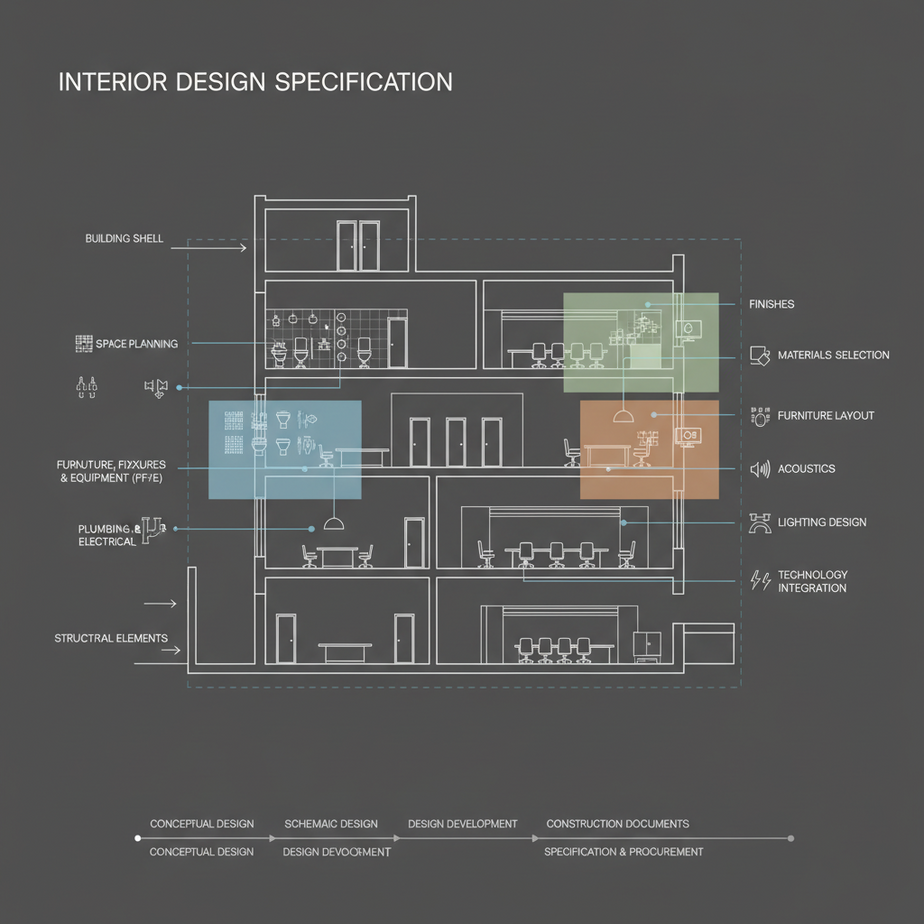
Interior design specification is the detailed documentation that clearly outlines every element of a design project. Think of it as the blueprint for bringing a design concept to life. It goes far beyond aesthetics and encompasses all the technical aspects, materials, finishes, fixtures, and equipment required to complete a commercial interior project successfully. A comprehensive specification includes product names, model numbers, quantities, colors, sizes, performance criteria, and installation instructions. It also addresses compliance with building codes, accessibility standards (ADA), and other regulatory requirements.
In essence, the interior design specification acts as a communication tool between the designer, the client, contractors, and suppliers. It ensures everyone is on the same page and minimizes the risk of misunderstandings, errors, and costly changes during the construction or renovation phase. Without a detailed specification, projects are prone to delays, budget overruns, and unsatisfactory results. As the industry moves towards more sustainable and technologically integrated designs, the importance of precise and well-documented specifications will only increase. For instance, specifying smart lighting systems or eco-friendly materials requires a level of detail that goes beyond traditional design plans.
This is especially crucial in commercial projects like restaurant design, where functionality and aesthetics must blend seamlessly, or in retail design, where the design directly impacts the customer experience and sales. A clear interior design specification ensures that the final build aligns with the brand’s vision and operational needs.
Benefits of Interior Design Specification for Commercial Projects
The benefits of a robust interior design specification are significant for any commercial project, translating directly to improved ROI and operational efficiency. For business owners and developers, a well-defined specification minimizes risks associated with construction delays and cost overruns. By clearly outlining all design elements and requirements upfront, it reduces the likelihood of errors during the build-out phase, which can save considerable time and money.
From a practical standpoint, a detailed specification streamlines the procurement process. When all product information, quantities, and performance criteria are clearly documented, purchasing becomes more efficient, and the risk of ordering incorrect items is significantly reduced. This is especially important for large-scale projects involving multiple vendors and suppliers. Moreover, a well-crafted specification enhances communication and collaboration among all stakeholders. It provides a clear reference point for contractors, subcontractors, and suppliers, ensuring everyone is working towards the same goal. This improved coordination can lead to faster project completion times and higher quality workmanship.
For businesses focused on creating a strong brand experience, the interior design specification ensures that the final build aligns perfectly with the brand’s identity and values. It allows for precise control over every detail, from the color palette to the furniture selection, ensuring that the space reflects the desired image and creates a memorable experience for customers and employees. Ultimately, investing in a comprehensive interior design specification is an investment in the success of the commercial project, leading to improved efficiency, reduced costs, and a stronger brand presence. Consider how effective space planning, driven by a detailed specification, can enhance the functionality and flow of your commercial space, leading to increased productivity and customer satisfaction.
How Interior Design Specification Works: The Process
The interior design specification process typically involves several key stages, each requiring careful attention to detail and collaboration among stakeholders. The process begins with the conceptual design phase, where the designer develops the overall vision for the project, including the aesthetic style, functional requirements, and budget considerations. Once the concept is approved, the designer moves on to the schematic design phase, where they create preliminary plans and layouts, select initial materials and finishes, and develop a rough budget.
The next stage is the design development phase, where the design is refined and detailed. This is where the interior design specification truly comes to life. The designer selects specific products, materials, and finishes, and documents all relevant information, including product names, model numbers, quantities, colors, sizes, performance criteria, and installation instructions. They also address compliance with building codes, accessibility standards, and other regulatory requirements. The specification is typically organized into sections based on different categories, such as flooring, wall finishes, lighting, furniture, and fixtures.
Once the specification is complete, it is reviewed and approved by the client and other stakeholders. It then becomes part of the construction documents, which are used by contractors to build the project. During the construction phase, the designer works closely with the contractor to ensure that the specification is followed accurately and that any necessary changes are made in a timely manner. Effective communication and collaboration are essential throughout the entire process to ensure a successful outcome. Remember that a detailed specification also facilitates value engineering, allowing for cost-effective alternatives to be considered without compromising the overall design intent.
Interior Design Specification in San Antonio & Central Texas: Local Market Insights
In the rapidly growing San Antonio-Austin corridor, which includes the Texas Hill Country cities like Boerne, New Braunfels, and San Marcos, the demand for sophisticated and functional commercial spaces is soaring. For businesses operating within a 100-mile radius of San Antonio, a meticulous interior design specification is not just a best practice, but a strategic imperative. This region is experiencing a surge in development across various sectors, including hospitality, retail, healthcare, and office spaces. This growth necessitates a keen understanding of local building codes, material availability, and the specific needs of the Texas market.
The interior design specification process becomes even more critical when considering the unique characteristics of the Central Texas environment. Factors such as climate, water conservation, and energy efficiency must be addressed in the design and material selection. For example, specifying durable, low-maintenance materials that can withstand the Texas heat and humidity is essential for long-term cost savings and sustainability. Furthermore, the rise of eco-conscious consumers in this region is driving demand for sustainable and locally sourced materials, which should be clearly specified in the design documents.
Nationally, interior design trends are shifting towards warmer, more personalized spaces, moving away from the stark minimalism of recent years. Silver is trending as the metal of choice, and integrating technology seamlessly into the design is becoming increasingly important. In Central Texas, these national trends are blending with local preferences for natural materials, rustic accents, and a touch of Texan charm. For businesses looking to reposition their commercial properties or undertake tenant improvements, a well-defined interior design specification is the key to creating spaces that are both aesthetically pleasing and functionally efficient, attracting customers and enhancing the overall brand experience. Consider looking into turnkey solutions that offer a streamlined approach from concept to opening, ensuring that every detail aligns with your vision and operational needs. Don’t hesitate to reach out for expert guidance to ensure your project is a success.
Common Mistakes to Avoid
Even with a detailed interior design specification, it’s easy to stumble. Here are some common pitfalls to watch out for:
- Neglecting Scale and Proportion: Furniture that’s too large or too small for a space can throw off the entire design. Always measure the room and consider the proportions of each piece before making a purchase.
- Ignoring Functionality for Aesthetics: A beautiful space is useless if it doesn’t serve its intended purpose. Prioritize functionality and workflow, especially in commercial spaces like restaurants or medical clinics.
- Following Trends Blindly: While staying current is important, avoid chasing every fleeting trend. Instead, focus on timeless design principles that reflect your brand and create a lasting impression. Remember that all-white interiors are becoming a thing of the past.
- Poor Lighting Design: Lighting is crucial for setting the mood and highlighting key features. Insufficient or poorly placed lighting can make a space feel unwelcoming and detract from the overall design.
- Lack of Personalization: A space that lacks personality can feel sterile and uninviting. Incorporate elements that reflect your brand identity and create a unique and memorable experience for your customers or clients.
Frequently Asked Questions
How much does an interior designer cost in 2025?
Interior design costs vary widely depending on the scope of the project, the designer’s experience, and the location. Hourly rates can range from $75 to $500 or more, while some designers charge a flat fee or a percentage of the total project cost. Earmarking 11% to 25% of your project budget for design is typical.
What is the 80/20 rule in interior design?
The 80/20 rule suggests that 80% of your design should be functional and practical, while the remaining 20% can be dedicated to decorative elements and personal touches. This helps to balance aesthetics with usability, creating a space that is both beautiful and efficient.
What are some common interior design mistakes?
Common mistakes include neglecting scale and proportion, prioritizing aesthetics over functionality, following trends blindly, and poor lighting design. A lack of personalization and failing to consider the overall flow of the space are also frequent errors.
How does interior design impact my brand experience?
Interior design plays a crucial role in shaping your brand experience. A well-designed space can communicate your brand values, create a positive impression on customers, and enhance employee productivity. The design should be cohesive with your brand identity, creating a memorable and consistent experience.
What are the key interior design trends for 2025?
Emerging trends include a shift away from all-white interiors, a move towards warmer and more inviting minimalism, and the integration of smart technology. Silver finishes are gaining popularity, replacing copper, and there’s a growing emphasis on sustainable and biophilic design elements.
Conclusion
Mastering the interior design specification process is essential for creating commercial spaces that are not only visually appealing but also functional, efficient, and aligned with your brand. By understanding the key components of a specification, staying informed about current trends like those impacting restaurant and cafe design, and avoiding common mistakes, you can ensure a successful project that delivers a strong return on investment. Remember to prioritize clear communication, accurate documentation, and a collaborative approach throughout the entire process.
Whether you’re in San Antonio, Austin, or anywhere within a 100-mile radius, Prestige 360 offers comprehensive turnkey solutions to bring your commercial interior design vision to life. From initial concept to final opening, we handle every detail, including space planning, permitting, and tenant improvements, to create a space that elevates your brand and enhances the customer experience. Don’t leave your next project to chance. Schedule a Free Consultation with our expert team today to discuss your project and discover how we can help you achieve your goals.