

Commercial Property Renovation: Maximize ROI in 2025
Key Takeaways
- Strategic commercial property renovation can significantly boost your ROI in the competitive Texas market.
- Understanding current costs, trends, and regulations is crucial for effective budgeting and project planning.
- Avoiding common renovation mistakes, such as inadequate budgeting and overlooking legal requirements, can save you time and money.
- Partnering with experienced professionals ensures a smooth renovation process from concept to completion.
- Prioritizing sustainability and incorporating modern technologies can enhance property value and attract tenants.
In the dynamic commercial landscape of San Antonio, Austin, and the Texas Hill Country, strategic property renovation is no longer just an option – it’s a necessity. Whether you’re repositioning an existing asset or upgrading a tenant’s space, a well-executed renovation can dramatically increase property value, attract high-quality tenants, and drive significant ROI. However, navigating the complexities of commercial renovation requires a deep understanding of current market trends, costs, and regulatory requirements.
This comprehensive guide is designed to equip business owners, developers, and investors in the San Antonio-Austin corridor (and the 100-mile radius around San Antonio that Prestige 360 serves) with the knowledge and strategies needed to maximize the return on your commercial property renovation investments. We’ll explore the key considerations for budgeting, planning, and execution, while highlighting common pitfalls to avoid. From understanding the latest cost per square foot to incorporating sustainable design principles, this guide will empower you to make informed decisions and achieve your renovation goals. Let’s dive in and unlock the potential of your commercial property!
What is Commercial Property Renovation?
Commercial property renovation encompasses a wide array of projects aimed at improving, updating, or repurposing existing commercial spaces. Unlike new construction, renovation focuses on modifying the structure, layout, or systems of a building that’s already standing. This can range from simple cosmetic updates, like new flooring and paint, to extensive structural changes, such as reconfiguring interior walls or upgrading HVAC systems. The ultimate goal is to enhance the property’s value, functionality, and appeal to tenants or customers.
In today’s dynamic business environment, commercial property renovation is more critical than ever. Businesses are constantly adapting to changing market demands, technological advancements, and evolving customer expectations. A well-executed renovation can help a business stay competitive by creating a more efficient, attractive, and modern space. It’s also essential for attracting and retaining top talent, as employees increasingly value workplaces that are comfortable, well-designed, and equipped with the latest amenities.
From a financial perspective, renovation can be a strategic investment. By improving energy efficiency, upgrading building systems, and enhancing the overall aesthetic, property owners can increase rental income, attract higher-quality tenants, and boost the long-term value of their assets. However, successful renovation requires careful planning, budgeting, and execution. Failing to adequately prepare for potential challenges, such as unforeseen structural issues or regulatory hurdles, can lead to costly delays and subpar results. That’s why many businesses are turning to turnkey solutions and experienced commercial interior design firms like Prestige 360 to manage their renovation projects from concept to completion.
Benefits of Commercial Property Renovation for Business ROI
The benefits of strategic commercial property renovation extend far beyond mere aesthetics. A well-planned renovation project can significantly boost your business’s bottom line through increased efficiency, enhanced brand image, and improved employee morale. For example, updating outdated HVAC systems can lead to substantial energy savings, reducing operating costs and contributing to a more sustainable business model. Similarly, modernizing the layout of an office space can improve workflow, increase productivity, and foster collaboration among employees.
Retail spaces can benefit immensely from renovations that enhance the customer experience. Upgrading the interior design, improving lighting, and optimizing the layout can create a more inviting and engaging environment, leading to increased foot traffic and sales. Consider how Prestige 360’s retail design services can transform your store into a customer magnet. In the restaurant industry, renovations can revitalize a dining establishment’s atmosphere, attract new customers, and boost revenue. Check out our restaurant design services to envision the possibilities.
From an ROI perspective, renovations can also be a powerful tool for attracting and retaining tenants. In a competitive market, properties that offer modern amenities, energy-efficient systems, and attractive designs are more likely to command higher rental rates and maintain high occupancy levels. Furthermore, renovations can help businesses comply with evolving building codes and accessibility standards, reducing the risk of legal issues and ensuring a safe and comfortable environment for employees and customers alike. By carefully considering the specific needs and goals of your business, you can leverage commercial property renovation to achieve a significant return on investment.
How Commercial Property Renovation Works: The Process
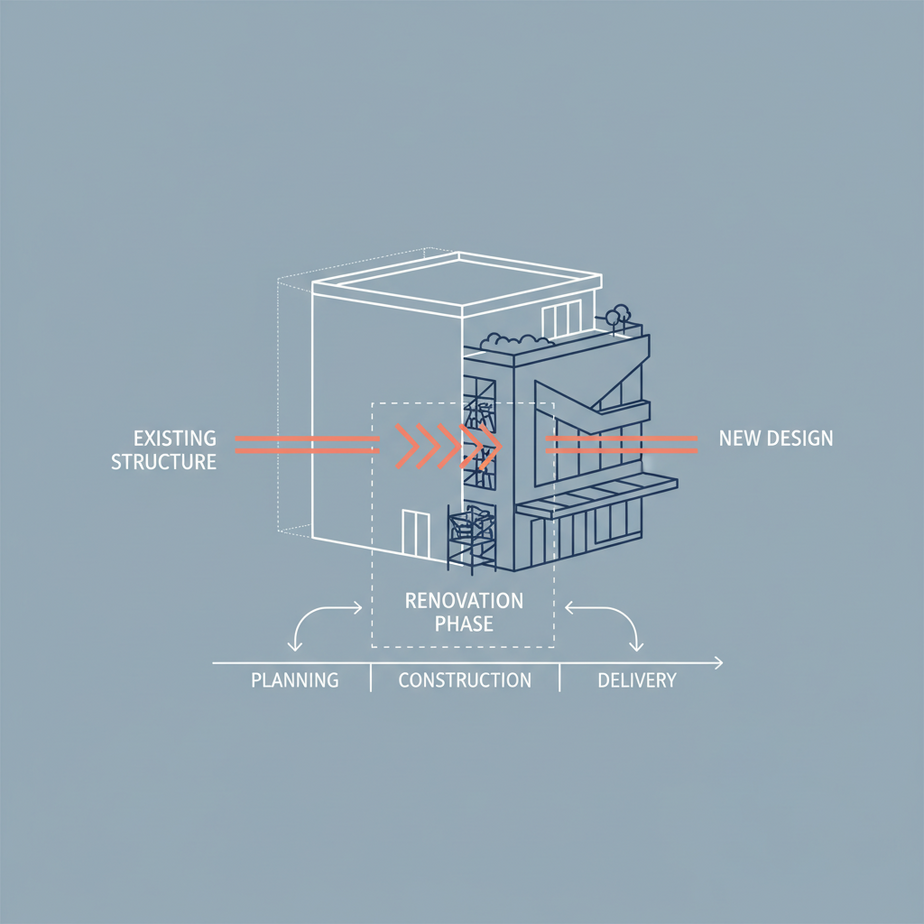
A successful commercial property renovation project involves a structured process, typically beginning with a thorough assessment of the existing space and the client’s objectives. This initial phase includes identifying any structural issues, evaluating the existing building systems, and understanding the client’s specific needs and goals for the renovation. Prestige 360’s space planning services are invaluable at this stage.
Next comes the design phase, where architects and designers develop detailed plans and specifications for the renovated space. This includes selecting materials, finishes, and fixtures, as well as creating 3D visualizations to help the client envision the final result. Once the design is approved, the project moves into the permitting phase, where necessary approvals are obtained from local authorities. This can be a complex and time-consuming process, requiring expertise in building codes and regulations.
With permits in hand, the construction phase begins. This involves demolition of existing structures, installation of new systems and finishes, and ongoing project management to ensure the project stays on schedule and within budget. Regular communication with the client is essential throughout the construction phase to address any issues that may arise and ensure the final result meets their expectations. Finally, upon completion of the construction, a thorough inspection is conducted to ensure compliance with all applicable codes and regulations. The project is then turned over to the client, ready for occupancy.
Commercial Property Renovation in San Antonio & Central Texas: Local Market Insights
The San Antonio-Austin corridor, including the Texas Hill Country towns of Boerne, New Braunfels, and San Marcos, is experiencing rapid growth, making commercial property renovation a critical strategy for businesses looking to capitalize on this expansion. With a booming population and a thriving economy, the demand for high-quality commercial spaces is on the rise. Businesses that invest in renovating their properties can gain a competitive edge by attracting new customers and retaining existing ones.
In this dynamic market, understanding local nuances is key. For example, preserving the unique architectural character of historic buildings in downtown San Antonio can be a significant selling point, while incorporating modern amenities and sustainable design features is essential for attracting tech companies and startups in Austin. Prestige 360, serving a 100-mile radius around San Antonio, possesses deep expertise in the local market, understanding the specific needs and preferences of businesses and consumers in the region.
Nationally, trends such as the increasing focus on sustainability, the adoption of smart building technologies, and the growing demand for flexible workspaces are shaping the future of commercial property renovation. Businesses in San Antonio and Central Texas can benefit from incorporating these trends into their renovation projects to create spaces that are not only aesthetically pleasing but also functional, efficient, and future-proof. By partnering with a reputable commercial interior design firm like Prestige 360, businesses can navigate the complexities of the renovation process and achieve a significant return on their investment. Contact us today!
Common Mistakes to Avoid
Commercial property renovation, while offering significant ROI potential, is fraught with potential pitfalls. Avoiding these common mistakes can save you time, money, and frustration.
- Inadequate Budgeting: Many projects fail due to underestimating the true cost. Always factor in a contingency (10-15%) for unforeseen issues like hidden structural problems or unexpected code upgrades. A detailed budget, based on professional estimates, is crucial.
- Neglecting Due Diligence: Failing to thoroughly inspect the property before starting renovations can lead to costly surprises. Hidden issues like leaks, foundation cracks, or outdated electrical systems can significantly impact your budget and timeline.
- Poor Contractor Selection: Choosing a contractor based solely on price is a recipe for disaster. Verify their experience, check references, and ensure they have the necessary licenses and insurance. A contractor specializing in commercial renovations is always preferable.
- Ignoring Regulatory Compliance: Overlooking local building codes, permitting requirements, and accessibility standards (ADA) can lead to delays, fines, and even project shutdowns. Engage professionals familiar with local regulations to ensure compliance from the outset.
- Lack of Clear Objectives: Without a well-defined scope of work and clear objectives, renovations can quickly spiral out of control. Clearly define your goals – whether it’s improving tenant experience, increasing property value, or repositioning the asset – and ensure all stakeholders are aligned. Commercial interior design experts can help clarify these objectives.
Frequently Asked Questions
What is the 30% rule for renovations?
The 30% rule typically refers to scenarios where renovations exceed 30% of the building’s assessed value. This can trigger more stringent code requirements, potentially requiring upgrades to the entire building’s systems to meet current standards. Always consult with local authorities to understand the specific implications in your area.
How much does a commercial renovation cost?
Commercial renovation costs vary widely depending on the scope of work, location, materials, and labor. On average, you can expect to pay between $50 to $250+ per square foot. Cosmetic updates will be on the lower end, while extensive structural or system upgrades will be considerably more expensive.
What is the most expensive part of renovation?
The most expensive parts of a commercial renovation often involve structural modifications, HVAC system upgrades, electrical work, and plumbing. Bringing older buildings up to current code can also add significant costs. Detailed planning and accurate assessments are vital to managing these expenses.
What is the average cost per square foot of a commercial building?
The average cost per square foot for commercial building renovation can range from $50 for basic cosmetic improvements to over $250 for extensive renovations involving significant structural or system upgrades. The complexity of the project, materials used, and local labor costs heavily influence this figure.
What are the most common renovation mistakes?
Common renovation mistakes include inadequate budgeting, neglecting due diligence, poor contractor selection, ignoring regulatory compliance, and a lack of clear objectives. Avoiding these pitfalls requires careful planning, professional expertise, and a proactive approach to risk management.
How can I minimize business disruption during a commercial renovation?
Careful scheduling and phasing of the renovation are crucial to minimize disruption. Consider off-hours work, temporary relocation of departments, and clear communication with employees and customers. A detailed plan, developed in consultation with your contractor, can significantly reduce downtime.
What are the key considerations for tenant improvement projects?
Tenant improvement projects require a thorough understanding of the tenant’s needs and brand. Space planning, layout design, and material selection should align with their operational requirements and brand identity. Clear communication and collaboration with the tenant are essential for a successful project. For commercial property repositioning, a strong tenant improvement strategy is key.
Conclusion
Commercial property renovation is a powerful tool for maximizing ROI, enhancing tenant experience, and repositioning assets in the competitive market. By understanding market trends, budgeting effectively, and avoiding common pitfalls, you can unlock the full potential of your investment. Remember to prioritize due diligence, engage qualified professionals, and maintain a clear vision throughout the project.
Prestige 360 specializes in delivering turnkey commercial interior design and renovation solutions across the San Antonio-Austin corridor and within a 100-mile radius of San Antonio. From space planning and tenant improvements to complete property repositioning, we provide the expertise and resources to ensure a successful and profitable renovation project. Don’t leave your investment to chance. Schedule a Free Consultation today to discuss your project and discover how we can help you achieve your ROI goals.