

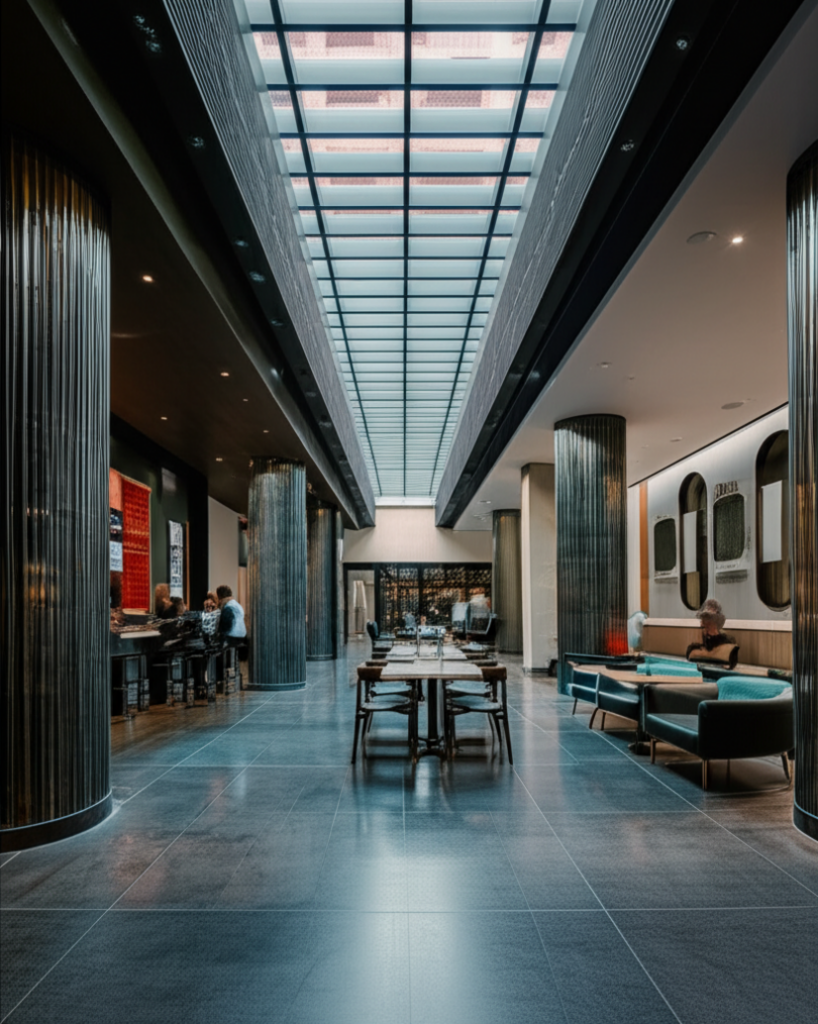
Interior Design for Commercial Spaces: 2025 Guide
Key Takeaways
- Commercial interior design fees range from $14-22 per square foot for basic projects, with hourly rates between $100-500
- Human-centric workspaces and sustainable materials dominate 2025 design trends
- Poor space planning and ignoring brand identity are the costliest design mistakes to avoid
- Successful projects require balancing functionality, aesthetics, and future growth planning
- Proper market research and accurate pricing strategies are critical for project success
Commercial interior design has evolved far beyond simply making spaces look attractive. In 2025, successful businesses understand that strategic interior design directly impacts employee productivity, customer experience, and bottom-line profitability. Whether you’re planning an office renovation, retail buildout, or hospitality project, the decisions you make today will influence your business performance for years to come.
The commercial design landscape is experiencing unprecedented change, driven by post-pandemic workplace evolution, sustainability mandates, and shifting consumer expectations. Business owners who master these trends while avoiding common pitfalls position themselves for competitive advantage. This comprehensive guide reveals the latest industry insights, cost-effective strategies, and proven methodologies that separate successful commercial projects from costly failures.
You’ll discover how to navigate 2025’s design trends, understand true project costs, implement human-centric design principles, and avoid the expensive mistakes that derail commercial interior projects. From initial space planning to final implementation, this guide provides the strategic framework needed to maximize your design investment.
Understanding Commercial Interior Design
Commercial interior design encompasses the strategic planning, design, and implementation of interior spaces for businesses, organizations, and public facilities. Unlike residential design, commercial interior design must balance aesthetic appeal with functionality, regulatory compliance, and business objectives. This specialized field requires deep understanding of building codes, accessibility requirements, safety regulations, and industry-specific needs that vary dramatically across sectors.
The scope of commercial interior design extends far beyond selecting furniture and color schemes. It involves comprehensive space planning that optimizes workflow efficiency, enhances customer experience, and supports business operations. Modern commercial design integrates technology infrastructure, sustainable materials, and flexible layouts that can adapt to changing business needs. The discipline requires collaboration with architects, engineers, contractors, and regulatory authorities to ensure projects meet all technical and legal requirements.
Commercial spaces serve diverse purposes, from corporate offices and retail stores to restaurants, medical facilities, and hospitality venues. Each sector demands specialized knowledge of operational requirements, customer behavior patterns, and industry standards. For instance, restaurant design must consider kitchen workflow, dining capacity, and health department regulations, while office design focuses on productivity, collaboration, and employee wellness. The designer must understand how space directly impacts business performance, customer satisfaction, and operational efficiency.
Professional commercial interior designers bring expertise in project management, vendor coordination, and construction administration. They navigate complex permitting processes, manage budgets and timelines, and ensure projects comply with Americans with Disabilities Act (ADA) requirements and local building codes. This comprehensive approach transforms raw commercial space into functional, attractive environments that support business success and create positive experiences for employees, customers, and visitors.
Benefits of Commercial Interior Design for Business Success
Strategic commercial interior design delivers measurable return on investment through improved operational efficiency, enhanced customer experience, and increased property value. Well-designed commercial spaces can boost employee productivity by up to 20% through optimized lighting, ergonomic layouts, and improved air quality. For retail businesses, thoughtful design increases sales conversion rates and average transaction values by creating engaging shopping environments that encourage customer exploration and purchases.
Brand differentiation represents another critical advantage of professional commercial interior design. In competitive markets, distinctive interior design helps businesses stand out, communicate brand values, and create memorable customer experiences. Retail design that aligns with brand identity builds customer loyalty and supports premium pricing strategies. Professional design also ensures regulatory compliance, reducing risk of costly violations or retrofits that could disrupt business operations.
Commercial interior design significantly impacts employee satisfaction, retention, and recruitment. Modern workplace design that prioritizes natural light, flexible collaboration areas, and wellness features attracts top talent and reduces turnover costs. Studies show that employees in well-designed offices report higher job satisfaction and take fewer sick days. For customer-facing businesses, professional design creates positive first impressions that influence purchasing decisions and encourage repeat visits.
Energy efficiency and sustainability benefits provide long-term cost savings and support corporate environmental goals. Professional designers specify energy-efficient lighting, HVAC systems, and sustainable materials that reduce operating costs while meeting LEED certification requirements. Flexible design solutions accommodate future growth and changing needs, protecting the investment over time. The cumulative impact of these benefits often justifies design investment within the first year of operation, while continuing to deliver value throughout the space’s lifecycle.
The Commercial Interior Design Process
The commercial interior design process begins with comprehensive discovery and programming, where designers assess business requirements, operational workflows, and regulatory constraints. This initial phase includes site analysis, space measurement, and stakeholder interviews to understand functional needs, aesthetic preferences, and budget parameters. Designers evaluate existing infrastructure, identify potential challenges, and establish project timelines that minimize business disruption during construction phases.
Design development follows a structured approach, starting with conceptual planning and space allocation. Designers create preliminary layouts that optimize traffic flow, maximize usable space, and support business operations. This phase includes material selection, color schemes, lighting design, and furniture specifications that align with brand identity and functional requirements. Advanced 3D visualization and virtual reality technology allows clients to experience proposed designs before construction begins, ensuring alignment with expectations and reducing costly changes.
The documentation phase produces detailed construction drawings, specifications, and permitting documents required for regulatory approval. Professional designers coordinate with engineers, contractors, and specialty consultants to ensure all systems integrate properly. They manage the permitting process, addressing code compliance issues and obtaining necessary approvals from local authorities. This comprehensive documentation protects clients from construction delays and ensures projects meet all legal requirements.
Construction administration represents the final phase, where designers oversee project implementation, conduct site inspections, and coordinate with contractors to ensure quality execution. They manage change orders, resolve field issues, and conduct final inspections before client occupancy. Professional project management ensures timelines are met, budgets are controlled, and quality standards are maintained throughout the construction process. The result is a turnkey solution that transforms raw commercial space into a functional, attractive environment ready for business operations.
Commercial Interior Design in San Antonio & Central Texas: Local Market Insights
The San Antonio-Austin corridor has emerged as one of the nation’s fastest-growing commercial markets, driven by technology sector expansion, military presence, and favorable business climate. This dynamic growth creates unprecedented demand for sophisticated commercial interior design services across diverse industries. The region’s unique blend of historic architecture and modern development requires designers who understand both preservation requirements and contemporary business needs. From downtown San Antonio’s historic districts to Austin’s tech campuses, commercial spaces must balance cultural heritage with cutting-edge functionality.
Central Texas businesses face specific challenges that influence interior design strategies, including extreme weather conditions, energy costs, and rapid population growth. Professional designers in this market prioritize energy-efficient solutions, sustainable materials, and flexible layouts that accommodate business expansion. The region’s diverse economy spans healthcare, technology, military contracting, tourism, and manufacturing, each requiring specialized design expertise. Medical facilities must meet strict regulatory requirements, while tech companies demand collaborative spaces that attract top talent from major metropolitan areas.
The Texas Hill Country’s unique geography and climate influence material selection and design approaches for commercial projects. High humidity, temperature fluctuations, and intense sunlight require durable finishes and advanced HVAC integration. Local building codes reflect these environmental challenges, making professional design expertise essential for regulatory compliance. The region’s growth has attracted national retailers, restaurant chains, and corporate headquarters that demand sophisticated design solutions to compete in major metropolitan markets.
Market trends show increasing demand for mixed-use developments, adaptive reuse projects, and sustainable design solutions throughout the San Antonio-Austin corridor. Businesses recognize that professional interior design provides competitive advantages in attracting customers, retaining employees, and supporting operational efficiency. The region’s projected population growth and continued economic diversification ensure strong demand for commercial interior design services across all sectors, from small business tenant improvements to large-scale corporate headquarters and hospitality developments.
Common Mistakes to Avoid in Commercial Interior Design
Even well-intentioned business owners can make costly mistakes when approaching commercial interior design projects. Understanding these pitfalls helps ensure your investment delivers maximum returns and creates the optimal environment for your business success.
1. Prioritizing Aesthetics Over Functionality
While visual appeal matters, designing without considering daily operations leads to beautiful but impractical spaces. Ensure your design supports workflow efficiency, customer movement patterns, and employee productivity before focusing on decorative elements.
2. Ignoring Future Growth and Flexibility
Many businesses design for their current size without considering expansion plans. This shortsighted approach results in costly renovations within just a few years. Plan for scalability by incorporating modular furniture systems and flexible layouts that can adapt as your business evolves.
3. Inadequate Space Planning and Traffic Flow
Poor space utilization wastes valuable square footage and creates bottlenecks that frustrate customers and employees. Professional space planning ensures optimal traffic patterns, appropriate zones for different activities, and efficient use of every square foot.
4. Neglecting Brand Identity Integration
Your physical space should reinforce your brand message and values. Failing to align your interior design with your brand identity creates disconnect and missed opportunities to strengthen customer relationships and employee engagement.
5. Underestimating Lighting and Acoustics
These critical elements dramatically impact comfort, productivity, and customer experience. Poor lighting strains eyes and creates unwelcoming atmospheres, while inadequate acoustic planning leads to distracting noise levels that harm both employee performance and customer satisfaction.
Frequently Asked Questions
How much should I budget for commercial interior design?
Commercial interior design fees typically range from $14-22 per square foot for basic projects, with comprehensive turnkey solutions varying based on scope and complexity. Professional designers generally charge $100-200 per hour, though high-end firms may command up to $500 per hour. The total investment depends on your space size, design complexity, and material selections.
How long does a commercial interior design project take?
Timeline varies significantly based on project scope, space size, and complexity. Simple office refreshes may take 4-8 weeks, while complete restaurant or retail buildouts can require 3-6 months from concept to completion. Permitting, custom millwork, and specialty installations add time to the overall schedule.
Do I need permits for commercial interior renovations?
Most commercial interior projects require permits, especially when involving electrical, plumbing, or structural changes. Even cosmetic updates may need permits depending on local regulations and building codes. Professional design firms typically handle permit applications and ensure compliance with all applicable codes.
What’s included in turnkey commercial design services?
Turnkey solutions encompass everything from initial concept development through project completion and final walkthrough. This includes space planning, design development, permit acquisition, contractor coordination, material procurement, installation oversight, and final styling. You receive a completely finished, move-in ready space.
How do I choose between different commercial design firms?
Evaluate firms based on relevant industry experience, portfolio quality, client testimonials, and their understanding of your specific business needs. Consider their project management approach, timeline commitments, and ability to work within your budget. The best firms offer comprehensive services and maintain clear communication throughout the process.
Can commercial interior design increase my property value?
Professional commercial interior design typically increases property value and rental rates while reducing vacancy periods. Well-designed spaces command premium rents, attract quality tenants, and require less frequent renovations. The ROI often justifies the initial investment within 2-3 years through increased revenue and reduced operating costs.
What commercial spaces benefit most from professional design?
All commercial spaces benefit from professional design, but restaurants, retail stores, medical facilities, and hospitality venues see the most dramatic impact on customer experience and revenue. Office spaces benefit through improved employee productivity and retention, while any customer-facing business gains competitive advantages through enhanced brand presentation.
Should I hire an architect or interior designer for my commercial project?
The choice depends on your project scope and structural requirements. Architects handle structural changes, major mechanical systems, and building additions, while interior designers focus on space planning, finishes, furniture, and creating functional, beautiful interiors. Many projects benefit from both professionals working collaboratively, or from firms offering integrated architectural and design services.
Transform Your Commercial Space with Professional Design
Commercial interior design represents far more than aesthetic enhancement—it’s a strategic investment that drives business success, enhances customer experiences, and maximizes your property’s potential. From understanding the fundamental principles of effective space planning to implementing the latest 2025 trends in sustainable materials and technology integration, every design decision impacts your bottom line.
The most successful commercial spaces result from careful planning, professional expertise, and a clear understanding of how design serves business objectives. Whether you’re developing a new restaurant concept, repositioning an existing retail space, or creating a modern office environment that attracts top talent, the right design approach transforms your vision into a profitable reality.
Don’t leave your commercial space to chance or attempt to navigate the complex world of permits, codes, and contractor coordination alone. Professional design firms bring the expertise, industry connections, and project management skills necessary to deliver exceptional results on time and within budget.
Ready to transform your commercial space into a powerful business asset? Our team of experienced commercial interior designers specializes in creating turnkey solutions that drive results. From initial concept through final installation, we handle every detail while keeping your business objectives at the forefront of every decision. Schedule a Free Consultation today to discover how professional commercial interior design can elevate your business and maximize your investment returns.
For small business owners, the SBA Small Business Store Management Guide provides authoritative resources on retail operations and planning.