

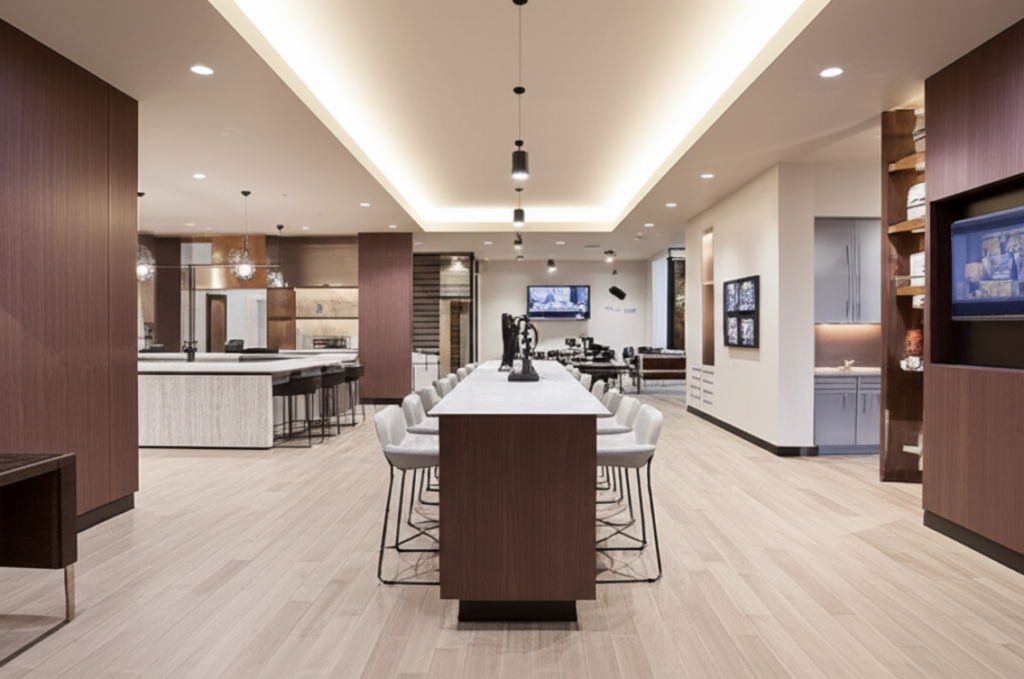
Commercial Interior Design: 2025 Guide to Transform Your Business
Key Takeaways
- Commercial interior design costs average $10.44 per square foot nationwide, with strategic design delivering measurable ROI through increased customer retention and sales
- Human-centric workspaces and sustainable materials dominate 2025 trends, directly impacting employee productivity and brand perception
- Successful commercial design requires balancing aesthetics with functionality, avoiding common mistakes like ignoring brand identity and overlooking future growth needs
- Professional design firms charge $100-$500 per hour, but turnkey solutions from concept to opening provide better value for business owners seeking comprehensive transformation
- Smart technology integration and AI-powered design solutions are revolutionizing commercial spaces, creating competitive advantages for forward-thinking businesses
Your commercial space isn’t just four walls and furniture—it’s your silent sales team, working 24/7 to influence customer decisions and shape brand perceptions. In 2025, business owners across America are discovering that strategic commercial interior design delivers measurable returns, with well-designed retail spaces increasing sales by up to 20% and optimized office environments boosting employee productivity significantly.
Whether you’re launching a new restaurant, expanding your retail footprint, or transforming an outdated office, the stakes have never been higher. Today’s consumers expect experiences that seamlessly blend functionality with aesthetic appeal, while employees demand workspaces that support both collaboration and focused work. The challenge? Navigating design trends, managing costs, and avoiding expensive mistakes that could derail your business goals.
This comprehensive guide reveals the commercial interior design strategies that successful business owners use to create spaces that attract customers, retain talent, and drive profitability. From understanding 2025 cost structures to implementing cutting-edge design trends, you’ll discover how to transform your commercial space from concept to grand opening.
Understanding Commercial Interior Design
Commercial interior design is the strategic planning and design of interior spaces for business environments, encompassing everything from office buildings and retail stores to restaurants and hospitality venues. Unlike residential design, commercial interior design focuses on creating functional, profitable spaces that serve multiple stakeholders – employees, customers, and business owners alike.
At its core, commercial interior design balances three critical elements: functionality, aesthetics, and brand alignment. The design must support daily operations while creating an environment that enhances productivity, customer experience, and ultimately, business performance. This discipline requires deep understanding of building codes, accessibility requirements, safety regulations, and industry-specific needs that vary dramatically between sectors.
Modern commercial interior design has evolved beyond simple space decoration to become a strategic business tool. Professional designers analyze traffic flow patterns, employee workflows, customer journeys, and brand positioning to create environments that actively contribute to business success. The field encompasses space planning, furniture selection, lighting design, color psychology, technology integration, and sustainable material choices – all working together to create cohesive, purposeful environments.
The investment in professional commercial interior design typically pays dividends through increased employee satisfaction, improved customer retention, enhanced brand perception, and measurable impacts on revenue. Whether transforming an existing space or designing from scratch, commercial interior design serves as the foundation for creating environments where businesses thrive and customers want to return.
Benefits of Commercial Interior Design for Business Success
Professional commercial interior design delivers measurable returns on investment through multiple channels that directly impact business performance. Well-designed commercial spaces increase employee productivity by up to 25% through improved lighting, ergonomic layouts, and spaces that reduce stress while promoting collaboration and focus. This translates to reduced turnover costs, lower absenteeism, and higher quality work output.
For customer-facing businesses, strategic interior design significantly influences purchasing decisions and brand perception. Retail environments designed with customer psychology in mind can increase sales by 20-30% through optimized product placement, intuitive navigation, and atmospheres that encourage longer visits and impulse purchases. Similarly, restaurant design directly impacts table turnover rates, average ticket sizes, and customer satisfaction scores.
Brand differentiation represents another crucial benefit, particularly in competitive markets. Custom commercial interior design helps businesses stand out from competitors while reinforcing brand values and creating memorable experiences that drive customer loyalty. This is especially valuable for franchises and multi-location businesses seeking consistent brand expression across diverse markets.
From a financial perspective, professional design maximizes space utilization, potentially reducing real estate costs per employee or increasing revenue per square foot. Energy-efficient design choices reduce operational costs, while durable material selections minimize long-term maintenance expenses. Additionally, well-designed commercial spaces often command higher property values and rental rates, benefiting property owners and investors. The cumulative effect creates a compelling business case where design investment generates ongoing returns through improved operations, enhanced customer relationships, and strengthened market positioning.
The Commercial Interior Design Process
The commercial interior design process begins with comprehensive discovery and programming, where designers conduct detailed assessments of business needs, operational requirements, and growth projections. This phase includes stakeholder interviews, space audits, workflow analysis, and brand exploration to establish project parameters and success metrics. Professional designers also review building codes, zoning requirements, and accessibility standards to ensure compliance throughout the design process.
Space planning and layout design forms the foundation of successful commercial projects, involving detailed analysis of traffic patterns, functional zones, and adjacency requirements. Designers create multiple layout options using advanced software to optimize space utilization while supporting operational efficiency. This phase includes furniture planning, technology integration points, and infrastructure requirements for electrical, HVAC, and data systems.
The design development phase transforms approved concepts into detailed specifications, including material selections, color schemes, lighting design, and custom millwork details. Professional designers provide 3D visualizations and renderings that allow stakeholders to experience spaces before construction begins, reducing costly changes during implementation. This phase also includes preparation of construction documents, specifications, and coordination with contractors and vendors.
Project implementation involves construction administration, where designers oversee installation quality, coordinate deliveries, and ensure design intent is properly executed. This includes regular site visits, progress meetings, and problem-solving as challenges arise. The process concludes with final inspections, punch list completion, and post-occupancy evaluation to ensure the space meets performance expectations. Professional firms often provide ongoing support for space optimization, maintenance planning, and future expansion needs, creating long-term partnerships that support business growth and evolution.
Commercial Interior Design Trends in the US Market
The 2025 commercial interior design landscape is being shaped by several transformative trends that reflect changing work patterns, technological advancement, and evolving customer expectations. Human-centric workspaces lead this evolution, prioritizing employee wellbeing through biophilic design, improved air quality systems, and flexible spaces that adapt to diverse work styles. This trend responds to the ongoing competition for talent and recognition that workplace environment directly impacts recruitment and retention.
Technology integration has moved beyond basic connectivity to encompass smart building systems, IoT sensors, and AI-powered environmental controls that optimize energy usage and space utilization. These technologies provide real-time data on space performance, enabling continuous optimization and supporting sustainability goals that are increasingly important to both employees and customers. Advanced visualization technologies, including virtual and augmented reality, are revolutionizing the design process itself, allowing stakeholders to experience spaces before construction begins.
Sustainability and wellness considerations now drive material selection and design decisions across all commercial sectors. This includes specification of low-VOC materials, energy-efficient lighting systems, and furniture made from recycled or rapidly renewable resources. The wellness movement extends beyond environmental concerns to encompass acoustic design, circadian lighting, and spaces that support mental health and stress reduction.
Flexibility and adaptability have become essential design principles, particularly in office environments where hybrid work models require spaces that can quickly reconfigure for different functions. This trend extends to retail and hospitality sectors, where businesses need spaces that can adapt to changing consumer behaviors and seasonal variations. Multi-functional design elements, modular furniture systems, and technology infrastructure that supports rapid reconfiguration are becoming standard specifications in forward-thinking commercial projects nationwide.
Common Mistakes to Avoid
Even experienced business owners can fall into costly traps when approaching commercial interior design. Understanding these common pitfalls helps protect your investment and ensures project success.
Prioritizing Style Over Functionality: The most expensive mistake is creating beautiful spaces that don’t serve your business needs. A trendy restaurant layout that impedes service flow or an office design that hampers productivity ultimately costs more than it saves.
Ignoring Brand Identity: Your space should reinforce your brand, not compete with it. Many businesses choose generic designs that fail to differentiate them from competitors, missing valuable opportunities to strengthen brand recognition and customer loyalty.
Underestimating Future Growth: Designing only for current needs often leads to expensive renovations within years. Smart commercial design anticipates business expansion, technology upgrades, and evolving operational requirements.
Skipping Professional Electrical Planning: DIY approaches frequently overlook electrical and technology infrastructure needs. Retrofitting power, data, and lighting systems after construction costs significantly more than proper initial planning.
Inadequate Budget Planning: Failing to account for permits, project management, and contingency costs leads to budget overruns. Professional designers help establish realistic budgets that include all necessary elements for successful project completion.
Frequently Asked Questions
What are the commercial interior design trends in 2025?
The top commercial interior design trends for 2025 focus on human-centric workspaces, sustainable materials, and smart technology integration. Businesses are prioritizing flexible layouts that adapt to changing needs, biophilic design elements that improve employee wellness, and AI-powered solutions that enhance operational efficiency.
Are interior designers in demand in 2025?
Yes, commercial interior designers are experiencing high demand in 2025 as businesses recognize the direct connection between well-designed spaces and profitability. The shift toward hybrid work models, emphasis on customer experience, and need for adaptable commercial spaces has increased demand for professional design expertise.
How much does an interior designer cost in 2025?
Interior designers typically charge between $100 to $200 per hour, with high-end commercial firms commanding up to $500 per hour. Many commercial projects use per-square-foot pricing or fixed project fees, making costs more predictable for business planning purposes.
How much does commercial interior design cost per square foot?
Commercial interior design costs average $10.44 per square foot nationally, with ranges from $9.43 to $11.44 depending on project complexity and location. This covers design services only and doesn’t include construction, furniture, or fixtures.
What is the biggest problem in interior design?
The biggest problem in commercial interior design is prioritizing aesthetics over functionality, leading to beautiful spaces that don’t support business operations. This often results in costly redesigns and lost revenue from inefficient workflows or poor customer experiences.
How long does a commercial interior design project take?
Commercial interior design projects typically take 3-6 months from initial consultation to completion, depending on space size and complexity. This includes design development, permit acquisition, construction, and final installation phases.
Do I need permits for commercial interior design changes?
Most commercial interior changes require permits, especially those involving electrical work, plumbing modifications, or structural alterations. Professional design firms handle permit applications and ensure all work meets local building codes and ADA compliance requirements.
What’s the ROI of professional commercial interior design?
Professional commercial interior design typically delivers 200-400% ROI through increased sales, improved employee productivity, and enhanced property values. Well-designed retail spaces can increase sales by 20-30%, while optimized office layouts boost employee efficiency and reduce turnover costs.
Conclusion
Commercial interior design represents one of the most impactful investments you can make in your business. From creating customer experiences that drive sales to designing workspaces that boost productivity, professional design directly influences your bottom line. The trends shaping 2025—human-centric design, sustainable materials, smart technology integration, and flexible layouts—aren’t just aesthetic choices; they’re strategic business decisions that position your company for long-term success.
Whether you’re opening a new location, renovating an existing space, or expanding your operations, the key to success lies in partnering with experienced professionals who understand both design principles and business objectives. The right design team brings expertise in space planning, regulatory compliance, project management, and cost control—ensuring your vision becomes reality on time and within budget.
Don’t let your commercial space become a missed opportunity. The businesses thriving in 2025 are those that recognize their physical environment as a powerful tool for growth, brand building, and competitive advantage. Ready to transform your business through strategic design? Schedule a Free Consultation with our commercial interior design experts today. Let’s discuss how we can create a space that not only looks exceptional but drives measurable results for your business. Your success story starts with the right design partner—and the right design starts now.