Insights
Commercial Kitchen Remodeling Checklist: Costs, Timeline, Guide (2026)
April 14, 2026
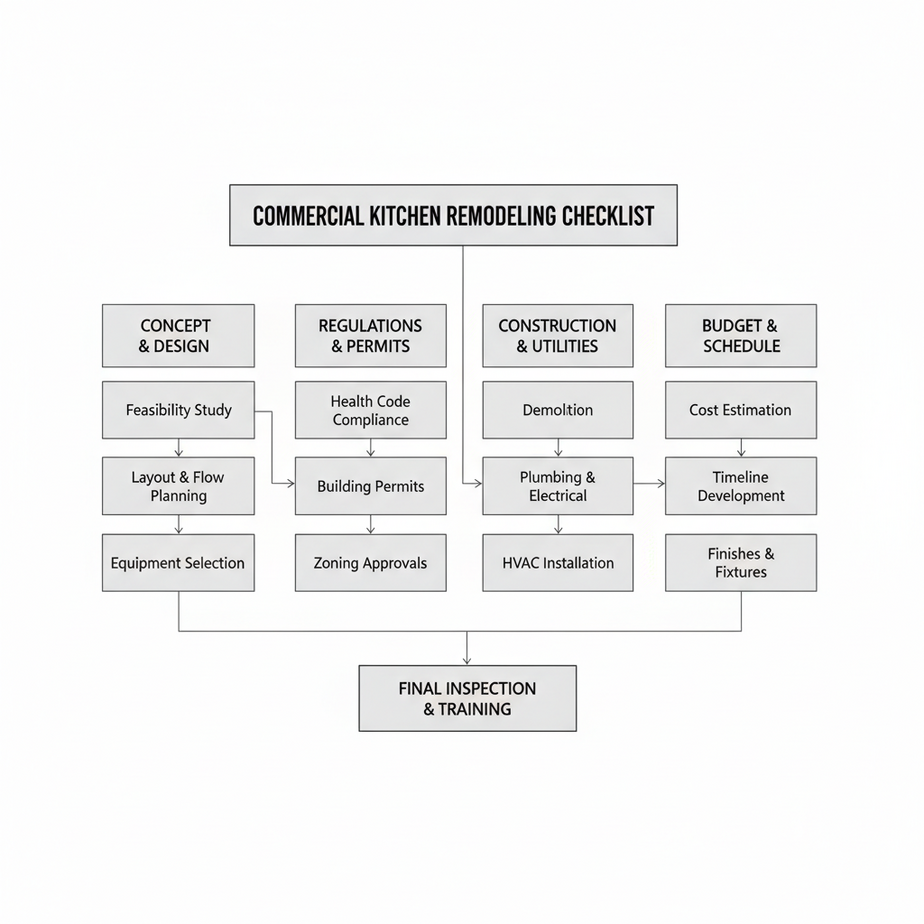
Commercial Kitchen Remodeling Checklist: Costs, Timeline & Guide
Quick answer: A commercial kitchen remodel in Texas typically follows seven phases: budget definition, layout design, equipment specification, permit review, demolition, MEP and equipment install, then final health inspection. Total timeline runs 10 to 16 weeks for most concepts, and 2026 costs commonly fall within $250 to $500 per square foot depending on equipment, ventilation, and city health department review.
Key Takeaways
- A detailed commercial kitchen remodeling checklist is crucial for project success, covering everything from initial assessment to final inspection.
- Budgeting for a commercial kitchen remodel requires factoring in design, construction, equipment, permits, and potential cost overruns.
- Project timelines vary significantly based on scope; proper planning and contractor selection are key to staying on schedule.
- Upgrading to energy-efficient equipment and optimizing kitchen layout can lead to substantial long-term cost savings.
- Prioritize workflow, safety, and regulatory compliance throughout the remodeling process to avoid costly mistakes.
Remodeling a commercial kitchen is a significant undertaking, whether you’re upgrading an existing restaurant in the heart of San Antonio, launching a new cafe in Austin, or repositioning a commercial property in the rapidly growing I-35 corridor. For business owners, developers, and investors across the Texas Hill Country, a well-executed kitchen remodel is more than just aesthetics – it’s about maximizing efficiency, optimizing workflow, and ensuring long-term profitability.
However, navigating the complexities of commercial kitchen remodeling can be daunting. From understanding permitting requirements to selecting the right equipment and managing construction timelines, there are numerous potential pitfalls that can lead to cost overruns and delays. Prestige 360, serving the San Antonio-Austin area within a 100-mile radius, understands these challenges intimately. That’s why we’ve created this comprehensive guide to provide you with a practical checklist, cost breakdown, timeline considerations, equipment upgrade strategies, and energy-efficient solutions. By following these expert insights, you can ensure your commercial kitchen remodel is a success, delivering a strong return on investment and enhancing your brand experience.
Your Commercial Kitchen Remodeling Checklist: A Step-by-Step Guide to Success
Embarking on a commercial kitchen remodel requires meticulous planning and execution. This checklist provides a structured approach to ensure your project stays on track, within budget, and meets all regulatory requirements. Prestige 360 understands the complexities of commercial interior design and offers turnkey solutions to guide you from concept to opening.
1. Define Your Remodeling Goals: Begin by clearly outlining what you aim to achieve. Are you expanding your menu, improving workflow, enhancing energy efficiency, or addressing outdated equipment? Understanding your objectives will drive design decisions and budget allocation. For example, a restaurant aiming to introduce a new catering service might need to expand prep areas and install specialized ovens.
2. Assess Your Current Operations: Evaluate your existing kitchen’s strengths and weaknesses. Identify bottlenecks, inefficient layouts, and equipment that needs replacement. This assessment informs the new design, ensuring it optimizes workflow and addresses operational challenges. Don’t underestimate the value of professional space planning to maximize efficiency.
3. Set a Realistic Budget: Commercial kitchen remodels involve significant investment. Establish a detailed budget that includes construction costs, equipment purchases, permitting fees, design services, and a contingency fund for unforeseen expenses. Remember that skimping on quality can lead to costly repairs and replacements down the line.
4. Navigate Regulatory Requirements: Commercial kitchens are subject to stringent health and safety regulations. Ensure your design complies with local codes, including ventilation, fire suppression, and accessibility standards. Engage with local authorities early in the process to avoid delays and costly revisions.
5. Design for Optimal Workflow: A well-designed kitchen prioritizes efficient movement of staff and ingredients. Consider the flow from receiving to storage, preparation, cooking, and service. Optimize equipment placement to minimize steps and prevent congestion. Consider whether you want an open-concept design or a galley-style kitchen for compact functionality.
6. Equipment and Infrastructure Planning: Select reliable, energy-efficient equipment that meets your operational needs. Ensure your infrastructure, including plumbing, electrical, and gas lines, can support the new equipment. Consider future expansion and choose scalable solutions.
7. Choose Quality Materials and Finishes: Opt for durable, easy-to-clean materials that withstand the rigors of a commercial kitchen. Select flooring, wall coverings, and countertops that are resistant to stains, scratches, and moisture. Prioritize food-safe materials to maintain hygiene standards.
8. Secure Necessary Permits: Obtain all required permits before starting construction. This process can be time-consuming, so initiate it early. Failure to secure permits can result in fines, delays, and even project shutdowns.
9. Hire Qualified Professionals: Engage experienced contractors, designers, and engineers who specialize in commercial kitchen remodels. Verify their credentials, review their portfolios, and obtain references. Prestige 360 offers comprehensive commercial interior design services, ensuring your project is handled by experts.
10. Project Management and Execution: Implement a robust project management plan to oversee the remodel. Establish clear communication channels, track progress against milestones, and address any issues promptly. Regular site meetings and progress reports keep the project on track.
Restaurant Kitchen Remodel Cost Breakdown: Understanding Your Investment
Remodeling a restaurant kitchen is a significant investment, and understanding the cost components is crucial for effective budgeting. The total cost varies widely depending on the size of the kitchen, the scope of the remodel, the quality of materials and equipment, and local labor rates. Here’s a breakdown of typical cost categories:
1. Design and Planning: This includes fees for architects, interior designers, and engineers. Design costs can range from 5% to 15% of the total project budget, depending on the complexity of the design. Prestige 360 provides comprehensive design services tailored to your specific needs, ensuring a functional and aesthetically pleasing kitchen.
2. Demolition and Construction: Demolition involves removing existing fixtures, flooring, and walls. Construction includes framing, plumbing, electrical, HVAC, and finish work. These costs can range from 20% to 35% of the total budget, depending on the extent of the demolition and construction work required. Addressing hidden issues like outdated wiring or plumbing can add to these expenses.
3. Equipment: Commercial kitchen equipment represents a substantial portion of the budget. Costs vary based on the type, size, and brand of equipment. Essential equipment includes ranges, ovens, fryers, refrigerators, freezers, dishwashers, and ventilation systems. Allocate 30% to 40% of your budget for equipment purchases. Consider energy-efficient models to reduce long-term operating costs. Refer to an expert in restaurant design to help you choose the best equipment for your needs.
4. Ventilation: A properly designed ventilation system is critical for removing smoke, grease, and odors. Ventilation costs include the hood, ductwork, fans, and fire suppression system. Allocate 10% to 15% of your budget for ventilation. Poorly designed ventilation is a common mistake that can lead to health and safety issues.
5. Plumbing and Electrical: Upgrading plumbing and electrical systems is often necessary to accommodate new equipment and meet code requirements. Costs depend on the extent of the upgrades required. Allocate 5% to 10% of your budget for these upgrades. Inadequate electrical capacity or plumbing issues can cause significant delays and expenses.
6. Finishes: This includes flooring, wall coverings, countertops, and lighting. Choose durable, easy-to-clean materials that comply with health and safety regulations. Allocate 5% to 10% of your budget for finishes. Selecting the wrong wall surface is a common mistake that can lead to hygiene problems.
7. Permitting and Fees: Obtaining the necessary permits can involve significant costs. Permitting fees vary depending on location and the scope of the project. Allocate 2% to 5% of your budget for permitting and fees. Failure to secure permits can result in fines and project delays.
8. Contingency: Always include a contingency fund to cover unforeseen expenses. A contingency of 10% to 15% of the total budget is recommended. Unexpected issues such as asbestos abatement or structural repairs can quickly deplete your budget.
Cost Examples:
- Basic Package: $2,500 – $5,000 (Minor upgrades, cosmetic changes)
- Mid-Range Package: $5,000 – $12,000 (Equipment upgrades, layout modifications)
- High-End Package: $12,000 – $25,000 (Extensive remodel, new equipment, design changes)
- Luxury/Professional: $25,000 – $50,000+ (Complete overhaul, custom design, high-end equipment)
By understanding these cost components, you can develop a realistic budget and make informed decisions throughout the remodeling process. Remember to factor in potential disruptions to your business during the remodel and plan accordingly.
How Long Does Commercial Kitchen Remodeling Take? Project Timeline Breakdown
The timeline for a commercial kitchen remodel can vary considerably depending on the scope of the project, the complexity of the design, permitting processes, and unforeseen challenges. A well-managed project can take anywhere from a few weeks to several months. Here’s a breakdown of the typical phases and their estimated durations:
1. Planning and Design (2-6 weeks): This phase involves defining your remodeling goals, assessing your current operations, developing a design plan, and selecting materials and equipment. The duration depends on the complexity of the design and the level of detail required. Engaging a professional design firm like Prestige 360 can streamline this process and ensure a well-thought-out plan. This stage also includes initial consultations and 3D visualization to ensure alignment on the vision.
2. Permitting (2-8 weeks): Obtaining the necessary permits can be a time-consuming process, especially in areas with strict regulations. The duration depends on the local permitting process and the complexity of the project. Initiate the permitting process early to avoid delays. Working with a design firm familiar with local codes can expedite this process.
3. Demolition (1-5 days): Demolition involves removing existing fixtures, flooring, and walls. The duration depends on the extent of the demolition work required. Careful planning and execution are essential to minimize disruptions and ensure safety.
4. Construction (4-12 weeks): Construction includes framing, plumbing, electrical, HVAC, and finish work. The duration depends on the scope of the construction work and the availability of contractors. Effective project management is crucial to keep the construction phase on schedule. Delays in material deliveries or contractor availability can extend the timeline.
5. Equipment Installation (1-2 weeks): Installing new equipment involves coordinating deliveries, connecting utilities, and testing functionality. The duration depends on the complexity of the equipment and the availability of qualified technicians. Ensure that all equipment is properly installed and calibrated to ensure optimal performance.
6. Inspections (1-2 weeks): Final inspections are required to ensure compliance with building codes and regulations. The duration depends on the availability of inspectors and the complexity of the project. Address any deficiencies promptly to avoid delays in obtaining occupancy permits.
7. Final Touches and Cleanup (1 week): This phase involves completing any remaining tasks, cleaning the space, and preparing for opening. Ensure that all systems are functioning properly and that the space is ready for operation.
Factors Affecting Timeline:
- Scope of the Project: Larger, more complex projects take longer to complete.
- Permitting Process: Lengthy permitting processes can significantly extend the timeline.
- Contractor Availability: Scheduling conflicts and contractor delays can impact the timeline.
- Unforeseen Issues: Unexpected problems, such as structural repairs or hazardous materials, can cause delays.
- Material Delays: Supply chain disruptions can impact the availability of materials and equipment.
Tips for Minimizing Delays:
- Plan Thoroughly: Develop a detailed design plan and address potential issues early.
- Secure Permits Early: Initiate the permitting process as soon as possible.
- Hire Qualified Professionals: Engage experienced contractors and designers.
- Communicate Effectively: Maintain clear communication channels with all stakeholders.
- Monitor Progress: Track progress against milestones and address any issues promptly.
By carefully planning and managing the remodel process, you can minimize delays and ensure a timely completion. Remember to factor in potential disruptions to your business and plan accordingly.
Commercial Kitchen Equipment Upgrade Guide: Boosting Efficiency and Performance
Upgrading your commercial kitchen equipment is a strategic investment that can significantly improve efficiency, reduce operating costs, and enhance the quality of your food. This guide provides a comprehensive overview of key considerations and best practices for selecting and installing new equipment. Prestige 360 understands the importance of a well-equipped kitchen and can help you choose the right solutions for your specific needs.
1. Assess Your Current Equipment: Begin by evaluating the performance and condition of your existing equipment. Identify items that are outdated, inefficient, or prone to breakdowns. Consider factors such as energy consumption, repair costs, and operational limitations. A thorough assessment helps prioritize upgrades and allocate resources effectively.
2. Identify Your Needs: Determine your specific equipment needs based on your menu, production volume, and operational requirements. Consider factors such as cooking capacity, storage space, and workflow efficiency. For example, a restaurant expanding its catering service may need additional ovens and warming cabinets.
3. Research Equipment Options: Explore the latest equipment options available on the market. Consider factors such as energy efficiency, durability, ease of use, and maintenance requirements. Read reviews, compare specifications, and consult with industry experts to make informed decisions. Also, consider the overall design and how the equipment will fit into the space.
4. Prioritize Energy Efficiency: Choose energy-efficient equipment to reduce operating costs and minimize your environmental impact. Look for models with Energy Star certifications and features such as insulated cabinets, programmable controls, and efficient burners. Energy-efficient equipment can significantly lower your utility bills and improve your bottom line.
5. Consider Space Constraints: Evaluate your available space and choose equipment that fits within your kitchen layout. Consider factors such as dimensions, clearances, and accessibility. Compact, multi-functional equipment can maximize space utilization. Optimize your kitchen layout to improve workflow and minimize congestion.
6. Evaluate Durability and Reliability: Select equipment that is built to withstand the rigors of a commercial kitchen. Choose durable materials, robust construction, and reputable brands. Consider factors such as warranty coverage and availability of spare parts. Reliable equipment minimizes downtime and reduces repair costs.
7. Ensure Proper Installation: Proper installation is essential for ensuring optimal performance and safety. Engage qualified technicians to install new equipment and connect utilities. Ensure that all equipment is properly calibrated and tested before use. Incorrect installation can void warranties and lead to performance issues.
8. Train Your Staff: Provide comprehensive training to your staff on the proper use and maintenance of new equipment. Ensure that they understand operating procedures, safety precautions, and cleaning protocols. Well-trained staff can maximize the lifespan of your equipment and minimize the risk of accidents.
9. Maintain Your Equipment: Implement a regular maintenance schedule to keep your equipment in good working order. Follow manufacturer’s recommendations for cleaning, lubrication, and inspections. Regular maintenance can prevent breakdowns, extend the lifespan of your equipment, and ensure optimal performance.
10. Budget for Upgrades: Allocate sufficient funds for equipment upgrades in your annual budget. Consider the long-term benefits of investing in new equipment, such as reduced operating costs, improved efficiency, and enhanced food quality. Prioritize upgrades based on your operational needs and budget constraints.
By following these guidelines, you can make informed decisions and ensure that your commercial kitchen equipment upgrades are a success. Remember to consult with industry experts and seek professional advice when needed. Contact Prestige 360 today to discuss your commercial interior design and equipment needs and schedule a consultation.
Common Mistakes to Avoid During Commercial Kitchen Remodeling
Embarking on a commercial kitchen remodeling project is a significant undertaking, and avoiding common pitfalls can save you time, money, and frustration. Here are five critical mistakes to sidestep:
- Inadequate Initial Assessment: Failing to thoroughly assess your current operations and future needs can lead to a kitchen that doesn’t meet your demands. Take the time to analyze workflow, storage requirements, and equipment needs before starting the design process.
- Poorly Designed Ventilation: Underestimating ventilation requirements is a common and costly mistake. Insufficient ventilation can result in poor air quality, uncomfortable working conditions, and potential code violations. Ensure your ventilation system is properly sized and designed to handle the heat, smoke, and odors produced in your kitchen.
- Choosing the Wrong Wall Surface: Selecting inappropriate wall surfaces can lead to maintenance headaches and hygiene issues. Opt for durable, easy-to-clean materials that can withstand the rigors of a commercial kitchen environment.
- Ignoring Workflow and Safety: A poorly designed layout can impede workflow and create safety hazards. Prioritize workflow efficiency and employee safety when planning your kitchen layout. Consider factors such as traffic flow, equipment placement, and access to essential resources.
- Underestimating Storage Requirements: Insufficient storage space can lead to clutter, disorganization, and food spoilage. Carefully assess your storage needs and incorporate ample shelving, refrigeration, and dry storage solutions into your kitchen design.
Avoiding these common mistakes will set you on the path to a successful commercial kitchen remodel that enhances your operations and supports your business goals. Partnering with experienced commercial interior design professionals like Prestige 360 can further mitigate these risks and ensure a smooth, efficient renovation process. We serve businesses within a 100-mile radius of San Antonio, including Austin, Boerne, and New Braunfels.
Related Prestige 360 Services in Texas
Planning a commercial kitchen remodel in Texas? Prestige 360 Design supports the full project lifecycle with these directly related services:
- Commercial Kitchen Design Texas - NSF-compliant kitchen layouts, ventilation routing, and equipment coordination.
- Restaurant Layout Design Texas - front-of-house, bar, and dining-area planning that pairs with the kitchen flow.
- Commercial Buildout Planning Texas - permits, scope definition, and city health department coordination.
- Tenant Improvement Services - TI allowance planning and full coordination from lease review to Certificate of Occupancy.
- Commercial Interior Design San Antonio - kitchen and restaurant design services in the San Antonio metro.
Frequently Asked Questions
What is the average cost of renovating a kitchen in 2026?
The average cost of a kitchen remodel varies greatly depending on the scope of the project. Minor projects can range from $14,600 to $41,600, while more extensive renovations can cost significantly more. Luxury or professional-grade kitchen remodels can easily exceed $50,000 or more.
How much does it cost to kit out a commercial kitchen?
The cost to equip a commercial kitchen depends on the size, type of cuisine, and level of sophistication. Essential equipment like ovens, ranges, refrigeration units, and dishwashers can quickly add up. Careful planning and budgeting are crucial to ensure you have the necessary equipment without overspending. Consider investing in energy-efficient appliances to reduce long-term operating costs.
What are common kitchen renovation mistakes?
Common mistakes include inadequate initial assessment, poorly designed ventilation, choosing the wrong wall surface, ignoring workflow and safety, and underestimating storage requirements. Avoiding these pitfalls requires careful planning, attention to detail, and potentially, partnering with experienced professionals like Prestige 360. Refer to the section above for a detailed explanation of these mistakes.
What is the 3 kitchen rule?
The “3 kitchen rule” isn’t a universally recognized term in the culinary or design world. It may be a specific guideline used within certain restaurant chains or design firms, but without more context, it’s difficult to provide a precise definition. It could relate to workflow, hygiene, ingredient prep, or other specific operational aspects.
What are the common encountered maintenance problems in commercial kitchens?
Common maintenance problems include clogged drains, malfunctioning equipment (ovens, refrigerators, dishwashers), ventilation issues, and pest infestations. Regular cleaning, preventative maintenance, and prompt repairs are essential to keep your kitchen running smoothly and prevent costly downtime. Proper ventilation is key to maintaining air quality and preventing grease buildup.
How can I make my commercial kitchen more energy-efficient?
Energy-efficient commercial kitchen remodeling involves several strategies, including installing energy-star rated appliances, optimizing ventilation systems, using LED lighting, and implementing smart controls. Consider upgrading insulation and sealing air leaks to reduce energy waste. Training staff on energy-saving practices can also significantly reduce your kitchen’s environmental footprint and lower utility bills.
How long will my commercial kitchen remodel take?
The timeline for a commercial kitchen remodel depends on the project’s scope and complexity. Smaller renovations may take a few weeks, while larger projects can take several months. Factors such as permitting, equipment lead times, and unforeseen construction delays can impact the timeline. Working with an experienced commercial interior design firm like Prestige 360 can help streamline the process and minimize delays.
Conclusion
A successful commercial kitchen remodeling project requires careful planning, attention to detail, and a clear understanding of your operational needs. By following this commercial kitchen remodeling checklist, understanding the costs involved, and avoiding common mistakes, you can create a functional, efficient, and compliant kitchen that supports your business goals. Remember to prioritize workflow, safety, and energy efficiency throughout the design and construction process.
Prestige 360 specializes in turnkey commercial interior design solutions within a 100-mile radius of San Antonio, including Austin, Boerne, New Braunfels, and San Marcos. We understand the unique challenges and opportunities of the Texas commercial market and are committed to delivering exceptional results for our clients. From space planning and layout design to permitting and tenant improvements, we offer comprehensive services to transform your commercial space into a thriving brand experience. Don’t leave your commercial kitchen to chance – partner with the experts at Prestige 360 for a seamless and successful renovation.
Ready to transform your commercial kitchen into a high-performing asset? Schedule a Free Consultation with Prestige 360 today. Let us help you create a kitchen that meets your needs, exceeds your expectations, and drives your business forward.
For small business owners, the SBA Small Business Store Management Guide provides authoritative resources on retail operations and planning.