Insights
Commercial Property Renovation ROI: Maximize Your Investment
May 16, 2026
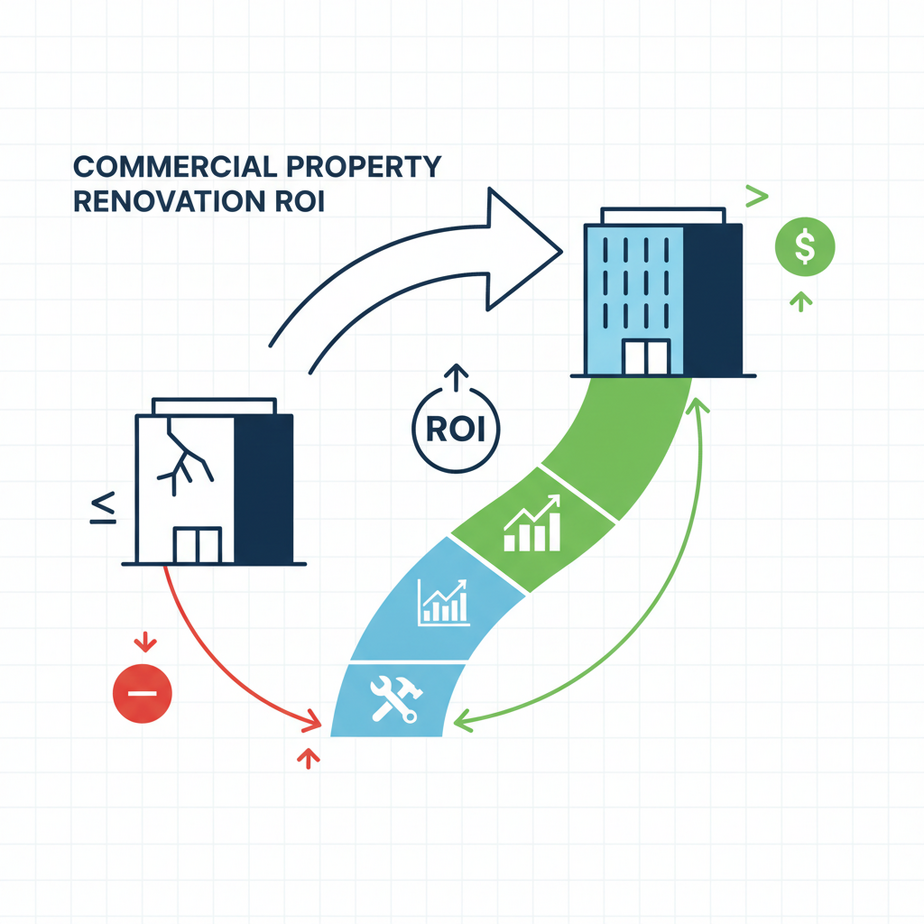
Commercial Property Renovation ROI: Maximize Your Investment
Key Takeaways
- Commercial property renovations can significantly increase ROI through strategic upgrades and improved tenant appeal.
- Timing is crucial; renovate when facing declining tenant satisfaction, market shifts, or to reposition for higher returns.
- Renovations offer tax benefits and can be more cost-effective than new construction, depending on project scope.
- Careful planning and avoiding common mistakes are essential for maximizing ROI and avoiding budget overruns.
In the competitive commercial real estate market, particularly in thriving areas like the San Antonio-Austin corridor, maximizing your return on investment (ROI) is paramount. Whether you’re a seasoned investor, a business owner, or a developer, understanding the potential of commercial property renovation is crucial for long-term success. Prestige 360, serving a 100-mile radius around San Antonio, specializes in helping clients unlock this potential through strategic and impactful interior design and turnkey solutions.
Many owners face the dilemma of aging properties, declining tenant satisfaction, or missed opportunities to capitalize on market trends. The question becomes: how can you transform a stagnant asset into a high-performing investment? This comprehensive guide provides the answers. We’ll explore how to calculate renovation ROI, determine the optimal time to renovate, compare renovation versus new construction, understand the tax advantages, and ultimately, increase your property’s value. We’ll also highlight common pitfalls to avoid, ensuring your renovation project delivers the maximum possible return.
From space planning and tenant improvements to full-scale commercial property repositioning, Prestige 360 offers the expertise to guide you through every step. Let’s dive in and discover how to transform your commercial property into a revenue-generating powerhouse.
Unlocking Maximum Value: Calculating and Improving Commercial Property Renovation ROI
Commercial property renovation ROI (Return on Investment) is the key metric that determines whether your investment is a success. It’s a percentage that compares the cost of the renovation to the profit or value increase generated by that renovation. Understanding how to calculate it and, more importantly, how to improve it is crucial for any business owner, developer, or investor. The basic ROI formula is straightforward: (Net Profit / Cost of Renovation) x 100. However, accurately determining ‘Net Profit’ requires careful consideration of increased revenue, cost savings, and property value appreciation.
For example, consider a retail store renovation. Prestige 360 can help you design a space that increases foot traffic and sales. If a $50,000 renovation leads to a $20,000 increase in annual profit, the ROI is ($20,000 / $50,000) x 100 = 40%. But ROI isn’t just about immediate profit. It’s also about long-term value. A renovation that attracts higher-paying tenants or extends the lifespan of your building also contributes to a higher ROI. External upgrades such as manufactured stone veneer can deliver over 200% ROI. That’s why it’s essential to factor in both short-term gains and long-term appreciation when evaluating your renovation’s success.
Several factors influence your ROI. Cost control is paramount. Unexpected expenses can quickly erode profitability. Careful budgeting and selecting the right contractor are essential. Avoid the common mistake of underestimating repair costs. Strategic design choices also play a significant role. Renovations that enhance curb appeal, improve energy efficiency, or create a more desirable tenant experience will yield a higher return. For instance, upgrading to energy-efficient lighting not only reduces operating costs but also makes your property more attractive to environmentally conscious tenants.
Ultimately, maximizing renovation ROI requires a holistic approach. It’s not just about the lowest bid; it’s about creating a space that generates more income, attracts better tenants, and increases the overall value of your commercial property. Working with a design firm like Prestige 360 ensures your renovation aligns with your business goals and target market, leading to a more substantial and sustainable return on your investment. Be sure to check out our space planning services to ensure you’re maximizing the potential of your property.
Strategic Timing: When is the Optimal Time to Renovate Your Commercial Property?
Knowing when to renovate your commercial property is as important as knowing how. The best time isn’t always obvious and depends on a variety of factors, including market conditions, lease cycles, and the overall condition of your building. Delaying too long can lead to lost revenue and decreased property value, while renovating at the wrong time can disrupt business and negatively impact your bottom line.
One of the primary triggers for renovation is the end of a lease cycle. As tenants move out, it presents an ideal opportunity to upgrade the space to attract new, higher-paying tenants. This is especially true in competitive markets where tenants have more options. A modern, well-designed space can be a significant differentiator. Consider a tenant improvement project that updates the interior, improves the layout, and incorporates modern amenities. This can significantly increase your property’s appeal and justify higher rental rates. Prestige 360 specializes in tenant improvement projects that maximize ROI.
Market trends also play a crucial role. If you notice that competing properties are undergoing renovations and offering more modern amenities, it may be time to upgrade your own property to remain competitive. Staying ahead of the curve is especially important in industries like retail and restaurants, where customer expectations are constantly evolving. For example, a restaurant design that incorporates current trends, such as open kitchens and flexible seating, can attract more customers and increase revenue. See how Prestige 360 can help with your restaurant design.
Another critical factor is the physical condition of your building. If you’re experiencing frequent maintenance issues, outdated systems, or a deteriorating facade, it’s time to consider a renovation. Addressing these issues proactively can prevent more costly repairs down the road and improve the overall safety and appeal of your property. Furthermore, renovations can improve energy efficiency, reducing operating costs and making your property more environmentally friendly. A proactive approach to commercial property renovation can save money and increase property value over time.
Renovate or Rebuild? Weighing the ROI of Commercial Property Renovation vs. New Construction
The decision to renovate an existing commercial property or opt for new construction is a pivotal one, hinging largely on a careful assessment of potential ROI. Both options present unique advantages and disadvantages, and the most profitable path depends heavily on your specific circumstances, budget, and long-term goals. While new construction offers the opportunity to create a space perfectly tailored to your needs, renovation can be a more cost-effective and time-efficient way to achieve similar results.
Renovation generally offers a faster turnaround time compared to new construction. This means less disruption to your business and a quicker return on your investment. Furthermore, renovations often benefit from existing infrastructure, such as utilities and parking, which can significantly reduce costs. However, renovations can also present unforeseen challenges, such as hidden structural issues or outdated building codes that require costly upgrades. It’s crucial to conduct a thorough assessment of the property before committing to a renovation project. Engage Prestige 360 for space planning and a commercial interior design consultation to reveal hidden potential.
New construction, on the other hand, allows for complete customization and the incorporation of the latest technologies and design trends. This can be particularly advantageous for businesses with specific operational requirements or those seeking to create a cutting-edge brand experience. However, new construction projects typically involve higher upfront costs, longer timelines, and more complex permitting processes. The ROI of new construction is often realized over a longer period, as it takes time to attract tenants, establish a customer base, and build brand recognition.
Ultimately, the choice between renovation and new construction depends on a careful evaluation of your budget, timeline, and desired outcome. If you’re looking for a cost-effective and relatively quick way to improve your property and increase its value, renovation may be the better option. However, if you have a more extensive budget and are seeking to create a completely customized space that meets your exact specifications, new construction may be the right choice. In many cases, a strategic renovation can achieve comparable results to new construction at a fraction of the cost, making it a more attractive option for maximizing ROI.
Capitalizing on Savings: Understanding the Tax Benefits of Commercial Property Renovation
One often-overlooked aspect of commercial property renovation is the potential for significant tax benefits. Understanding and leveraging these benefits can substantially improve the overall ROI of your project. The IRS offers various incentives to encourage property owners to invest in their buildings, and taking advantage of these can significantly reduce your tax liability and free up capital for other investments. It is always advised to consult with a tax professional to determine the best strategy for your specific situation.
One of the most common tax benefits associated with commercial property renovation is the ability to depreciate the cost of the improvements over time. Depreciation allows you to deduct a portion of the renovation expenses each year, reducing your taxable income. The specific depreciation schedule depends on the type of improvement and the property’s classification. For example, certain energy-efficient upgrades may qualify for accelerated depreciation or tax credits. This can significantly reduce the after-tax cost of the renovation and improve your overall ROI.
Another potential tax benefit is the ability to deduct certain repair expenses in the year they are incurred. However, it’s important to distinguish between repairs and improvements. Repairs are generally considered to be expenses that maintain the property in its existing condition, while improvements are those that add value or extend the property’s useful life. Repairs are typically deductible in the current year, while improvements must be depreciated over time. Properly classifying your renovation expenses is crucial for maximizing your tax benefits.
Furthermore, certain renovation projects may qualify for specific tax credits or incentives offered by state and local governments. These incentives are often targeted at projects that promote economic development, create jobs, or improve energy efficiency. Researching and applying for these incentives can further reduce the cost of your renovation and improve your overall ROI. Ignoring building codes and compliance can lead to additional costs. By carefully planning your renovation and working with a qualified tax advisor, you can unlock significant tax benefits and maximize the profitability of your investment.
Common Mistakes to Avoid
Commercial property renovations offer significant opportunities for increased value and ROI, but they also come with potential pitfalls. Avoiding these common mistakes can save you time, money, and frustration.
- Underestimating Costs: One of the biggest mistakes is failing to accurately estimate the total cost of the renovation. This includes not only materials and labor but also permits, inspections, and potential unforeseen issues like structural repairs or code violations. Always factor in a contingency budget (10-15%) to cover unexpected expenses.
- Ignoring Building Codes and Compliance: Overlooking building codes, zoning regulations, and ADA (Americans with Disabilities Act) compliance can lead to costly rework and legal issues. Engage with local authorities early in the planning process to ensure your renovation meets all necessary requirements.
- Choosing the Wrong Contractor: Selecting a contractor based solely on price can be a recipe for disaster. Look for a contractor with a proven track record in commercial renovations, positive references, and proper licensing and insurance. A qualified contractor will understand the complexities of commercial projects and help you avoid costly errors. Consider Prestige 360, serving the San Antonio and Austin areas, for your commercial interior design needs.
- Lack of Clear Objectives: Before starting any renovation, clearly define your objectives. What are you hoping to achieve with the renovation? Increased rental income? Improved tenant satisfaction? A more modern brand image? Having clear objectives will guide your design decisions and ensure the renovation aligns with your overall business goals.
- Poor Space Planning & Layout: A poorly designed layout can negatively impact workflow, customer experience, and overall efficiency. Invest in professional space planning services to optimize the use of your space and create a functional and appealing environment. Prestige 360 specializes in space planning and layout design to maximize your commercial property’s potential.
Frequently Asked Questions
What is the 30% rule for renovations?
The 30% rule generally refers to a guideline suggesting that renovation costs should not exceed 30% of the property’s current market value. This helps ensure that the investment in renovations doesn’t overcapitalize the property and maintains a reasonable ROI. Always conduct a thorough cost-benefit analysis before undertaking any major renovation project.
What is a good ROI for commercial property?
A good ROI for commercial property typically ranges from 8% to 12% or higher, depending on the market, property type, and risk factors. This ROI considers factors such as rental income, appreciation, and operating expenses. Aiming for a higher ROI ensures a profitable investment and attractive returns for stakeholders.
What is the average ROI for renovations?
The average ROI for renovations varies widely depending on the type of renovation and the property’s location. Some renovations, like upgrading an exterior with manufactured stone veneer, can yield ROIs as high as 208%. However, more general renovations may have ROIs ranging from 10% to 30%. Carefully consider the potential ROI of each renovation project before investing.
How long does it take to do renovations in a 3,000 sq ft commercial building?
The timeline for renovating a 3,000 sq ft commercial building can vary significantly depending on the scope of work. A basic renovation might take 2-4 weeks, while a more extensive remodel could take several months. Factors like permitting delays, material availability, and the complexity of the design can all impact the project timeline. Engage with a professional like Prestige 360 for accurate project planning and realistic timelines.
How to price a commercial remodel?
Pricing a commercial remodel involves several steps, including defining the scope of work, obtaining multiple contractor bids, and factoring in costs for materials, labor, permits, and potential contingencies. It’s essential to conduct a thorough cost analysis and compare quotes carefully to ensure you’re getting a fair price. Consider using RSMeans data for cost estimation.
What are the tax benefits of commercial property renovation?
Commercial property renovations can offer several tax benefits, including deductions for depreciation, repairs, and energy-efficient upgrades. Section 179 of the IRS code allows businesses to deduct the full purchase price of qualifying equipment and software placed in service during the tax year. Consult with a tax professional to understand the specific tax benefits available for your renovation project.
What is the difference between tenant improvement and a commercial renovation?
Tenant improvements (TI) are renovations made to a commercial space to customize it for a specific tenant’s needs, often paid for by the landlord or a combination of landlord and tenant. Commercial renovations, on the other hand, are broader upgrades to the property that may not be specifically tied to a tenant, such as updating common areas or improving the building’s exterior. Tenant improvements often increase the appeal of the property, which can then positively impact the commercial property renovation ROI.
Conclusion
Maximizing the commercial property renovation ROI requires careful planning, strategic execution, and a keen understanding of market trends. By focusing on high-impact improvements, avoiding common mistakes, and leveraging professional expertise, you can transform your commercial property into a valuable asset that attracts tenants, increases revenue, and enhances your brand experience. Whether you’re repositioning an existing property or designing a new space, a well-executed renovation can significantly boost your bottom line.
Prestige 360 is your trusted partner for commercial interior design and turnkey solutions in the San Antonio, Austin, and Texas Hill Country region. Our team of experienced professionals can guide you through every step of the renovation process, from initial concept to final completion. Don’t leave your commercial property renovation ROI to chance. Schedule a Free Consultation today and discover how we can help you achieve your business goals.