Insights
How to Choose a Commercial General Contractor
July 26, 2026
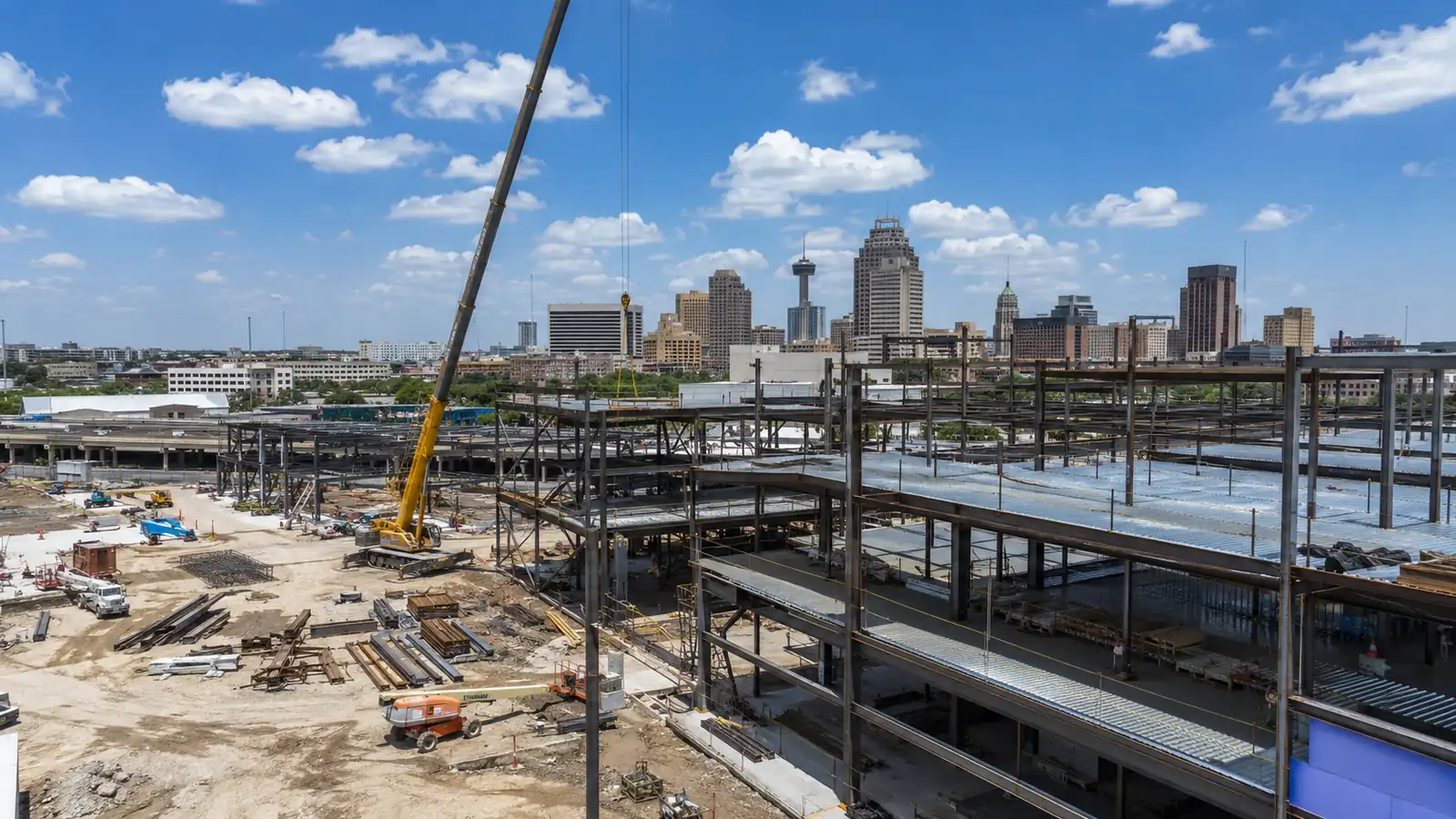
Choosing a commercial general contractor is one of the most consequential decisions in any commercial construction or buildout project. This guide covers what a commercial general contractor actually does, how the selection and bidding process works, the documents and permits involved, and how to structure a contract that protects the business owner through construction. It applies to any commercial space nationally, whether office, retail, restaurant, warehouse, or medical, with the process and terminology largely consistent across markets even as pricing and local permitting rules vary.
Quick Answer: A commercial general contractor manages every trade and subcontractor on a construction project under a single contract, holding responsibility for schedule, budget, and quality. The selection process typically involves defining scope, soliciting bids from three or more contractors, verifying licensing and insurance, and structuring a contract with a clear draw schedule tied to project milestones. The two dominant delivery models are traditional design-bid-build, where design fully completes before construction bidding, and design-build, where one firm handles both under a single contract to compress timeline and centralize accountability.
What a Commercial General Contractor Actually Does
The term applies across a wide range of project sizes and complexity, from a small single-tenant retail buildout to a multi-story office tower, but the underlying function stays consistent: one contracted party responsible for turning a design into a finished, code-compliant, occupiable space. Understanding this role clearly before beginning a project helps a business owner ask better questions during the selection process and set realistic expectations for what the contractor is, and is not, responsible for once a contract is signed.
A commercial general contractor is the single point of accountability for a construction project, responsible for coordinating every trade, subcontractor, and supplier involved, managing the project schedule, and delivering a finished space that meets the agreed specifications, budget, and code requirements. Rather than a business owner hiring an electrician, a plumber, a drywall crew, and a flooring installer separately and coordinating the sequence themselves, the general contractor absorbs that coordination burden and carries the risk of one trade's delay cascading into another's.
Beyond scheduling, a general contractor's core value is risk transfer and quality control. The GC is contractually responsible for the finished product meeting the specification regardless of which specific subcontractor performed a given piece of work, meaning the owner has one party to hold accountable rather than needing to sort out fault among multiple independent trades if something goes wrong. A general contractor also typically manages the permit process, coordinates inspections with the local building department, and handles the day-to-day site supervision that keeps a project moving without requiring the owner's constant on-site involvement.
The Contractor Selection Process
Selecting a commercial general contractor should start well before requesting price quotes, with a clear scope of work that describes intended use, approximate square footage, known equipment or specialty system needs, and any timeline constraints tied to a lease start date or business opening target. A vague scope produces vague, incomparable bids, and the time invested in a clear scope package before reaching out to contractors pays for itself many times over during the bid comparison process.
Most commercial buyers should solicit bids from at least three general contractors, verify each holds appropriate insurance and, where applicable, a state contractor license, and check references from at least two comparable past projects, ideally including a project of similar size and use type to the one being planned. A contractor's willingness to provide references, and the quality of those references when contacted directly rather than reading a canned testimonial, is one of the more reliable signals of how that contractor actually performs once a contract is signed and the daily pressures of an active job site set in.
Industry associations and trade organizations, such as the Associated Builders and Contractors (ABC) or a local chapter of the Associated General Contractors of America (AGC), maintain member directories that can be a useful starting point for identifying established, professionally affiliated firms in a given market, since membership in these organizations typically requires meeting baseline standards around insurance, safety practices, and financial stability that an unaffiliated contractor is not required to demonstrate.
How to Evaluate Competing Bids
Comparing general contractor bids requires more than lining up bottom-line totals side by side. A thorough comparison examines what allowances each bid includes for finish selections not yet finalized, such as flooring, lighting, and paint, since a lower total bid frequently reflects a lower finish allowance rather than a genuinely more efficient price for identical work. It also requires confirming each bid covers the same scope of work, since one contractor may have included site work or utility upgrades that another quietly excluded, assuming the owner would handle that scope separately.
Beyond price, evaluating a contractor's proposed schedule against the other bidders is worth serious attention. A bid that promises a dramatically faster timeline than its competitors deserves a direct question about how that timeline is achievable, since an unrealistically aggressive schedule is a common source of quality shortcuts or unplanned overtime costs that surface as change orders later in the project. A contractor's communication style during the bidding process itself, responsiveness to questions, clarity of the written proposal, and willingness to walk through the scope in person, is often a preview of how that contractor will communicate once the project is underway and problems inevitably arise.
What Belongs in a Commercial Construction Contract
A well-structured commercial construction contract should include a detailed scope of work referencing specific drawings and specifications, a clear price and payment schedule tied to defined milestones, a project timeline with a substantial completion date, and language addressing how change orders will be documented and approved. Standard industry contract forms, such as those published by the American Institute of Architects (AIA), provide a well-tested starting framework that many commercial contractors and owners use rather than drafting custom contract language from scratch.
Retainage, typically 5 to 10 percent of each progress payment withheld until final completion and inspection, is a standard protective mechanism that gives the owner leverage to ensure punch list items are actually completed after the bulk of construction wraps up. Warranty terms should also be explicit in the contract, specifying what workmanship warranty period the contractor provides beyond manufacturer warranties on materials and equipment, since a contract silent on this point defaults to whatever minimum standard applies under state law, which may be less generous than what a reputable contractor would offer voluntarily.
Permits and Inspections
Nearly every commercial construction or significant renovation project requires a building permit, and often separate trade permits for electrical, plumbing, and mechanical work performed as part of the project. The general contractor typically manages this permitting process, submitting construction documents to the local building department, responding to plan review comments, and scheduling the sequence of inspections required as construction progresses, from foundation and framing inspections through rough-in inspections for mechanical, electrical, and plumbing systems, to a final inspection before a certificate of occupancy is issued.
A certificate of occupancy is the document a business legally needs before opening to the public or beginning operations in a newly constructed or renovated commercial space, and it is issued only after the building department confirms the completed construction matches approved plans and meets all applicable code requirements. Planning backward from a target opening date, and accounting for realistic permit review and inspection scheduling time, avoids the common and costly mistake of signing a lease or announcing an opening date before confirming a realistic construction and permitting timeline actually supports it.
How Subcontractor Management Works
A general contractor rarely performs every trade's work with their own direct employees, instead assembling a team of subcontractors, licensed electricians, plumbers, HVAC installers, drywall crews, flooring installers, and painters, each responsible for their specific scope under the general contractor's overall coordination and schedule. The quality of a general contractor's subcontractor relationships, built over years of repeat work together, is a significant and often underappreciated factor in project success, since an established GC-subcontractor relationship tends to produce smoother communication, more reliable scheduling, and fewer disputes than a general contractor assembling an unfamiliar crew for each new project.
Owners should understand that their contract is with the general contractor, not directly with individual subcontractors, meaning disputes over a specific trade's work are the general contractor's responsibility to resolve, not something the owner needs to negotiate directly with the subcontractor. This is one of the central value propositions of hiring a general contractor rather than self-managing individual trades directly, since it consolidates risk and accountability into a single contractual relationship rather than spreading it across many independent parties.
The Phases of a Commercial Construction Project
A typical commercial construction project moves through several distinct phases: pre-construction, where scope, budget, and design are finalized and permits are submitted; mobilization, where the site is prepared and initial demolition or site work begins; rough construction, covering framing, structural work, and rough-in of mechanical, electrical, and plumbing systems; finish work, covering drywall, flooring, painting, fixtures, and equipment installation; and closeout, covering final inspections, punch list resolution, and certificate of occupancy issuance.
Each phase typically triggers a corresponding inspection or milestone payment, which is why a clear, milestone-based payment schedule tied to these phases, rather than an arbitrary calendar-based payment schedule, better protects both the contractor's cash flow needs and the owner's interest in only paying for verified, completed work. Understanding this phase structure also helps an owner anticipate when disruptive, noisy work like demolition and framing will occur versus quieter finish work later in the project, which matters for businesses operating in adjacent spaces during construction.
Common Mistakes Business Owners Make
The most common and costly mistake business owners make is signing a lease with a firm opening date before confirming a realistic construction timeline with a contractor, creating pressure to compress a schedule in ways that add cost and risk quality. A close second is failing to build a reasonable contingency into the project budget, treating the initial quoted price as a hard ceiling rather than a starting point that inevitably shifts once existing conditions are uncovered or finish selections are finalized.
Underestimating the importance of a detailed, written scope before requesting bids is another frequent misstep, since a loosely defined scope invites both lowball bids that expand through change orders later and genuine confusion about what was actually agreed to. Finally, many first-time commercial owners underestimate how much value a design-build or otherwise integrated delivery model can add compared to managing architect and contractor as fully separate, potentially misaligned parties, particularly for a business without in-house construction management expertise to bridge that gap themselves.
A related mistake is selecting a contractor primarily on price without weighing experience with the specific building type or use category involved. A contractor who has built dozens of standard office buildouts may still be a poor fit for a restaurant with commercial kitchen equipment or a medical space with specialized infection-control requirements, since the code knowledge, subcontractor relationships, and sequencing experience required differ meaningfully by use type. Asking a prospective contractor directly how many projects of the specific use type being planned they have completed in the past two to three years is a more useful diligence question than years in business alone, since general commercial experience does not automatically transfer to every specialized building type.
Insurance and Bonding Explained
General liability insurance protects against third-party claims of property damage or bodily injury arising from the construction work, and a reputable commercial general contractor should carry coverage in the millions of dollars for any project of meaningful size, well beyond the minimums that might satisfy a small residential remodel. Owners should request a certificate of insurance directly from the contractor's insurance carrier, not simply take the contractor's word for coverage, and should confirm the policy is active for the full duration of the project rather than relying on a certificate issued months before construction actually begins.
Workers' compensation insurance, covering the contractor's own employees and, depending on state law, potentially subcontractors as well, protects the owner from liability if a worker is injured on site during construction. Beyond these two baseline coverages, larger commercial projects frequently require builder's risk insurance, a policy covering the structure itself against damage from fire, weather, or other covered events while under construction, before the owner's standard property insurance policy would otherwise apply once the building is complete and occupied.
Bonding operates as a separate layer of protection from insurance, guaranteeing contractual performance rather than covering accidental damage or injury. A performance bond, issued by a surety company, guarantees that if the general contractor fails to complete the project as contracted, the surety will step in to ensure completion, either by funding the original contractor's completion or by hiring a replacement contractor. A payment bond similarly guarantees that subcontractors and material suppliers will be paid even if the general contractor becomes insolvent partway through the project, which protects the owner from the mechanic's lien exposure that unpaid subcontractors can otherwise place against the property. While bonding is standard practice on public projects and larger private commercial work, it is negotiable on smaller commercial buildouts and worth discussing directly with a prospective contractor for any project involving meaningful upfront deposits or a contractor whose financial stability the owner cannot independently verify.
Managing Communication Through Construction
The single most common source of owner frustration during a commercial construction project is not cost or even schedule delay in isolation, but a breakdown in communication that leaves the owner uncertain what is actually happening on site or why a delay or cost change occurred. Establishing a clear communication rhythm at the outset of the project, typically a weekly progress meeting or written update covering completed work, upcoming milestones, and any emerging issues, prevents small misunderstandings from compounding into larger disputes later in the project.
Many established commercial general contractors now use project management software that gives owners direct visibility into schedule, budget, photos of completed work, and outstanding decisions awaiting the owner's input, reducing the reliance on informal phone calls or site visits to stay current on project status. Owners evaluating contractors during the bidding process should ask directly what tools and cadence a given contractor uses to keep clients informed, since a contractor without a structured communication process is more likely to leave the owner surprised by developments that a more disciplined communication approach would have flagged well in advance.
It is equally important for the owner to designate a single decision-maker on their own side of the relationship, someone empowered to approve finish selections, change orders, and schedule adjustments without needing to consult a committee each time a decision is needed. Projects with an unclear or slow-moving owner-side decision process frequently experience delays that have nothing to do with the contractor's performance but instead stem from finish selections or change order approvals sitting unresolved while the broader schedule waits, a dynamic worth planning around before construction begins rather than discovering mid-project.
Key Takeaways
- A general contractor consolidates accountability for schedule, budget, and quality across every trade into a single contractual relationship.
- Soliciting at least three bids against an identical, clearly defined scope is the most reliable way to compare pricing fairly.
- Contracts should specify a milestone-based payment schedule, retainage, warranty terms, and a written change-order approval process.
- Permitting and inspection scheduling should be planned backward from any firm opening date, not treated as an afterthought.
- Design-build delivery compresses timeline and centralizes accountability compared to managing architect and contractor separately.
Frequently Asked Questions
What does a commercial general contractor actually do?
A general contractor coordinates every trade and subcontractor on a project, manages schedule and budget, handles permitting and inspections, and holds single-point accountability for the finished result.
How many bids should I get for a commercial construction project?
At least three bids from contractors evaluated against an identical, clearly defined scope of work, with references checked from comparable past projects.
What is the difference between design-bid-build and design-build?
Design-bid-build completes design fully before bidding construction separately. Design-build combines both under one contract, compressing timeline and centralizing accountability with one firm.
What should a commercial construction contract include?
A detailed scope referencing specific drawings, a milestone-based payment schedule with retainage, a completion timeline, warranty terms, and a written change-order approval process.
Do I need a certificate of occupancy before opening?
Yes. A certificate of occupancy is required before legally opening or operating in a newly constructed or renovated commercial space, issued after final inspection confirms code compliance.
Planning a commercial buildout? Talk to Prestige 360 Design about a design-build approach for your San Antonio project.
Related Services