Insights
Commercial Landscaping Cost in San Antonio
July 26, 2026
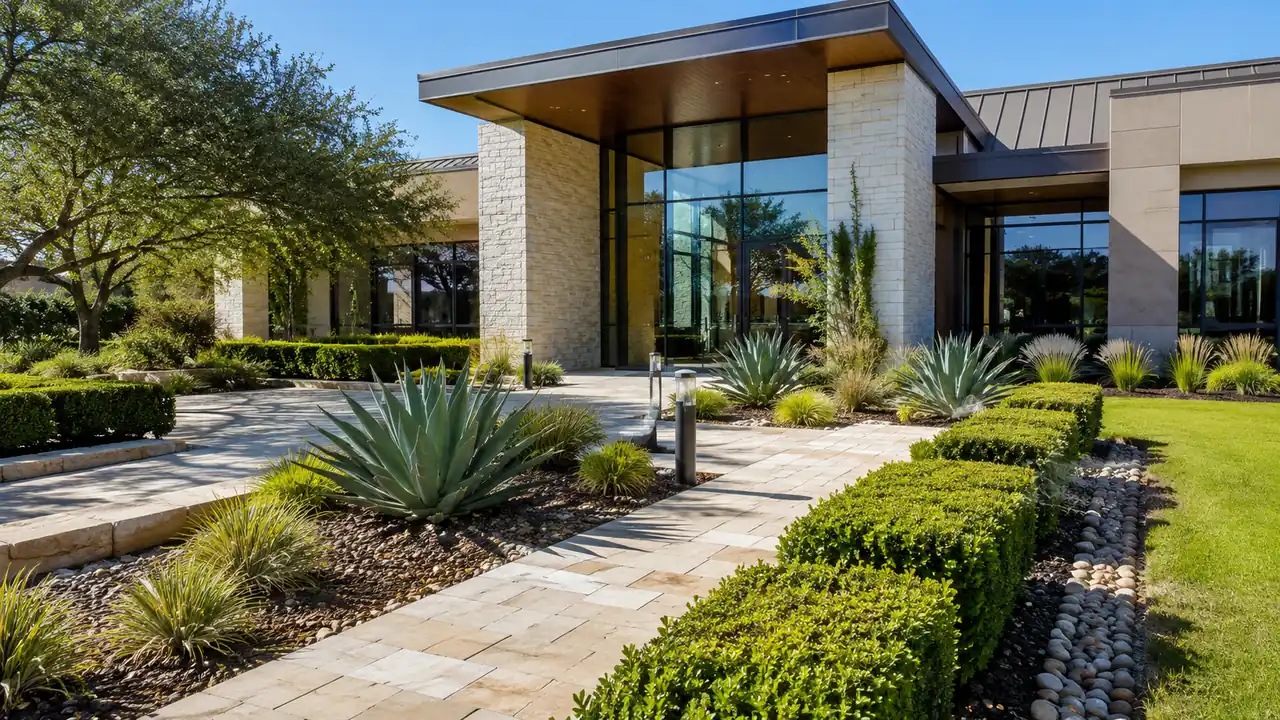
Commercial landscaping is one of the first things a customer notices about a San Antonio business, and one of the easiest budget items to underestimate when planning a new commercial property or renovating an existing one. This guide breaks down real commercial landscaping costs in San Antonio in 2026, from routine maintenance contracts to full landscape installation, and what drives the price up or down for a commercial property in this specific climate and market.
Quick Answer: Routine commercial landscaping maintenance in San Antonio typically runs $100 to $200 per month for a standard-size commercial property, or $50 to $150 per week for basic lawn care on a smaller lot. Weed control treatments run $80 to $300 per visit depending on property size. New landscape installation, including planting, hardscaping, and irrigation, costs considerably more and varies widely based on design scope, plant selection, and site conditions. Labor rates for landscaping and related construction work run roughly $50 to $120 per hour nationally, a range that directly affects both maintenance contract pricing and installation project bids in the San Antonio market.
Routine Maintenance Cost Breakdown
Routine commercial landscaping maintenance in San Antonio typically runs $100 to $200 per month for a standard-size commercial property, covering mowing, edging, trimming, and basic seasonal cleanup on a regular visit schedule. Smaller commercial lots billed on a per-visit or weekly basis often run $50 to $150 per week, with the exact figure depending heavily on lot size, the density and complexity of existing landscaping features, and how frequently the property requires service during San Antonio's long growing season, which extends considerably longer than in cooler climates further north.
Weed control treatments, typically billed separately from routine mowing and trimming, run $80 to $300 per visit depending on property size and the specific product and application method used. A property with extensive planting beds or a larger footprint of non-turf landscaped area generally sits at the higher end of this range, since weed control in planting beds requires more careful, targeted application than a straightforward turf treatment covering open lawn area.
New Landscape Installation Cost
New landscape installation for a commercial property, covering plant material, hardscaping elements like walkways or retaining walls, mulch, and initial grading, varies considerably more than routine maintenance since it depends heavily on design scope and the specific plant and material selections chosen. Labor rates for landscaping and related site work run roughly $50 to $120 per hour nationally, a range that directly shapes installation project bids alongside the material costs specific to the design.
A basic commercial landscape installation, foundation plantings around a building entrance and parking lot islands with standard, low-maintenance plant selections, sits toward the lower end of typical commercial installation budgets. A more elaborate installation involving specimen trees, extensive hardscaping, water features, or decorative lighting integrated into the landscape design can run several times higher, and a business should request a detailed line-item proposal from any landscape contractor rather than accepting a single bundled total that makes it difficult to identify which specific design elements are driving the overall cost up.
Irrigation System Cost and Considerations
Backflow prevention device testing, a requirement tied to irrigation systems connected to a municipal water supply, is a small but recurring annual cost that a commercial property owner should budget for as part of overall irrigation ownership cost, since San Antonio requires this testing to protect the potable water supply from potential contamination through the irrigation system. This testing is typically inexpensive on its own but is worth confirming as either included in a maintenance contract or billed as a clearly identified separate line item, since it is easy for a property owner to overlook until a compliance notice arrives, at which point a lapsed test can create an unnecessary scramble to schedule a technician on short notice.
San Antonio's climate, hot summers with periods of genuine drought stress, makes a properly designed irrigation system a near-necessity for maintaining healthy commercial landscaping year-round rather than an optional upgrade. Irrigation installation cost depends on system type, a basic zone-based sprinkler system versus a more water-efficient drip irrigation system for planting beds, and on property size and the complexity of the planting layout being served.
San Antonio Water System (SAWS) maintains specific watering restrictions and rebate programs relevant to commercial irrigation planning, and a commercial property owner should factor current SAWS watering schedule restrictions into both irrigation system design and ongoing maintenance contract expectations, since a system designed without accounting for restricted watering days may struggle to keep landscaping healthy within the permitted watering windows during peak summer heat. Smart irrigation controllers that adjust watering schedules automatically based on weather data and soil moisture sensors have become increasingly standard on new commercial installations specifically because they help properties stay both within SAWS restrictions and within a reasonable water utility budget simultaneously.
How San Antonio's Climate Affects Cost
San Antonio's climate zone, hot and often dry with periods of intense summer heat well above 100 degrees, means plant selection has a direct and meaningful impact on long-term maintenance cost, not just the upfront installation price. A landscape design built around plant species poorly suited to this climate requires more frequent replacement, more intensive irrigation, and more active intervention to keep looking presentable, all of which add up to a higher effective cost over several years of ownership even if the initial installation price looked competitive.
Native and climate-adapted plant species, Texas sage, yaupon holly, and various native grasses among common commercial landscaping choices in this region, generally require less water and less intensive maintenance once established than non-native ornamental species chosen primarily for a specific aesthetic without regard to climate fit. A landscape designer or contractor with genuine, demonstrated local experience will typically default toward these climate-appropriate selections for the bulk of a commercial planting plan, reserving less climate-adapted species for smaller accent areas where their higher maintenance cost is more limited in scope and easier to justify against the visual impact they provide.
Xeriscaping and Drought-Tolerant Design
Xeriscaping, a landscaping approach specifically designed to minimize water use through plant selection, mulching, and efficient irrigation design, has grown increasingly common for commercial properties in San Antonio both as a cost-management strategy and in response to periodic drought restrictions that can limit conventional irrigation. A well-executed xeriscape design does not need to sacrifice visual appeal; modern xeriscape approaches use a genuine variety of texture, color, and seasonal interest through drought-tolerant plant selection rather than defaulting to gravel and cactus alone.
The upfront cost of a xeriscape installation is often comparable to, or sometimes modestly higher than, a conventional landscape installation due to more specialized plant material and hardscaping elements, but the long-term maintenance and water cost savings frequently make it the more economical choice over a multi-year ownership horizon, particularly given San Antonio's periodic watering restrictions and the trajectory of water utility costs in Texas generally. A commercial property owner planning to hold the property long-term should weigh this multi-year total cost comparison, not just the initial installation bid, when deciding between a conventional and xeriscape-oriented design approach, a decision best made with a genuine multi-year cost projection in hand rather than upfront price alone.
How Maintenance Contracts Are Structured
Commercial landscaping maintenance contracts in San Antonio are typically structured as either a flat monthly fee covering a defined scope of regular services, or a per-visit billing arrangement for properties with more variable or seasonal needs. A flat monthly contract offers budget predictability, which many commercial property owners and managers prefer for straightforward accounting purposes, while per-visit billing can better match cost to actual need for a property with highly seasonal landscaping demands.
Contract scope should specify exactly what is included, mowing frequency, edging, trimming, seasonal color rotation if applicable, irrigation system checks, and fertilization or pest treatment, since a vague scope invites disputes later about whether a specific service was actually included in the base contract price or should be billed as an add-on. Requesting a detailed written scope before signing any commercial maintenance contract, and confirming the same scope language is used consistently across competing bids, is the most reliable way to compare pricing fairly across multiple landscaping companies.
Commercial Property vs. HOA Landscaping Needs
Multi-tenant commercial properties, a strip retail center or a mixed-use office building with several distinct tenants, add another layer of complexity around who is responsible for what landscaping scope. A property manager or landlord typically maintains common area landscaping directly, while individual tenant lease agreements may or may not include specific landscaping obligations near that tenant's own entrance or signage area. Clarifying this division of responsibility explicitly in lease language, rather than leaving it ambiguous, avoids the common dispute where a tenant assumes the landlord's landscaping contract covers an area the landlord's contract actually excludes, or vice versa, a gap that often only becomes visible once a specific area has already been neglected for months.
Commercial landscaping differs meaningfully from residential or HOA-managed landscaping in several practical respects that affect both cost and contractor selection. Commercial properties typically require landscaping crews to work around active business hours, often scheduling more disruptive work like major pruning or irrigation repairs for early morning or off-peak periods to minimize disruption to customers and employees, a scheduling consideration that residential landscaping generally does not need to accommodate to the same degree.
Commercial properties also carry greater liability exposure around landscaping-related safety issues, tripping hazards from uneven walkways bordered by landscaping, visibility obstructions from overgrown shrubs near parking lot entrances or exits, that a maintenance contract should explicitly address through regular inspection and prompt correction. A landscaping company with genuine commercial property experience will typically flag these liability-relevant issues proactively as part of routine service, rather than only addressing what is explicitly listed in the maintenance contract scope, a meaningful practical difference from a contractor whose primary experience is residential lawn care. Insurance coverage is a related consideration worth confirming directly: a commercial landscaping contractor should carry general liability insurance sufficient to cover potential property damage or injury claims arising from their work on a business's premises, and a property manager should request proof of this coverage before signing any commercial maintenance agreement.
Seasonal Planning for the San Antonio Growing Cycle
San Antonio's growing season extends considerably longer than in cooler climates, generally running from early spring through late fall with only a short winter dormant period, which means a commercial maintenance schedule genuinely needs more frequent service during peak growing months than a flat year-round visit frequency would provide. Spring and early summer typically require the most intensive mowing and trimming frequency as growth accelerates, while late summer's peak heat often shifts maintenance priority toward irrigation monitoring and heat-stress management over pure growth control, since many plant species genuinely slow their growth rate during the hottest weeks even as their water needs increase.
Fall cleanup and winter preparation, while less dramatic in San Antonio than in colder climates, still matters for a commercial property, covering leaf removal from deciduous trees, a final fertilization application timed to support root development during the cooler months, and any pruning that is best performed during dormancy rather than during active growth. A maintenance contract that adjusts visit frequency and service focus seasonally, rather than applying an identical scope of work every month regardless of season, both serves the landscaping better and can represent a genuine cost efficiency compared to paying for unnecessarily frequent service during slower growth periods.
Seasonal color rotation, planting annual flowering plants that are swapped out several times per year to maintain visual interest at building entrances and other high-visibility areas, is a specific line item worth clarifying in any commercial contract, since it is a meaningfully different service, and cost, than standard perennial and shrub maintenance. A business prioritizing a polished, ever-changing storefront appearance should budget for this seasonal color service explicitly rather than assuming it is automatically bundled into a standard maintenance quote.
Commercial Tree Care and Removal
Mature trees on a commercial property represent both a valuable amenity, providing shade and curb appeal, and a genuine liability and maintenance consideration that a general landscaping maintenance contract does not always fully cover. Tree trimming and pruning for health and safety, removing dead or damaged limbs that could pose a hazard to customers, vehicles, or the building itself, is typically billed separately from routine landscaping maintenance and should be scheduled on a regular inspection cycle rather than only addressed reactively after a limb has already fallen or a problem has become visually obvious.
Tree removal, when a tree has died, become structurally unstable, or needs to be cleared for a construction or renovation project, carries a meaningfully higher cost than routine trimming and often requires specialized equipment and, depending on the tree's size and location relative to structures or power lines, a specialized removal crew rather than a standard landscaping maintenance company. San Antonio has specific tree preservation ordinances that can apply to certain protected tree species and sizes, meaning a commercial property owner planning tree removal, particularly as part of a larger construction or site redevelopment project, should confirm whether a permit or arborist review is required before removal begins, since removing a protected tree without proper authorization can result in significant fines.
Root systems from mature trees near a building's foundation, parking lot pavement, or underground utilities can also become a genuine maintenance and cost concern over time, as roots can cause pavement heaving or, in more serious cases, foundation issues. A commercial property owner with mature trees close to structures or pavement should factor periodic root inspection into their landscaping maintenance plan, since addressing a developing root issue early is considerably less expensive than the pavement or foundation repair required once the problem has progressed significantly.
Getting Accurate Landscaping Bids
Getting comparable bids from multiple San Antonio commercial landscaping companies starts with providing each bidder the same basic property information: total landscaped area, current plant inventory or a site visit to assess it directly, and a clear statement of desired service frequency and scope. A landscaping company visiting the property in person to prepare a bid, rather than quoting a price based solely on a phone conversation or satellite imagery, generally produces a more accurate and more reliable quote, since many cost-relevant details, slope, soil condition, existing irrigation infrastructure, are difficult to assess accurately without an actual site visit, and a bid built on incomplete information tends to shift once the contractor's crew arrives and discovers conditions the initial estimate did not account for, which is why an in-person walkthrough is worth insisting on.
Beyond the base price, it is worth asking each bidding company directly about their approach to plant replacement when something dies or is damaged, whether replacement is included in the standard contract or billed separately, since plant loss is a normal and expected part of commercial landscaping over time, particularly during an unusually hot or dry stretch of weather, and a contract silent on this point can lead to unexpected additional charges when a straightforward plant replacement becomes necessary, a scenario worth avoiding by simply asking the question directly before signing.
Key Takeaways
- Routine commercial landscaping maintenance in San Antonio runs $100-$200/month, or $50-$150/week for smaller lots.
- New landscape installation cost varies widely based on design scope, plant selection, and hardscaping elements.
- San Antonio's climate makes properly designed irrigation and climate-adapted plant selection genuinely cost-relevant, not optional.
- Xeriscaping often costs comparably upfront but saves meaningfully on water and maintenance over a multi-year horizon.
- Commercial maintenance contracts should specify exact scope in writing to allow fair comparison across bids.
Frequently Asked Questions
How much does commercial landscaping maintenance cost in San Antonio?
Routine maintenance typically runs $100-$200 per month for a standard commercial property, or $50-$150 per week for smaller lots billed weekly.
Is xeriscaping cheaper than traditional landscaping in San Antonio?
Upfront cost is often comparable, but xeriscaping typically saves significantly on water and maintenance costs over a multi-year ownership horizon.
Do I need a special irrigation system for San Antonio's climate?
A properly designed irrigation system, ideally with smart controllers, is important given San Antonio's heat and periodic SAWS watering restrictions.
What should a commercial landscaping contract include?
A detailed written scope specifying mowing frequency, edging, trimming, irrigation checks, and any fertilization or pest treatment included in the base price.
Planning a new commercial buildout with exterior landscaping needs? Talk to Prestige 360 Design about coordinating your landscape design with the rest of your project.
Related Services