Insights
Commercial Office Furniture Guide: How to Plan Procurement
July 26, 2026
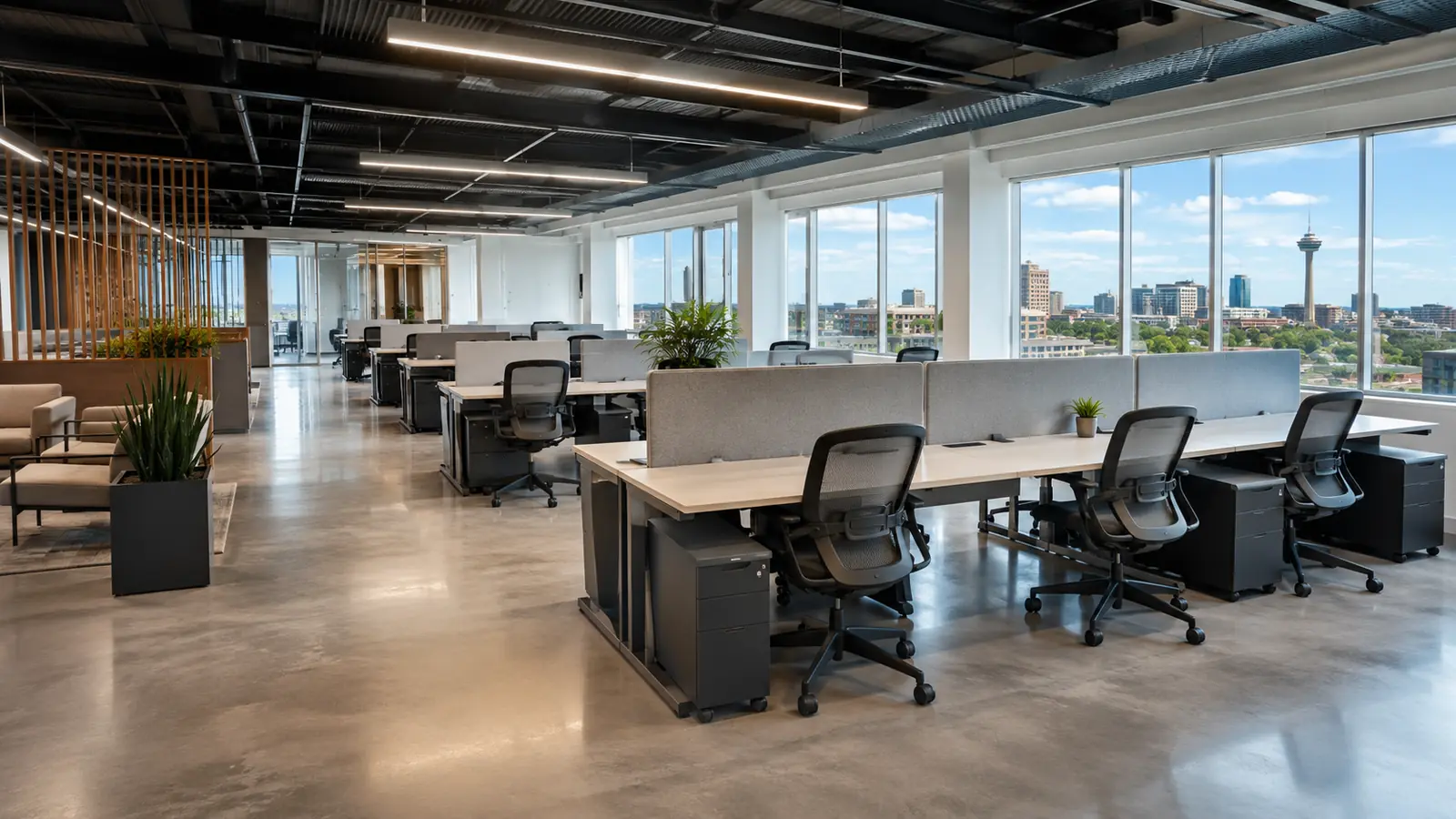
Planning commercial office furniture is a headcount and workflow exercise before it is ever a shopping exercise, and treating it as a shopping exercise from the start, browsing catalogs and comparing finishes before the underlying plan exists, is why so many furniture budgets run over their original estimate. This guide walks through how to plan a commercial furniture procurement the way a design-build team actually approaches it: headcount and growth first, workflow and adjacency second, brand and finish last.
Quick Answer: Plan commercial office furniture in three steps, in this order: first, confirm actual headcount today and realistic growth over the lease term, since furniture ordered for today's headcount alone is the most common reason a business outgrows its space within two years. Second, map furniture to actual workflow, collaborative teams need different furniture than focused individual work, and getting this wrong produces expensive furniture nobody uses the way it was designed for. Third, and only third, decide on brand, new versus remanufactured, and finish. Skipping straight to brand selection without confirming headcount and workflow first is the most common reason furniture budgets run over or need mid-project changes.
Step One: Plan for Headcount and Growth
Furniture ordered for exactly today's headcount, with no allowance for growth, is one of the most common and most expensive planning mistakes on a commercial buildout. A business signing a five-year lease and furnishing for its exact current headcount will very likely need additional furniture within the lease term, and ordering that addition later, potentially from a different product line if the original is discontinued, rarely matches the original furniture cleanly. The better approach is planning furniture procurement in two phases from the start: an initial order sized to current headcount plus a realistic near-term growth allowance, and a documented specification, exact brand, model, and finish, held in reserve so a second phase order matches the first even if it is placed a year or two later.
The growth allowance itself needs to be grounded in an actual hiring plan rather than an optimistic guess. A business with a documented plan to add five employees in year one and eight more in year two should furnish closer to that trajectory than to current headcount alone, while a business with no concrete hiring plan is better served furnishing closer to current needs and accepting that a second phase order may require some finish flexibility later. The mistake in either direction, over-furnishing for growth that does not materialize or under-furnishing for growth that happens faster than expected, both carry real cost: unused furniture sitting in storage on one side, and a scramble to furnish new hires with mismatched or rush-ordered furniture on the other.
Step Two: Match Furniture to Actual Workflow
| Work Style | Furniture Implication |
|---|---|
| Heads-down individual focused work | Enclosed or higher-panel workstations, sound-dampening consideration |
| Collaborative team-based work | Lower panels or benching systems, shared work surfaces, adjacent breakout seating |
| Hybrid or hot-desking arrangement | Flexible, non-assigned desking, lockers for personal storage, booking system integration |
| Client-facing sales or account teams | Presentable, higher-finish furniture near reception and meeting areas |
| Call center or high-density data entry | Compact, efficient benching, acoustic separation, cable management priority |
A company that skips this mapping and buys a uniform furniture standard for every department frequently discovers, after move-in, that the enclosed workstations bought for the whole floor frustrate the collaborative marketing team while the open benching bought for cost savings frustrates the focused finance team working with confidential documents. Furniture selected against actual workflow, department by department, avoids this mismatch from the start.
Gathering this information does not require an elaborate study. A short conversation with each department lead about how their team actually works day to day, how often they collaborate versus work independently, whether they handle confidential material, whether clients visit their area, produces enough real information to map furniture correctly. Skipping this conversation and defaulting to whatever furniture standard the previous office used, or whatever a furniture catalog presents as the modern standard, is how a mismatch between furniture and actual work happens in the first place. A middle path many growing companies use successfully is furnishing to a moderate growth allowance while holding the balance of the space as flexible, unfurnished square footage that can accept furniture on short notice from the same locked specification, rather than either fully furnishing or fully leaving that space unplanned.
New, Remanufactured, or Used: Deciding by Category
The new-versus-remanufactured-versus-used decision does not have to be uniform across an entire furniture order, and treating it category by category typically produces the best value. Task chairs, given how much daily use and mechanical wear they take, are worth buying new or high-quality remanufactured from a premium brand rather than the lowest-cost used option. Desks and worksurfaces, which take far less mechanical wear, are strong candidates for quality used or remanufactured purchase at meaningful savings. Reception and client-facing furniture is worth prioritizing new, since visible wear or a mismatched finish in the first impression area carries a cost beyond the furniture itself.
Steelcase vs. Herman Miller vs. Mid-Market Brands
Steelcase is the larger company by revenue with the broadest product portfolio and a historically research-driven approach to workplace furniture design, with deep investment in ergonomic and workplace behavior research feeding directly into product development. Herman Miller, now part of MillerKnoll, built its reputation on design-forward, iconic products, with the Aeron chair among the most recognized pieces of office furniture made and a design philosophy that treats furniture as much as an aesthetic statement as a functional tool. Both brands are consistently rated among the strongest for proven ergonomic support and long-term durability, and the practical choice between them for most commercial buyers comes down to dealer relationship and specific product fit rather than a meaningful quality gap between the two.
Mid-market brands, sold new at a lower price point than either premium brand, can be a reasonable choice for lower-wear categories like desks and storage, but rarely match premium brand chairs for long-term mechanism durability under daily commercial use. The gap shows up specifically in the seating mechanism, the tilt, recline, and height-adjustment hardware inside a chair, which takes constant mechanical stress in daily use and is where premium brands most consistently outperform mid-market alternatives over a multi-year ownership period. For desks, storage, and other lower-wear furniture, the gap between premium and mid-market brands narrows considerably, which is why a mixed-brand strategy, premium seating paired with mid-market or remanufactured desking, is a common and financially sensible approach rather than a compromise.
The Procurement Process, Step by Step
- Finalize headcount and space plan, including a documented growth allowance grounded in an actual hiring plan rather than a rough guess.
- Map departments and work styles to furniture categories, gathered through short conversations with department leads rather than assumed from a generic office standard.
- Decide new, remanufactured, or used by category, not uniformly across the whole order, prioritizing durability spend on the highest-wear items like seating.
- Select a dealer and confirm BIFMA certification for the specific product lines being ordered, not just the brand's general reputation.
- Place the order against a locked specification document, brand, model, fabric, and finish, that can be referenced for any future phase two order without re-specifying from scratch.
- Schedule delivery and installation against the construction and certificate of occupancy timeline, staged in phases rather than arriving all at once, and not treated as an independent afterthought once construction wraps.
Acoustic Planning: The Furniture Decision Most Layouts Skip
Open-plan and benching furniture systems, while cost-effective and space-efficient in terms of raw square footage per employee, introduce an acoustic problem that a floor plan alone does not solve: sound travels further and more disruptively across low or no-panel workstations than across enclosed cubicles, and this becomes a real productivity issue once a floor is fully occupied rather than showing up during an empty walkthrough. Acoustic panels integrated into furniture systems, sound-absorbing ceiling treatments, and strategic placement of breakout and phone-call spaces away from concentrated desking all address this, but only if planned at the same time furniture is selected rather than retrofitted after employees start complaining about noise. A furniture budget that saves money by choosing fully open benching without any acoustic mitigation is not actually saving money if it produces a productivity problem that later needs a separate acoustic retrofit to fix.
Delivery Staging and Installation Logistics
A large furniture order arriving all at once on a single delivery day creates a logistics problem many buildouts underestimate: someone needs to receive, stage, and coordinate installation crews for potentially hundreds of individual items, and doing this without a plan produces exactly the chaotic move-in day that gives commercial furniture delivery its reputation for disruption. The better approach, standard practice among experienced commercial dealers, is staging delivery in phases matched to the construction and installation schedule, storage furniture and back-of-house items early, then workstations, then the finishing touches like reception and breakroom furniture closest to opening day, with the dealer's own installation crew handling assembly and placement rather than leaving that labor to whoever happens to be on site that day. Assigning a single point of contact, either internally or through the general contractor, to coordinate delivery windows across multiple vendors is what actually prevents the scheduling conflicts that otherwise turn move-in week into the most stressful part of an entire buildout.
Sustainability and Circular Procurement Options
Beyond the remanufactured furniture tier already discussed, several manufacturers now offer formal take-back and recycling programs for furniture reaching end of life, and trading in existing furniture as part of a new order can offset a meaningful percentage of the purchase price on quality furniture from a recognized brand. This matters for two practical reasons beyond the environmental consideration: a documented disposal path avoids the cost and logistics of arranging independent furniture removal at lease end, and it gives a business a concrete answer when clients or employees ask about sustainability practices, a question that comes up more often in commercial procurement conversations than it did even a few years ago, particularly among clients and employees who increasingly factor a company's environmental practices into how they evaluate it as a vendor or an employer.
Common Furniture Planning Mistakes
The most expensive mistake is furnishing for today's headcount with no growth allowance, forcing a mismatched second-phase order later once new hires arrive faster than the original plan assumed. A close second is applying a single furniture standard uniformly across departments with genuinely different workflows, producing furniture that does not actually fit how a specific team works and that frequently gets informally modified by employees, extra partitions added, furniture rearranged against its intended layout, once the mismatch becomes obvious in daily use. A third common mistake is prioritizing brand and finish before confirming BIFMA-equivalent commercial durability, resulting in furniture that looks right in a showroom but wears out faster than expected under daily commercial use, most visibly in seating mechanisms failing well before their expected service life. A fourth, less discussed mistake is failing to plan delivery staging and installation logistics until the week furniture is scheduled to arrive, which is how move-in day chaos happens on an otherwise well-planned buildout.
Leasing vs. Buying Commercial Furniture
Furniture leasing, structured similarly to equipment leasing, is a real option worth genuine consideration for a growing or newly formed business that wants to preserve capital for other startup costs rather than committing to a large upfront furniture purchase. The tradeoff is straightforward: leasing preserves cash flow and can include maintenance or replacement provisions in some agreements, but the total cost over a multi-year lease term typically exceeds the outright purchase price of the same furniture, and at the end of a lease term the business owns nothing unless the agreement includes a buyout option. Leasing tends to make the most financial sense for a business in a genuine growth or transition phase where preserving capital outweighs the long-term cost premium, and buying outright tends to make more sense for a stable business with the capital available and no near-term plans to relocate or scale rapidly enough to strand the investment.
Sample Furniture Budgets by Office Size
| Office Size | Standard Tier Budget | Premium Tier Budget |
|---|---|---|
| 10 employees | $20,000 to $35,000 | $45,000 to $90,000 |
| 25 employees | $50,000 to $85,000 | $110,000 to $220,000 |
| 50 employees | $95,000 to $165,000 | $220,000 to $450,000 |
| 100 employees | $180,000 to $310,000 | $420,000 to $850,000 |
These figures include workstations, seating, and basic storage across the full headcount, plus a proportional allowance for shared spaces, conference rooms, reception, and break room furniture, scaled to typical space planning ratios. Actual figures shift meaningfully based on how much of the order is new versus remanufactured, and how much of the shared-space furniture leans toward custom or branded finishes versus stock options. A company that mixes tiers strategically, premium seating with remanufactured desking, for example, frequently lands closer to the standard tier total while delivering durability closer to the premium tier on the items that matter most.
Planning the Phase Two Order Before It Is Needed
The single most practical step a business can take at the time of the initial furniture order is deciding, in writing, how a phase two order will be triggered and executed before it is actually needed. That means documenting not just the specification, brand, model, fabric, and finish, but also who is responsible for placing the follow-up order, what lead time to expect based on the same product line's current availability, and roughly what headcount threshold justifies triggering it. A business that does this at the time of the original order can place a phase two order in days once the growth threshold is hit. A business that waits until new hires are already sitting without desks is starting the entire procurement conversation from scratch under time pressure, which is exactly the condition that produces rushed decisions and mismatched furniture.
Questions to Ask a Furniture Dealer
- Is this specific product line BIFMA-certified for commercial duty, not just marketed as commercial-grade?
- Can you hold or document this exact specification for a future phase two order?
- What is the lead time difference between stock and custom-finish options for this order?
- Do you offer installation labor as part of the quote, and is it scaled to my specific station count?
- What is your take-back or trade-in policy for furniture being replaced?
Key Takeaways
- Plan furniture procurement in the order headcount and growth, then workflow, then brand and finish.
- Furnishing for today's exact headcount without a growth allowance is the most common reason furniture orders need a mismatched second phase later.
- Deciding new versus remanufactured versus used by furniture category, not uniformly, typically produces the best value.
- Steelcase and Herman Miller are both strong choices with proven long-term durability; the practical difference for most buyers is dealer relationship and specific product fit.
- Locking a written specification at the time of the initial order protects a future phase two purchase from a finish or model mismatch.
Frequently Asked Questions
How much growth allowance should I plan into a furniture order?
A reasonable starting point is furnishing for current headcount plus a realistic estimate of hiring over the first one to two years of the lease term, with the exact specification documented so a later phase two order can match cleanly.
Is Steelcase or Herman Miller the better choice for a commercial office?
Both are strong, well-proven choices for commercial durability and ergonomics. The practical difference for most buyers is dealer relationship and specific product fit rather than a meaningful quality gap between the two brands.
Should every department in an office use the same furniture standard?
Not necessarily. Departments with genuinely different work styles, focused individual work versus collaborative team work, benefit from furniture matched to that specific workflow rather than a single uniform standard applied across the whole office.
What is BIFMA certification and why does it matter?
BIFMA is a commercial furniture testing standard covering weight capacity, structural fatigue, and stability under repeated commercial use. Furniture marketed as commercial-grade without BIFMA certification may not actually be built to that duty standard.
Is it better to lease or buy commercial office furniture?
Leasing preserves cash flow and can suit a business in a growth or transition phase, but typically costs more over a multi-year term than buying outright, and the business owns nothing at the end unless the agreement includes a buyout option. Buying tends to make more sense for a stable business with available capital.
Does furniture layout affect office acoustics?
Yes. Open-plan and low-panel benching systems carry sound further than enclosed workstations, and acoustic treatment needs to be planned alongside furniture selection rather than retrofitted later once noise becomes a productivity complaint.
Prestige 360 Design plans commercial office furniture procurement as part of full buildout projects, mapping furniture to actual headcount, growth, and workflow. Talk to our team before furniture gets ordered without a real space and workflow plan behind it.
Related Services