Insights
Dental Office Design Ideas: A Texas Guide to Layout, Compliance, and Cost
May 31, 2026
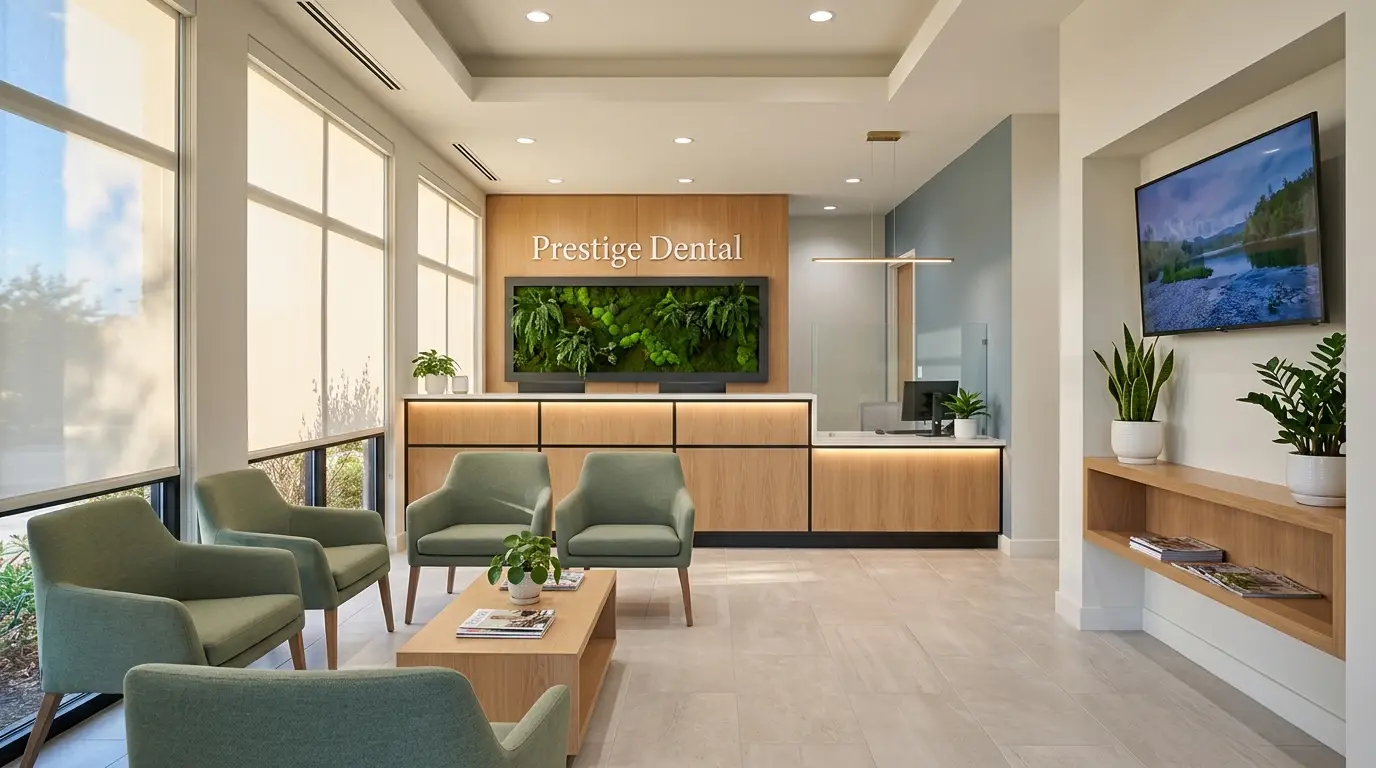
Your dental office design sends a message before your team says a word. Patients decide within seconds whether they trust a practice, and that judgment is built almost entirely on what they see and feel when they walk through the door. If your layout feels clinical, cramped, or dated, patients assume the care matches the space. Getting dental office design right is not an aesthetic luxury: it is a patient retention strategy, a staff efficiency tool, and a compliance requirement all at once.
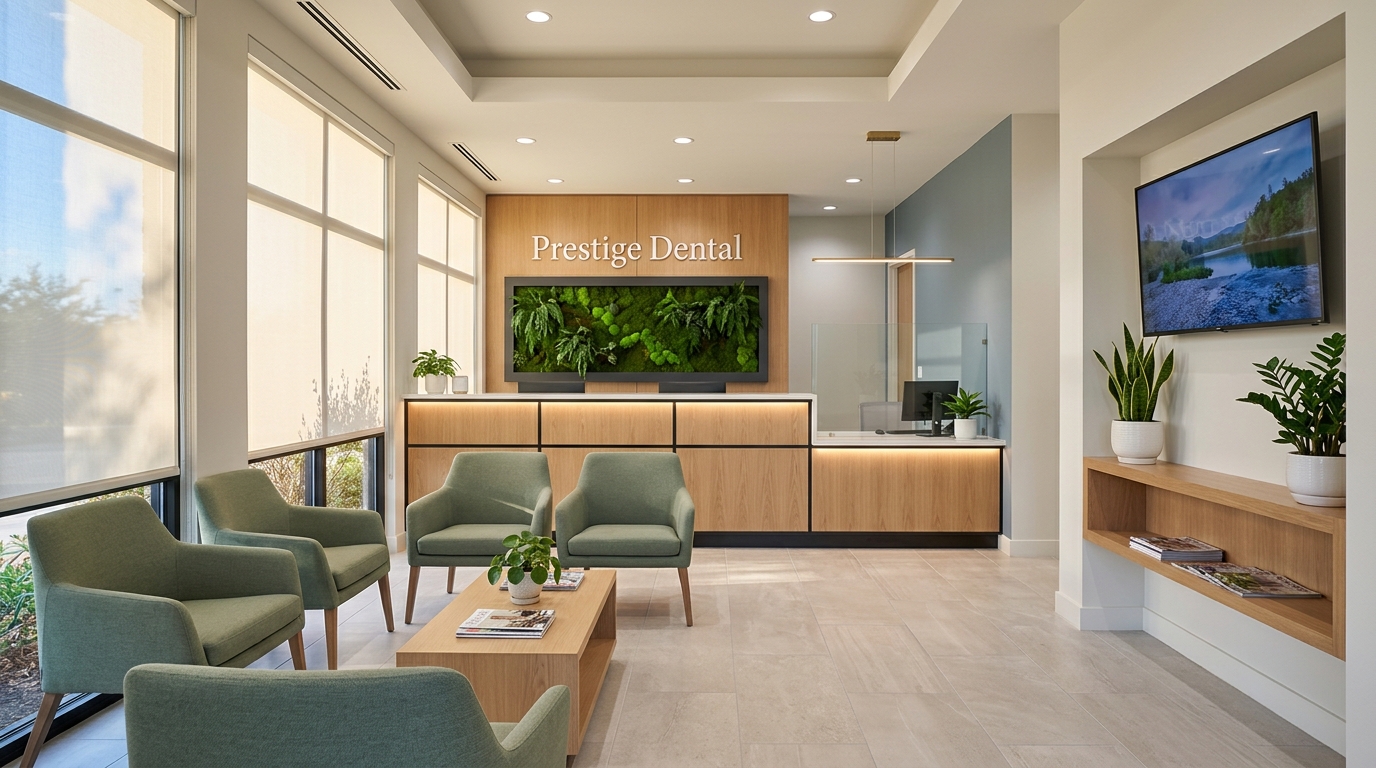
Quick Answer: Effective dental office design balances patient experience with clinical workflow. The most impactful decisions are operatory size (100 to 120 square feet each), sterilization placement central to all ops, a reception desk positioned for clear sightlines without exposing patient information, and a waiting area that separates check-in from check-out traffic.
Reception and Waiting Flow
The reception zone is where patient experience begins and where many dental offices lose trust before a patient ever sits in a chair. Best practice is to separate check-in and check-out, either physically with two counters or functionally with designated zones on a single L-shaped desk. Check-out requires privacy for financial conversations. Check-in needs a clear sightline to the waiting area.
| Zone | Recommended Size | Key Design Requirement |
|---|---|---|
| Waiting Area | 15 sq ft per seat | Separate pediatric and adult seating when possible |
| Reception Desk | 12-16 linear ft | High transaction counter on patient side, lower on staff side |
| Check-out Station | 6-8 linear ft | Side panel or wing wall for financial privacy |
| Consult Alcove | 60-80 sq ft | Adjacent to reception, semi-enclosed for treatment plan review |
Operatory Design and Dimensions
The operatory is the revenue-generating core of your practice. The industry standard for a functional operatory is 100 to 120 square feet, with 11 feet of width and 10 feet of depth as a reliable baseline. Equipment clearance drives operatory size: you need 18 inches minimum on the assistant side of the chair, 36 inches on the dentist side, and 36 inches at the foot of the chair.
Operatory layout follows one of three chair orientations: rear delivery, side delivery, or over-the-patient delivery. Rear delivery is the most common in new builds because it keeps the tray out of the patient’s sightline.
Every operatory should have:
- A dedicated hand-washing sink with hands-free controls
- Separate cabinetry zones for clean and contaminated instruments
- Ceiling-mounted or wall-mounted monitor positioned for ergonomic viewing
- Task lighting on an articulating arm plus ambient ceiling lighting
- Enough power circuits for chair, unit, computer, monitor, and portable equipment
Sterilization Room Placement
Sterilization room placement is one of the most consequential decisions in dental office design. The room must be centrally accessible to all operatories, and workflow must move in a single direction: contaminated instruments in one side, clean instruments out the other.
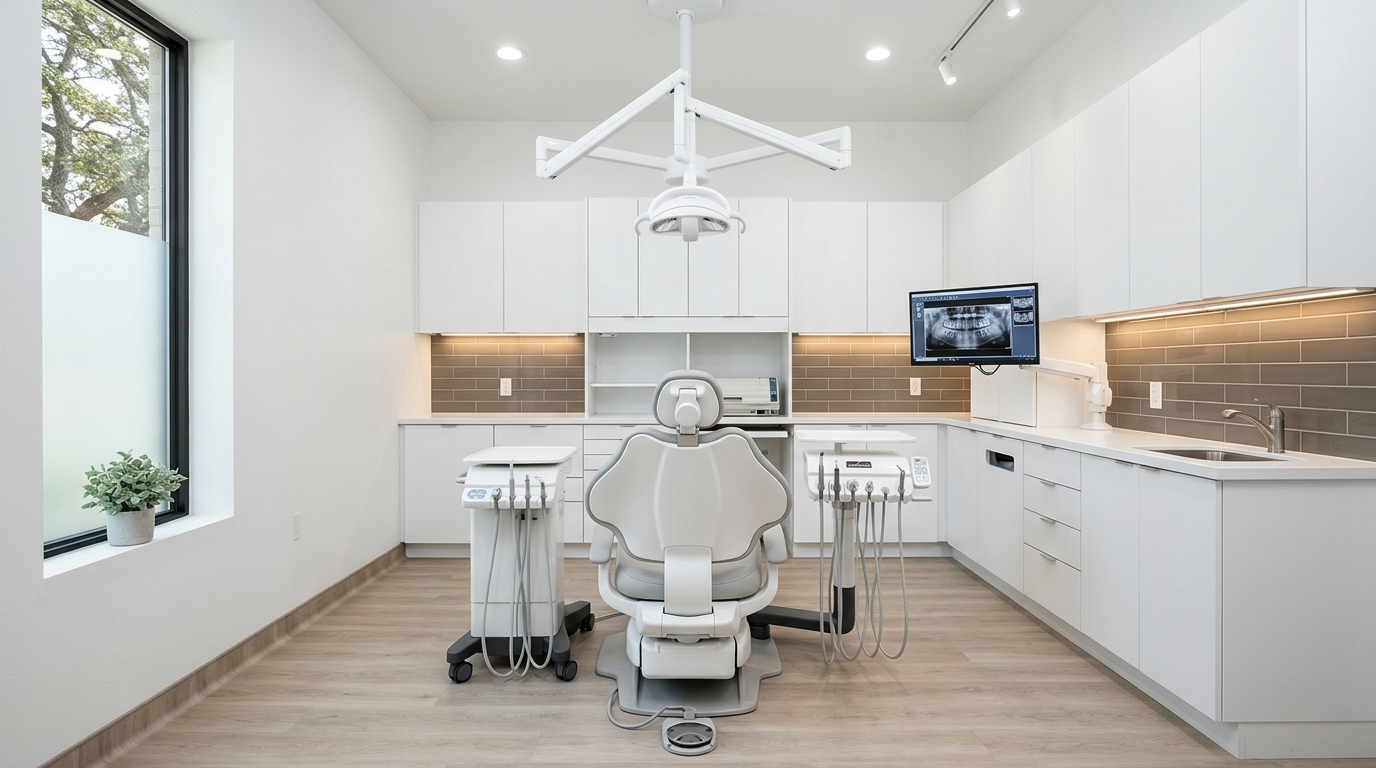
Minimum sterilization room size is 80 to 100 square feet for a practice with four to six operatories. OSHA and CDC guidelines require physical separation between the decontamination area and the clean storage area.
HIPAA Compliance in Layout
| Design Element | HIPAA Risk Without It | Solution |
|---|---|---|
| Reception counter height | Patients can read computer screens with PHI | Raise monitor or use privacy screen |
| Consultation space | Treatment plan conversations overheard in waiting room | Semi-enclosed alcove or separate consult room |
| Operatory doors | Patient names called aloud in hallway | Solid or frosted glass doors with sound attenuation |
| Check-out station | Financial conversations within earshot of waiting patients | Wing wall, privacy panel, or dedicated check-out room |
| Hallway signage | Patient names visible to other patients | Digital room indicators without patient names |
ADA Requirements for Dental Offices
- Accessible route from parking to entrance must be 44 inches minimum clear width
- Reception desk must include a lowered section (28 to 34 inches high) for wheelchair users, minimum 36 inches wide
- At least one operatory must accommodate a wheelchair transfer, with 60 inches of clear floor space
- Restroom must meet full ADA restroom requirements including grab bars, turning radius, and accessible fixtures
- Hallway clear width minimum 44 inches throughout, 60 inches at turns
ADA compliance is not optional for new dental office buildouts. Texas enforces the ADA through TDLR, which reviews plans before construction.
For medical and dental office design in Texas, ADA coordination determines whether your certificate of occupancy is issued on schedule.
Patient Experience Through Design
- Lighting temperature: Warm white (2700 to 3000K) in reception and waiting areas reduces anxiety.
- Ceiling height: Higher ceilings in reception (10 to 12 feet) communicate openness.
- Biophilic elements: Live plants, natural wood tones, and water features reduce patient-reported anxiety.
- Sightlines from the chair: A TV monitor on the ceiling, a nature photograph, or a window all reduce procedural anxiety.
- Smell control: HVAC systems that exhaust directly from operatories eliminate the antiseptic smell that triggers dental anxiety.
What We See in Texas Dental Projects
Working on dental office buildouts across San Antonio, Austin, and the surrounding Texas markets, we consistently see the same design mistakes. The most common: sterilization rooms too small or positioned at one end of the operatory corridor. The second most common: reception desks designed for aesthetics rather than workflow.
Our commercial interior design work in San Antonio includes coordination with dental equipment vendors and TDLR plan review.
Buildout Cost Data
Dental office buildouts in Texas currently run $150 to $300 per square foot for construction and finish-out, not including dental equipment, which typically ranges from $80,000 to $200,000 for a 4 to 6 operatory practice.
| Practice Size | Square Footage | Buildout Cost (excl. equipment) | Operatory Count |
|---|---|---|---|
| Startup / Solo | 1,200 to 1,800 sq ft | $180K to $360K | 3 to 4 ops |
| Small Group | 2,000 to 2,800 sq ft | $300K to $560K | 4 to 6 ops |
| Multi-Doctor | 3,000 to 4,500 sq ft | $450K to $900K | 7 to 10 ops |
| DSO / Group Practice | 5,000 sq ft+ | $750K+ | 10+ ops |
For practices using tenant improvement allowances, the typical landlord TI for a dental office in Texas is $50 to $80 per square foot.
Key Takeaways
- Operatory size should be 100 to 120 square feet minimum
- Sterilization room placement must be central to all operatories with one-way contaminated-to-clean workflow
- HIPAA compliance requires layout decisions: monitor positioning, acoustic insulation, and a separate check-out station
- ADA compliance in Texas is enforced by TDLR during plan review
- Dental office buildouts run $150 to $300 per square foot in Texas, not including equipment
- Patient perception of care quality is significantly influenced by office design
- Reception flow should separate check-in and check-out to protect PHI
Frequently Asked Questions
What is the ideal size for a dental operatory?
The industry standard for a functional dental operatory is 100 to 120 square feet, typically 11 feet wide by 10 feet deep. This provides the required clearances around the dental chair: 18 inches on the assistant side, 36 inches on the dentist side, and 36 inches at the foot of the chair.
How does office design affect HIPAA compliance in a dental practice?
HIPAA’s Privacy Rule requires reasonable safeguards to protect patient health information, and physical layout is a recognized safeguard. Key design elements include positioning reception monitors so patients cannot see PHI on screen, providing a separate check-out station, specifying acoustic insulation in operatory walls, and including a semi-enclosed consultation space.
How much does a dental office buildout cost in Texas?
Dental office buildouts in Texas run $150 to $300 per square foot for construction and finish-out, not including dental equipment. A 2,000 square foot practice typically costs $300,000 to $600,000 in buildout, with equipment adding $80,000 to $200,000 on top.
What ADA requirements apply to dental office design?
Dental offices must comply with ADA requirements as places of public accommodation. This includes an accessible route from parking, a lowered reception counter section (28 to 34 inches high), at least one operatory with 60 inches of clear floor space, a fully compliant ADA restroom, and 44-inch minimum clear hallway widths. In Texas, TDLR reviews plans before construction.
Where should the sterilization room be located in a dental office?
The sterilization room should be centrally positioned relative to all operatories. The room must support a one-way workflow: contaminated instruments enter from one side, processed sterile instruments exit from the other. A minimum of 80 to 100 square feet is needed for a four to six operatory practice.
Ready to Design Your Dental Office in Texas?
Prestige 360 Design specializes in commercial interior design across San Antonio, Austin, Dallas-Fort Worth, and Houston. Contact us to discuss your project.
About the Author
Hugo Ramirez is the founder of Prestige 360 Design, a commercial interior design firm serving Texas businesses. With expertise in healthcare and dental office design, Hugo has helped dental practices across San Antonio and Texas create patient-centered, code-compliant spaces.