Insights
The ROI of Commercial Interior Design: What Texas Business Owners Actually Get Back (2026)
June 19, 2026
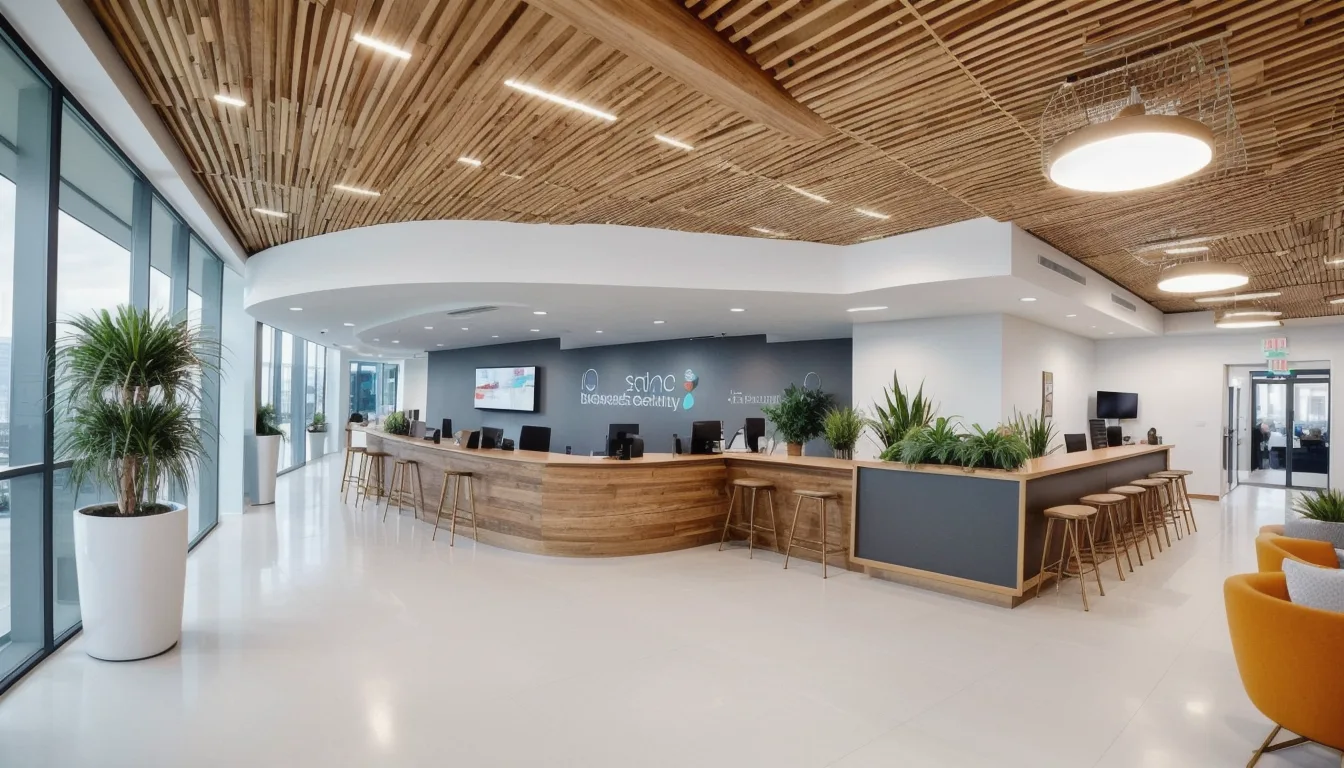
The question every Texas business owner asks before spending $40,000 to $150,000 on a commercial interior: what do I get back? The answer is not abstract. Commercial interior design produces measurable returns in four areas: employee productivity and retention, client and customer conversion rates, lease terms and TI allowance leverage, and building or business resale value. The numbers are specific enough to calculate before you spend.
This guide gives you the framework to estimate the ROI of a commercial interior design project for your business, with Texas-specific benchmarks and the variables that most affect the outcome.
Quick Answer: Well-executed commercial interior design produces ROI across four measurable channels: employee productivity (studies show 15 to 25 percent productivity gains in well-designed spaces), client conversion rates (first impressions affect purchase decisions within 7 seconds of entering a space), lease negotiation leverage (a documented design scope increases TI allowance by 20 to 40 percent), and resale value (professionally designed commercial spaces sell or lease faster at higher per-square-foot values). The highest-ROI design investments are client-facing spaces where the design directly influences a purchase decision.
The Four Areas Where Commercial Design Pays Back
Not all commercial design investment produces the same type of return. The category of your business and how clients, employees, or customers interact with your space determines where the return is highest.
| Business Type | Highest ROI Channel | Secondary ROI Channel |
|---|---|---|
| Retail store | Customer conversion and average transaction value | Employee productivity, brand perception |
| Restaurant | Table turns, average check, return visit rate | Brand differentiation, press coverage |
| Professional services (law, finance, medical) | Client trust and close rate | Employee retention, referral rate |
| Office (corporate, tech, creative) | Employee productivity and talent attraction | Client first impression, lease renewal leverage |
| Medical or dental practice | Patient anxiety reduction and return rate | Staff efficiency, compliance efficiency |
Employee Productivity and Retention ROI
Workplace design affects employee output and tenure in measurable ways. The World Green Building Council published research showing that improvements in air quality, natural lighting, and thermal comfort produce 8 to 11 percent productivity gains. Studies by Gensler and Leesman show that workspace quality correlates with employee engagement scores, which in turn predict retention.
In Texas, the hard math on retention is significant:
- Replacing an employee earning $50,000 per year costs an estimated 50 to 200 percent of annual salary in recruiting, onboarding, and lost productivity: $25,000 to $100,000 per departure
- A 2-person reduction in annual turnover in a 20-person office saves $50,000 to $200,000 per year
- If a $60,000 office design investment reduces annual turnover by 2 employees for 3 years, the net ROI over the lease term is strongly positive
The design elements with the highest correlation to employee productivity and retention are:
- Natural light access and view to exterior
- Acoustic separation between focus and collaborative zones
- Thermal comfort control at the workstation level
- Access to biophilic elements (plants, natural materials)
- Ergonomic furniture that reduces physical fatigue
Client and Customer Conversion ROI
Research on first impressions is consistent: judgments about trustworthiness, competence, and quality are made within 7 seconds of entering a space. For businesses where clients make a decision in your office or a customer makes a purchase in your store, the physical environment is a sales tool.
For retail: A 2019 study published in the Journal of Retailing found that shoppers in visually organized, well-lit retail environments spent an average of 23 percent more per transaction than those in cluttered or poorly lit stores with equivalent inventory. Texas specialty retail with annual revenue of $800,000 that improves transaction value by 15 percent adds $120,000 in annual revenue against a $50,000 to $80,000 design investment.
For professional services: A law firm, financial advisory, or medical practice where the client makes a significant financial decision (retaining counsel, engaging a financial plan, committing to a treatment) during an in-office visit is directly affected by the client’s assessment of the firm’s credibility. A dated, cluttered, or poorly maintained office introduces doubt. A well-designed space removes it.
For restaurants: Restaurant design directly affects average check, table turn time, and return visit rate. A dining room designed for efficient service (correct table spacing, lighting that signals dwell time, acoustics that allow conversation) outperforms an identical menu in a poorly designed space on every measurable hospitality metric.
Lease Negotiation and TI Allowance ROI
A documented design package increases TI allowance negotiation outcomes by 20 to 40 percent. On a 3,000 sq ft lease in San Antonio, the difference between a $30 per square foot TI offer and a $45 per square foot TI offer is $45,000. A $3,000 preliminary design package that produces $45,000 in additional landlord contribution is a 1,400 percent return on the design investment before construction begins.
The same principle applies at lease renewal. A tenant who has invested in a high-quality buildout holds more leverage at renewal than a tenant whose space looks worn and dated. The landlord knows the cost of replacing a well-designed space with a new tenant buildout and is more willing to offer rent concessions to retain the incumbent tenant.
Business and Real Estate Resale ROI
When a Texas business owner sells their practice, firm, or retail operation, the physical space is part of the asset. A well-designed, well-maintained commercial space:
- Increases the perceived value of the business to buyers
- Reduces the buyer’s anticipated buildout investment, making the asking price more defensible
- Speeds time to sale by reducing the buyer’s objections about condition
For medical practice and dental office sales in Texas, where buyers are often paying 60 to 100 percent of annual net revenue as a purchase premium, a space that needs a $75,000 renovation produces a price discount of $75,000 to $150,000 from a buyer who factors in the disruption and cost. A space that was professionally designed and properly maintained commands the top of the valuation range.
How to Estimate Your Specific ROI Before You Spend
Use this framework for any Texas commercial design project:
- Identify the primary return channel for your business (productivity, conversion, lease, or resale)
- Quantify the current baseline (current revenue per customer, current employee turnover, current TI offer)
- Estimate the improvement using conservative assumptions (10 percent revenue increase, 1 fewer turnover per year)
- Project the improvement over the lease term (5 to 7 years is typical)
- Compare the projected improvement to the design investment
A San Antonio medical spa generating $600,000 annually that improves client return rate by 8 percent through a better patient experience adds $48,000 per year in revenue. Over a 5-year lease, that is $240,000 against a $70,000 design investment, a 3.4x return. These numbers are conservative and verifiable before you approve the design budget.
When Commercial Design Investment Does Not Pay Back
Design investment underperforms when:
- The business model does not depend on the physical space (fully remote, online-only, delivery-only)
- The design is not aligned to the customer’s expectation (luxury finishes in a price-sensitive market)
- The buildout is treated as a one-time expense without a maintenance budget (a space that degrades to poor condition within 2 years provides no long-term return)
- The space is designed for the owner’s taste rather than the customer’s or employee’s experience
The highest-risk design investments are purely aesthetic overhauls in businesses where the product or service quality does not support the expectation the environment creates.
See how Prestige 360 Design approaches design for return in our San Antonio commercial interior design services and our Texas med spa design page.
Key Takeaways
- Commercial design ROI comes from four channels: employee productivity, client conversion, lease negotiation, and resale value
- Workplace design improvements produce 8 to 25 percent employee productivity gains per published research
- Retail environments with strong visual organization show 15 to 23 percent higher transaction values
- A documented design scope increases TI allowance by 20 to 40 percent before construction begins
- Medical and professional service practices sell faster and at higher multiples with professionally designed spaces
- Design investment underperforms when the space does not directly influence purchase decisions or employee retention
Frequently Asked Questions
How do you measure the ROI of commercial interior design?
ROI of commercial interior design is measured through the specific business outcomes the design is intended to improve. For retail, track average transaction value and conversion rate before and after the buildout. For offices, track employee retention and productivity metrics. For client-facing professional services, track close rate and client lifetime value. For lease negotiations, compare TI allowance received against the pre-design offer. The return is measurable in each channel with a pre-buildout baseline and post-buildout tracking period of 6 to 12 months.
Is commercial interior design worth the cost for a small business?
Commercial interior design is worth the cost for small businesses where the physical space directly influences a purchase decision, employee performance, or client trust. Retail, restaurants, medical and dental practices, law offices, and client-facing professional services all meet this threshold. Businesses that operate primarily remotely or online and use a physical space only for back-office work have a lower design ROI. For a Texas small business generating $400,000 to $1,000,000 annually in a client-facing environment, a $30,000 to $80,000 design investment with a documented ROI framework typically pays back within 2 to 4 years.
How much does commercial interior design increase property value?
Professionally designed commercial spaces in Texas typically support 5 to 15 percent higher asking prices at sale or lease compared to equivalent spaces with standard or dated finishes, according to commercial real estate broker data. For business sales that include the real estate, a well-maintained and professionally designed space reduces buyer discount requests and speeds time to sale. The exact value depends on market comparables, the age of the design, and how well the space has been maintained since the original buildout.
What commercial design features have the highest ROI?
The commercial design features with the highest documented ROI are natural lighting improvements (correlate with 8 to 11 percent productivity gains), acoustic separation between focus and collaborative areas (reduce distraction and meeting fatigue), branded reception and client-facing spaces (affect close rates in professional services), and clear wayfinding and visual merchandising in retail (increase conversion and average transaction). High-end finishes in back-of-house areas without client visibility have the lowest ROI. Design investment directed at the first point of client contact produces the fastest and most measurable return.
Design for Return, Not Just Appearance
Prestige 360 Design builds commercial spaces in San Antonio and across Texas with ROI as a design objective alongside aesthetics. We help clients identify which design investments will produce the highest measurable return before the budget is approved.
Request a consultation or explore our San Antonio commercial design services.
Hugo Ramirez is the founder of Prestige 360 Design, a commercial interior design and tenant improvement firm serving Texas businesses from San Antonio to Houston, Austin, and Dallas.