Insights
Salon Layout Design: Floor Plans, Stations, and Flow for 2026
May 28, 2026
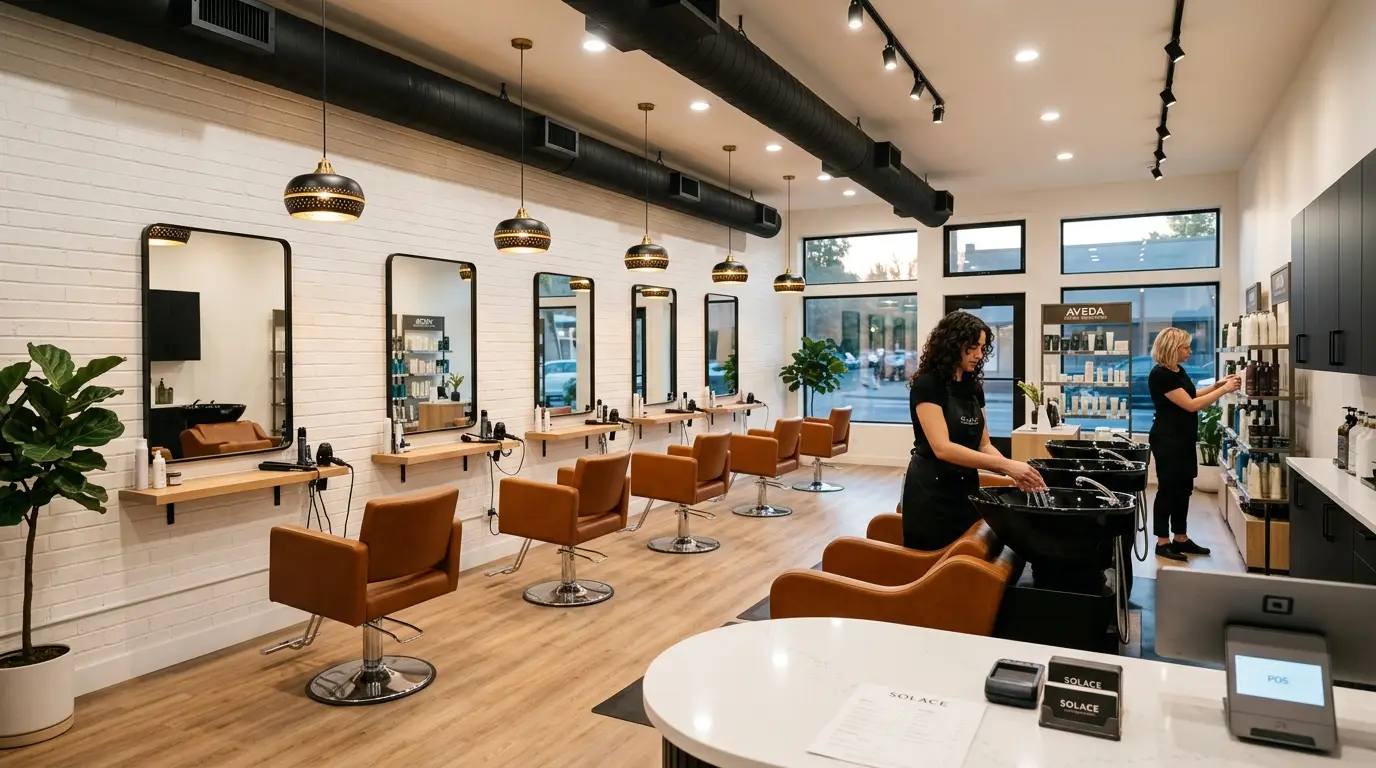
Quick Answer: A well-designed salon layout allocates 60 to 80 square feet per styling station (including walkway clearance), separates wet and dry zones with proper drainage and ventilation, and meets TDLR minimum spacing of 50 square feet per operator. In Texas, salon buildout costs range from $75 to $150 per square foot depending on plumbing complexity, electrical load, and finish level. The typical buildout timeline runs 8 to 14 weeks from permit to opening day. Getting the floor plan right before construction starts saves 15 to 25 percent on change orders alone.
Most salon owners start their buildout with Pinterest boards and equipment catalogs. That is exactly backwards. The floor plan comes first. Every dollar you spend on stations, plumbing, electrical, and finishes is either multiplied or wasted by the layout underneath it. A salon with 12 stations crammed into 900 square feet will underperform a salon with 8 stations in 700 square feet if the second one has better flow, proper zone separation, and code-compliant spacing.
This guide covers salon layout design from the ground up: how many stations your space can realistically support, what each component costs per square foot in 2026, how to separate wet and dry zones without doubling your plumbing budget, what TDLR actually requires in Texas, and the flow patterns that keep clients comfortable and stylists productive. Whether you are building out a raw shell or renovating an existing salon space, the principles here apply to every salon format from a 600 square foot suite to a 3,000 square foot full-service location.
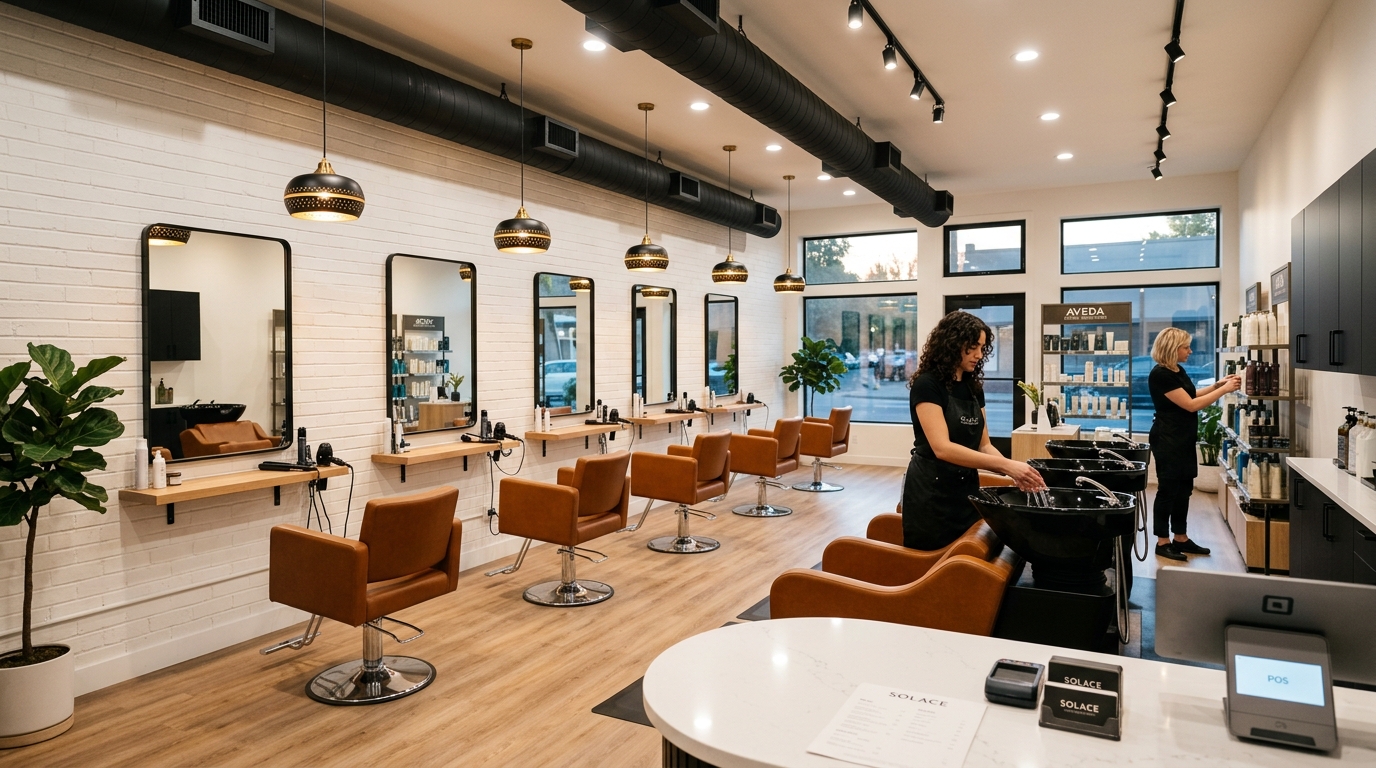
Salon Floor Plan Fundamentals: What Every Owner Needs First
Salon floor plan design starts with three numbers: total usable square footage, the number of operators you plan to employ at full capacity, and the ratio of wet stations (shampoo bowls, color processing) to dry stations (cuts, blowouts, styling). Everything else follows from those three inputs.
A common mistake is designing for day-one headcount instead of 18-month capacity. If you plan to open with 6 stylists but want to grow to 10, the plumbing, electrical, and HVAC infrastructure needs to support 10 from the start. Adding a wet station after construction costs three to five times more than including it in the original buildout.
The five functional zones every salon needs are:
- Reception and retail. First impression zone. Typically 8 to 12 percent of total square footage.
- Styling stations (dry zone). The revenue engine. Typically 40 to 50 percent of total square footage.
- Shampoo and processing (wet zone). Requires plumbing, drainage, and chemical ventilation. Typically 15 to 20 percent.
- Back of house. Break room, storage, laundry. Typically 10 to 15 percent.
- Circulation. Hallways, aisles, buffer zones between stations. Typically 15 to 20 percent.
If your floor plan does not account for all five zones before you pick a single finish material, you will run into problems during construction. The most expensive change order in a salon buildout is almost always a plumbing relocation that was not in the original plan.
How Many Stations Can You Fit?
The minimum functional footprint per styling station is 60 to 80 square feet, including the chair, the mirror/console, the stylist’s working radius, and the walkway behind the chair. TDLR requires a minimum of 50 square feet per operator station, but that is a regulatory floor, not a design recommendation. At 50 square feet, stylists bump elbows and clients feel cramped.
Here is the practical math for station planning:
| Total Usable Sq Ft | Stations at 60 Sq Ft Each | Stations at 75 Sq Ft Each | Notes |
|---|---|---|---|
| 600 | 4-5 | 3-4 | Suite or micro salon. No separate wet zone possible at 4+ stations. |
| 900 | 6-7 | 5-6 | Standard startup size. Enough for a small wet zone with 2 shampoo bowls. |
| 1,200 | 8-10 | 7-8 | Mid-size salon. Full wet/dry separation. Room for retail display. |
| 1,800 | 12-14 | 10-12 | Full-service salon. Can support dedicated color processing room. |
| 2,500+ | 16-20 | 14-16 | Large salon or salon/spa hybrid. Multiple wet zones recommended. |
Design Rule: Never calculate station count using 100 percent of your square footage. Subtract 30 to 35 percent for reception, back of house, circulation, and wet zone before dividing by your per-station footprint. A 1,200 square foot space has roughly 780 to 840 usable square feet for stations.
Station spacing also depends on the service mix. A salon that does primarily blowouts and cuts can work with tighter station spacing (55 to 60 square feet) because stylists move in a smaller radius. A salon offering color, extensions, and chemical treatments needs more room per station (70 to 80 square feet) because the stylist needs counter space for mixing, a processing timer, and room for the client to sit with foils without blocking the walkway.
Salon Buildout Cost Breakdown
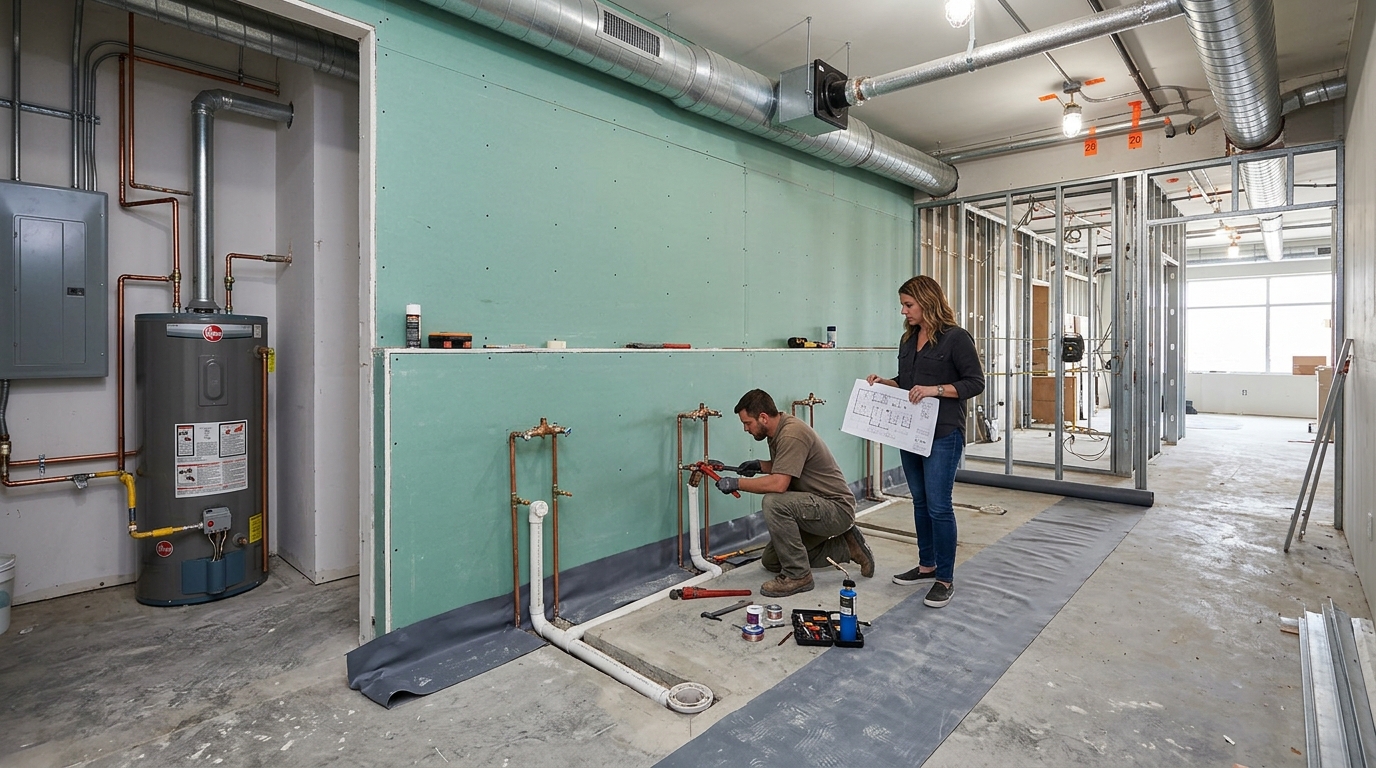
Salon buildout cost in Texas ranges from $75 to $150 per square foot in 2026, depending on the condition of the shell, the complexity of your plumbing and electrical needs, and your finish level. A basic buildout in a second-generation space (one that previously housed a salon or medical office with existing plumbing) sits closer to $75 per square foot. A first-generation shell with no plumbing stub-outs pushes toward $120 to $150 per square foot.
Here is where the money goes:
| Component | Cost Range | Notes |
|---|---|---|
| Styling stations (installed) | $3,000 – $8,000 each | Includes chair, mirror/console, electrical outlet, tool storage. Higher end includes built-in LED lighting and integrated product displays. |
| Plumbing rough-in (per wet station) | $2,000 – $5,000 each | Hot/cold supply, drain, backflow prevention. Cost varies by distance from main line. |
| Electrical (full salon) | $8,000 – $20,000 | 200-amp panel typical. Each station needs a dedicated 20-amp circuit for dryers and tools. |
| Flooring | $4 – $12 per sq ft | Luxury vinyl plank dominates salon installs. Water-resistant, anti-fatigue, and easy to clean. Avoid tile in wet zones; grout stains with color chemicals. |
| Ventilation and HVAC | $5,000 – $15,000 | Chemical service areas require dedicated exhaust. 25 CFM per station minimum in color/chemical zones. |
| Reception and waiting area | $3,000 – $10,000 | Front desk, seating, retail display, POS system integration. |
| Permits and design | $2,000 – $6,000 | Building permit, TDLR salon license application, architectural or design drawings. |
Real Numbers: A 1,200 square foot salon with 8 stations, 3 shampoo bowls, a reception area, and mid-grade finishes typically lands between $90,000 and $150,000 for the full buildout in the Austin, San Antonio, or Dallas-Fort Worth metro. That is $75 to $125 per square foot all-in. If you are seeing quotes above $150 per square foot for a standard salon, get a second bid.
The single largest variable is plumbing. Every wet station you add increases both the rough-in cost and the complexity of your drainage plan. Grouping all wet stations together on one wall (rather than scattering them across the floor) can save $3,000 to $8,000 on a typical 8 to 12 station salon. This is why space planning before construction is not optional.
Wet vs. Dry Zones: Plumbing, Drainage, and Ventilation
Wet zone and dry zone separation is the single most important structural decision in salon layout design. The wet zone includes shampoo stations, color mixing areas, and any station where water or chemicals are used. The dry zone includes styling stations, the reception area, retail displays, and back-of-house storage.
Why separation matters:
- Plumbing cost. Grouping all shampoo bowls on one wall means one set of supply lines and one drain run. Spreading them across the salon multiplies every pipe, fitting, and labor hour.
- Drainage. Salon shampoo stations produce significant water volume. Floor drains in the wet zone should slope at 1/4 inch per foot toward the drain. Without proper slope, standing water becomes a slip hazard and a code violation.
- Chemical ventilation. Color processing, perms, keratin treatments, and chemical straightening release fumes that require dedicated exhaust ventilation. TDLR and local building codes require a minimum of 25 CFM (cubic feet per minute) of ventilation per station in chemical service areas. A standalone exhaust fan for the wet zone is far cheaper to install than a whole-salon ventilation upgrade.
- Flooring transitions. The wet zone needs water-resistant, non-porous flooring with sealed seams. The dry zone has more flexibility. Designing a clean transition between the two zones at the floor plan stage prevents awkward material joints during construction.
The ideal wet zone placement is against the back wall or a side wall, as far from the entrance as possible. This keeps the chemical processing area away from the reception zone (where clients form their first impression) and positions the plumbing runs close to the building’s main water supply and drain stack. Most commercial spaces have their plumbing stubs along the rear wall, which makes back-wall wet zones the most cost-efficient option.
If your lease space is in a strip center or shopping center, check the landlord’s plumbing restrictions before signing. Some landlords cap the number of wet stations or require tenants to pay for a grease trap, which adds $2,000 to $4,000 to the buildout. Understanding these constraints early is a core part of tenant improvement planning.
TDLR Requirements for Salons in Texas
The Texas Department of Licensing and Regulation (TDLR) sets the minimum standards for salon facility design. These requirements are non-negotiable. Failing to meet them during your buildout means your salon license application will be denied, and you will pay for modifications before you can open.
Key TDLR requirements for salon layout:
- Minimum 50 square feet per operator station. This includes the chair, work area, and a portion of the shared walkway. TDLR measures from the center of each station.
- Hot and cold running water required. Every salon must have at least one shampoo bowl with hot and cold water. The water heater must maintain 100 degrees Fahrenheit minimum at the shampoo bowl.
- Separate restroom. A dedicated restroom for the salon is required. It must have a hand-washing sink with soap and single-use towels. The restroom cannot double as a storage room.
- Sanitation station. A separate area for disinfecting tools must be designated in the floor plan. This includes a wet sanitizer container and a dry (UV or cabinet) sanitizer. It cannot be at a styling station.
- Ventilation. Adequate ventilation is required throughout. Chemical service areas require enhanced ventilation. The 25 CFM per station benchmark applies to areas where color, chemical straightening, or perm solutions are used.
- Flooring. Must be smooth, non-absorbent, and easily cleanable. Carpet is not permitted in service areas. Most salons use luxury vinyl plank, polished concrete, or commercial-grade sheet vinyl.
- Lighting. Adequate lighting at each station is required. TDLR does not specify a lux level, but inspectors look for sufficient visibility at the point of service. The practical standard is 50 to 75 foot-candles at chair height.
Pro Tip: Schedule your TDLR pre-inspection before you finalize your floor plan. TDLR inspectors will review your layout drawings and flag issues before you start construction. This costs nothing and can save thousands in post-construction corrections. Many salon owners skip this step and regret it.
TDLR licensing is separate from your city building permit. You need both. The building permit covers structural, mechanical, and electrical code. The TDLR license covers salon-specific sanitation and operational requirements. Plan for 2 to 4 weeks of lead time on the TDLR application after your buildout passes final inspection.
Client Flow and the Experience Loop
Salon station layout determines more than just how many people fit in the room. It determines how a client experiences the visit from the moment they walk through the door to the moment they check out. A strong salon floor plan design creates a natural loop: arrival, check-in, service, checkout, and exit. Each phase should transition smoothly into the next without backtracking or awkward cross-traffic.
The flow sequence that works best in most salon formats:
- Entry to reception. The client walks in and sees the front desk immediately. No hunting for where to check in. The retail display is visible but not blocking the path.
- Reception to waiting. A small waiting area (2 to 4 seats) sits adjacent to the front desk. The client can see the styling floor from the waiting area, which reduces perceived wait time.
- Waiting to service. The stylist walks the client from the waiting area to either the shampoo station (wet start) or the styling chair (dry start). The path should not cross in front of other clients who are mid-service.
- Wet to dry. After shampooing, the client moves from the wet zone to the dry zone styling chair. This is the most common cross-traffic conflict in salon layouts. If the shampoo area is at the back and the styling chairs are in the middle, the path is clean. If both zones are side by side, clients in robes cross paths with clients in street clothes.
- Service to checkout. When the service is done, the client returns to the front desk to pay and rebook. The path from the styling chair back to reception should not require walking through the wet zone or the back of house.
This flow pattern mirrors what works in wellness studio design, where the client journey from check-in through treatment to checkout follows a one-directional loop. The principle is the same: forward movement, no backtracking, and clear transitions between zones.
What We See Across Prestige 360 Projects
Across our salon and beauty buildout projects, we consistently see three patterns that separate the layouts that work from the ones that cause problems after opening day.
First, owners underestimate back-of-house space. A salon with 10 stations generates a significant volume of towels, color tubes, developer bottles, and cleaning supplies. If your back-of-house area is a single closet, your stylists will store overflow product at their stations, which makes the floor look cluttered and reduces the premium feel you spent $100,000 building. We recommend allocating 10 to 15 percent of total square footage to storage and staff areas, even if it means one fewer station.
Second, the reception area gets designed last and it shows. The front desk is the first and last touchpoint in every visit. When it is an afterthought squeezed into whatever space is left over, it communicates that the business is not serious about the client experience. Our strongest salon projects allocate 80 to 120 square feet to the reception zone, including a compact retail display that drives add-on product sales. Salons that invest in the front desk area report 10 to 20 percent higher product retail revenue.
Third, natural light is an underused asset. If your lease space has storefront windows, use them. Position styling stations to take advantage of natural light, which improves color accuracy for stylists and creates a more inviting atmosphere. We have seen salon owners wall off their windows to create “more usable wall space,” and it always makes the space feel smaller and more clinical. Glass and light sell better than drywall.
These observations come from our work designing commercial interiors for retail, wellness, and beauty businesses across Texas. The details change from project to project, but the principles hold.
Key Takeaways
- Allocate 60 to 80 square feet per styling station, including walkway. The TDLR minimum of 50 square feet is a regulatory floor, not a design target.
- Salon buildout cost in Texas runs $75 to $150 per square foot in 2026. Plumbing complexity is the single largest cost variable.
- Separate wet and dry zones on your floor plan before anything else. Grouping wet stations on one wall saves $3,000 to $8,000 in plumbing costs.
- Chemical service areas require dedicated exhaust ventilation at 25 CFM per station minimum. This is a code requirement, not a suggestion.
- Design the client flow as a one-directional loop: entry, check-in, service, checkout, exit. No backtracking through the wet zone.
- Schedule a TDLR pre-inspection before finalizing your floor plan. It is free and prevents expensive post-construction corrections.
- The average salon buildout timeline is 8 to 14 weeks. Add 2 to 4 weeks for TDLR licensing after final inspection.
Frequently Asked Questions
How much does a salon buildout cost per square foot in 2026?
Salon buildout cost ranges from $75 to $150 per square foot in Texas in 2026. The low end applies to second-generation spaces with existing plumbing, while the high end covers first-generation shells that need full plumbing rough-in, electrical upgrades, and custom finishes. Each installed styling station costs $3,000 to $8,000 depending on the chair quality, mirror configuration, built-in lighting, and storage. Plumbing rough-in for each wet station adds $2,000 to $5,000. A complete 1,200 square foot salon with 8 stations typically costs $90,000 to $150,000 for the full buildout.
How many square feet do you need per salon station?
Each salon styling station requires 60 to 80 square feet of floor area, including the chair, mirror/console, the stylist’s working radius, and the walkway behind the chair. The Texas Department of Licensing and Regulation (TDLR) sets the legal minimum at 50 square feet per operator station, but that measurement results in cramped working conditions. Salons offering color services, extensions, or chemical treatments need closer to 75 to 80 square feet per station because the stylist requires additional counter space and the client needs room during processing time.
What does TDLR require for a salon floor plan in Texas?
TDLR requires a minimum of 50 square feet per operator station, at least one shampoo bowl with hot and cold running water, a separate restroom with hand-washing facilities, a dedicated sanitation station for disinfecting tools, non-absorbent and easily cleanable flooring in all service areas, and adequate ventilation throughout with enhanced exhaust in chemical service zones. Chemical areas must maintain a minimum of 25 CFM of ventilation per station. TDLR inspectors review these elements during the facility inspection before issuing your salon license.
How long does a salon buildout take from start to finish?
The average salon buildout timeline is 8 to 14 weeks from permit approval to construction completion. Add 2 to 4 weeks for TDLR salon license processing after your space passes final inspection. The most common delays come from plumbing and electrical rough-in inspections, custom millwork lead times, and equipment delivery schedules. Second-generation spaces with existing plumbing tend to finish closer to 8 weeks. First-generation shells requiring full plumbing, electrical, and HVAC installation run 12 to 14 weeks. Planning your design and permitting phase before signing your lease can save 3 to 4 weeks on the overall timeline.
Get a Free Salon Layout Consultation
Whether you are signing a lease on your first salon space or renovating an existing location, the floor plan is the foundation that everything else builds on. We design salon layouts that maximize station count without sacrificing flow, meet TDLR requirements from day one, and keep buildout costs predictable. Schedule a free layout consultation and we will review your space, your station goals, and your budget before you spend a dollar on construction.
About the Author: Hugo Ramirez is the founder of Prestige 360 Design. Before launching Prestige 360, Hugo spent over a decade at Nike leading retail environment projects, where he managed store buildouts, floor plan optimization, and tenant improvement coordination across multiple markets. He now applies that operational discipline to commercial interior design for salons, wellness studios, retail stores, and medical offices across Texas.