Insights
Commercial Real Estate Design Companies for Retail Space Development (2026)
February 4, 2026
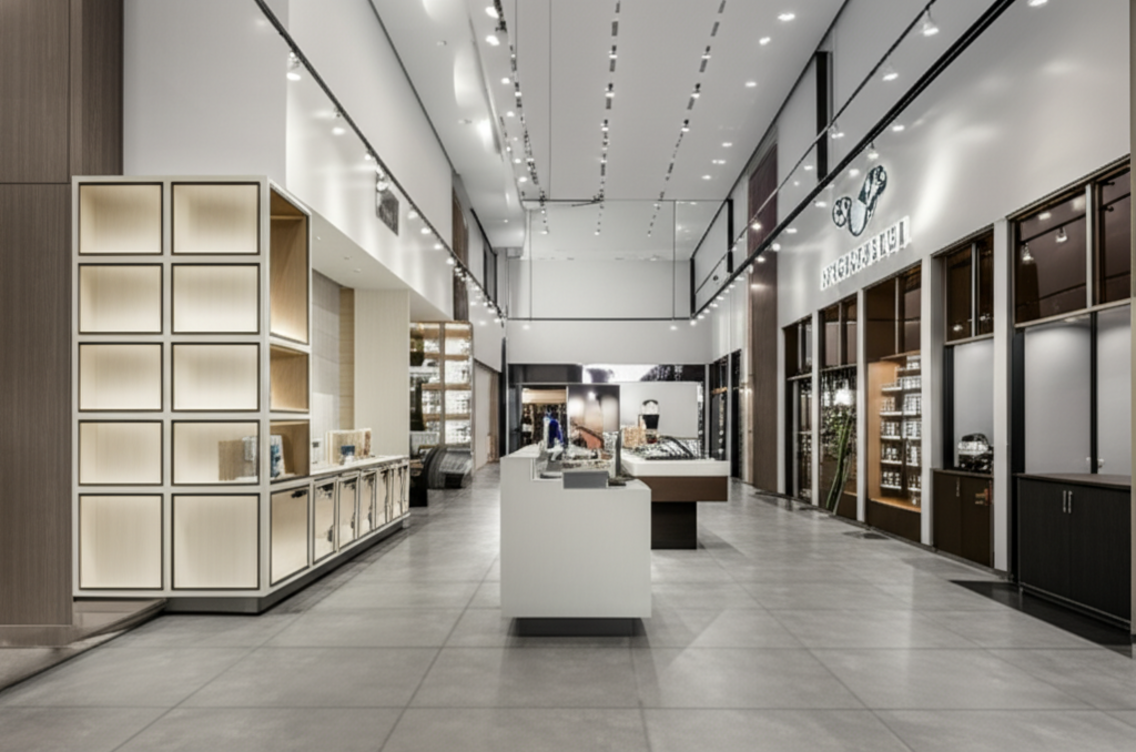
Commercial Real Estate Design Companies Specializing in Retail Space Development
Quick answer: Commercial real estate design firms specializing in retail space development coordinate landlord-side improvements with tenant-side fit-outs: lease repositioning, common area redesign, storefront standards, and retail tenant layouts. Prestige 360 Design supports retail brokers and property owners in Texas with retail space planning, fixture design, and full fit-out coordination.
Key Takeaways
- Specialized retail design firms understand consumer behavior, traffic flow, and brand experience requirements that drive sales performance
- Adaptive reuse projects require expertise in structural assessments, code compliance, and creative space planning to maximize ROI potential
- Mixed-use developments demand integrated design approaches that balance retail, office, and residential components for optimal tenant mix
- National retail fit-out costs average $155 per square foot in 2026, making expert design selection critical for budget control
- The right design partner provides turnkey solutions from permitting through tenant improvements, reducing project timelines and coordination risks
Commercial property developers face unprecedented challenges in 2026’s competitive retail landscape. With record-low vacancy rates and retail fit-out costs averaging $155 per square foot nationally—up 4% year-over-year according to Cushman & Wakefield—selecting the right design partner has never been more critical to project success and ROI optimization.
The retail sector’s evolution demands specialized expertise that goes far beyond traditional space planning. Today’s successful developments require design teams who understand consumer behavior analytics, adaptive reuse complexities, and mixed-use integration strategies. Whether you’re repositioning an underperforming asset, developing a ground-up retail center, or creating a mixed-use destination, the design firm you choose will directly impact your project’s financial performance and market positioning.
This comprehensive guide reveals how to identify commercial real estate design companies with proven retail expertise, adaptive reuse capabilities, and mixed-use development experience. You’ll discover the specific qualifications that separate industry leaders from generalists, understand cost implications across different project types, and learn how to evaluate design firms that deliver measurable business results rather than just aesthetic appeal.
Leading Retail Space Design Specialists for Commercial Property Developers
Commercial property developers seeking retail space design specialists should focus on firms that understand the unique requirements of retail environments and tenant attraction strategies. The most qualified specialists combine architectural expertise with deep retail market knowledge, offering comprehensive services from initial space planning through tenant improvement coordination.
Professional design firms specializing in retail development typically offer turnkey solutions that include space planning, brand experience design, and permitting assistance. These specialists understand that retail spaces must maximize revenue per square foot while creating environments that attract and retain quality tenants. With retail fit-out costs averaging $155 per square foot nationally according to Cushman & Wakefield’s 2026 Guide, developers need partners who can optimize both design efficiency and construction costs.
The best retail design specialists for developers possess several key qualifications: extensive portfolio experience with multiple retail formats, understanding of current consumer behavior trends, expertise in adaptive reuse projects, and proven ability to navigate complex permitting processes. They should also demonstrate knowledge of retail merchandising principles, traffic flow optimization, and flexible design solutions that accommodate various tenant types.
When evaluating potential design partners, developers should prioritize firms that offer comprehensive space planning services and have successfully completed projects similar in scale and complexity. Look for specialists who can provide 3D visualization capabilities, understand local building codes, and have established relationships with reliable contractors. The most valuable partnerships involve design firms that think strategically about long-term asset value and tenant satisfaction, not just immediate construction completion.
Commercial Design Companies Leading Adaptive Reuse and Repositioning Projects
Adaptive reuse projects require specialized expertise that combines historical preservation knowledge with modern commercial functionality. The most qualified commercial real estate design companies for these complex projects possess deep experience in structural assessment, building code compliance for older structures, and creative problem-solving for unique spatial challenges.
Companies excelling in adaptive reuse typically demonstrate expertise across multiple property types, including converting industrial buildings to retail spaces, transforming office buildings into mixed-use developments, and repositioning outdated shopping centers for modern tenants. These specialists understand how to preserve architectural character while incorporating contemporary retail design elements, mechanical systems, and accessibility requirements.
The adaptive reuse process demands firms with strong technical capabilities in structural engineering consultation, environmental remediation coordination, and historic preservation compliance where applicable. Successful companies maintain relationships with specialized contractors experienced in working with existing structures and understand the unique permitting challenges these projects often present.
Key indicators of adaptive reuse expertise include portfolio examples showing before-and-after transformations, demonstrated ability to work within existing structural constraints, and experience managing extended project timelines typical of complex renovations. The best firms also understand how to maximize the unique character of older buildings as competitive advantages in attracting tenants and customers. When evaluating potential partners, developers should prioritize companies that offer comprehensive retail design services specifically tailored to the challenges and opportunities of existing structures.
Finding Commercial Design Companies with Mixed-Use Development Expertise
Mixed-use developments require design companies with sophisticated understanding of how different commercial functions interact within shared spaces. The most qualified firms possess experience coordinating retail, office, hospitality, and residential components while ensuring each use type maintains its operational efficiency and brand identity.
Professional networks within the commercial real estate industry serve as primary sources for identifying experienced mixed-use design companies. Industry associations, commercial real estate brokerages, and development conferences provide access to firms with proven track records in complex, multi-tenant projects. Additionally, reviewing recently completed mixed-use projects in target markets reveals which design companies successfully navigate the coordination challenges these developments present.
The best mixed-use design specialists demonstrate expertise in vertical integration planning, shared infrastructure coordination, and flexible space design that can accommodate changing tenant needs over time. They understand how to create synergies between different use types while maintaining clear operational boundaries and appropriate security protocols.
When sourcing these specialists, developers should prioritize firms that offer integrated design services covering all commercial components, from ground-floor retail to upper-level office spaces. Look for companies with experience in parking integration, shared amenity design, and complex mechanical system coordination. The most valuable partners understand how mixed-use projects create enhanced property values through diversified income streams and can design spaces that maximize these financial benefits. Portfolio reviews should include projects demonstrating successful tenant retention, operational efficiency, and long-term asset performance across multiple use types within single developments.
Essential Considerations When Selecting Commercial Retail Design Partners
Selecting the right commercial retail design partner requires careful evaluation of both technical capabilities and strategic understanding of retail market dynamics. With retail space availability remaining limited in 2026 according to CBRE’s market outlook, developers need design partners who can create compelling spaces that attract and retain quality tenants in competitive markets.
The most critical selection criteria include demonstrated expertise in current retail formats, understanding of evolving consumer preferences, and ability to design flexible spaces that can adapt to changing tenant needs. Successful retail design firms stay current with merchandising trends, technology integration requirements, and accessibility standards that impact both tenant satisfaction and customer experience.
Financial considerations extend beyond initial design fees to include the firm’s ability to manage construction costs effectively and deliver projects on schedule. Given that retail fit-out costs have increased 4% year-over-year, developers need partners who can optimize design efficiency while maintaining quality standards. The best firms provide accurate cost projections and work collaboratively with contractors to prevent budget overruns.
Due diligence should include reference checks with previous developer clients, review of completed project performance metrics, and assessment of the firm’s project management capabilities. Look for design partners who offer comprehensive services including permitting assistance, construction administration, and post-occupancy support. The most valuable relationships involve firms that understand retail real estate as an investment vehicle and design spaces that enhance long-term asset value while meeting immediate leasing objectives.
Common Mistakes to Avoid
Commercial property developers and business owners frequently encounter costly pitfalls when planning retail space design. Understanding these common mistakes can save significant time, money, and operational headaches down the road.
Inadequate space inspection and analysis tops the list of critical errors. Many developers focus solely on location without thoroughly evaluating the physical space’s structural integrity, mechanical systems, and layout potential. This oversight can lead to unexpected construction costs and design limitations that compromise the retail concept.
Ignoring customer flow patterns represents another costly mistake. Retail spaces that fail to create intuitive customer journeys result in poor sales performance and tenant dissatisfaction. Successful retail design requires strategic placement of entrances, checkout areas, and product displays to maximize customer engagement and conversion rates.
Underestimating lighting and electrical requirements frequently derails retail projects. Poor lighting design affects product presentation and customer experience, while inadequate electrical infrastructure limits tenant flexibility for modern retail technology and equipment needs.
Failing to plan for future tenant improvements creates long-term value limitations. Retail spaces need flexible infrastructure to accommodate evolving tenant needs, from restaurant ventilation systems to specialized retail fixtures and technology integration.
Overlooking local market preferences and regulations can result in spaces that don’t align with target demographics or fail to meet local permitting requirements. Successful retail development requires deep understanding of local consumer behavior, zoning restrictions, and building codes to ensure both immediate leasing success and long-term asset value.
Related Prestige 360 Services in Texas
Developing retail real estate in Texas? These Prestige 360 services cover both landlord and tenant sides of the retail project:
- Retail Space Planning Design - layout, fixture placement, and traffic-flow optimization.
- Retail Design Company - in-house design and construction management under one contract for retail tenants.
- Retail Buildout Cost Guide - detailed cost breakdowns for retail tenants in Texas.
- Second Location Retail Design - design-build for brands opening their next retail or wellness location.
Frequently Asked Questions
What is the best retail concept in 2026?
Experiential retail concepts that blend physical and digital experiences are leading 2025 trends. Successful concepts include interactive showrooms, community gathering spaces, and flexible formats that can adapt to changing consumer preferences. Mixed-use developments incorporating retail, dining, and entertainment create the most sustainable value for commercial property investors.
What are the retail display trends in 2026?
Modular and flexible display systems dominate 2025 retail trends, allowing quick reconfiguration for seasonal changes and new product launches. Interactive digital displays, sustainable materials, and biophilic design elements create engaging customer experiences while supporting brand storytelling and environmental responsibility.
What are the retail construction trends in 2026?
Sustainable construction practices and adaptive reuse projects lead retail construction trends in 2026. Developers prioritize energy-efficient systems, locally sourced materials, and flexible infrastructure that can accommodate diverse tenant types. Cushman & Wakefield reports average retail fit-out costs of $155 per square foot nationally, emphasizing the importance of strategic planning.
What is the retail expansion outlook for 2026?
Retail expansion in 2026 focuses on strategic location selection and format optimization rather than aggressive square footage growth. Brands prioritize high-performing locations in mixed-use developments and suburban markets, with emphasis on smaller, more efficient spaces that maximize sales per square foot.
What is the retail space outlook for 2026?
the 2026 retail space market shows record-low vacancy rates and limited new supply, creating competitive conditions for quality retail locations. CBRE data indicates that despite lower interest rates, high capital costs will continue limiting new construction, making existing space repositioning and adaptive reuse increasingly valuable strategies.
How do I choose the right commercial design firm for retail development?
Select design firms with proven retail expertise, local market knowledge, and turnkey project capabilities. Look for companies that understand permitting processes, have relationships with qualified contractors, and can demonstrate successful retail projects similar to your development goals. Portfolio diversity and client references provide the best indicators of design firm capability.
What factors most impact retail space design success?
Customer flow optimization, flexible infrastructure, and brand alignment drive retail design success. Effective retail spaces balance operational efficiency with customer experience, incorporating proper lighting, clear sightlines, and adaptable layouts. Local market understanding and compliance with accessibility requirements ensure long-term tenant satisfaction and asset performance.
Conclusion
Commercial real estate design companies specializing in retail space development play a crucial role in creating profitable, sustainable retail environments. From adaptive reuse projects that breathe new life into existing structures to mixed-use developments that maximize property value, the right design partner can transform your commercial real estate investment into a thriving retail destination.
Success in retail space development requires more than aesthetic appeal—it demands strategic planning, market understanding, and flawless execution. The most effective retail spaces balance customer experience with operational efficiency, creating environments that attract quality tenants and drive long-term returns. With retail fit-out costs averaging $155 per square foot nationally and limited new supply creating competitive market conditions, every design decision impacts your bottom line.
Whether you’re developing a single retail space or planning a comprehensive mixed-use project, partnering with experienced commercial design professionals ensures your investment achieves maximum market potential. The right design team brings together space planning expertise, local market knowledge, and turnkey project management to deliver retail environments that exceed tenant expectations and investor goals.
Ready to transform your commercial property into a retail success story? Our team specializes in creating innovative retail spaces that drive tenant satisfaction and maximize property value. From initial concept through grand opening, we provide comprehensive design solutions tailored to your specific market and investment objectives. Schedule a Free Consultation today to discuss how we can help you achieve your retail development goals and create spaces that deliver exceptional returns for years to come.
For small business owners, the SBA Small Business Store Management Guide provides authoritative resources on retail operations and planning.