Insights
Best POS & Card Reader Companies in San Antonio
July 26, 2026
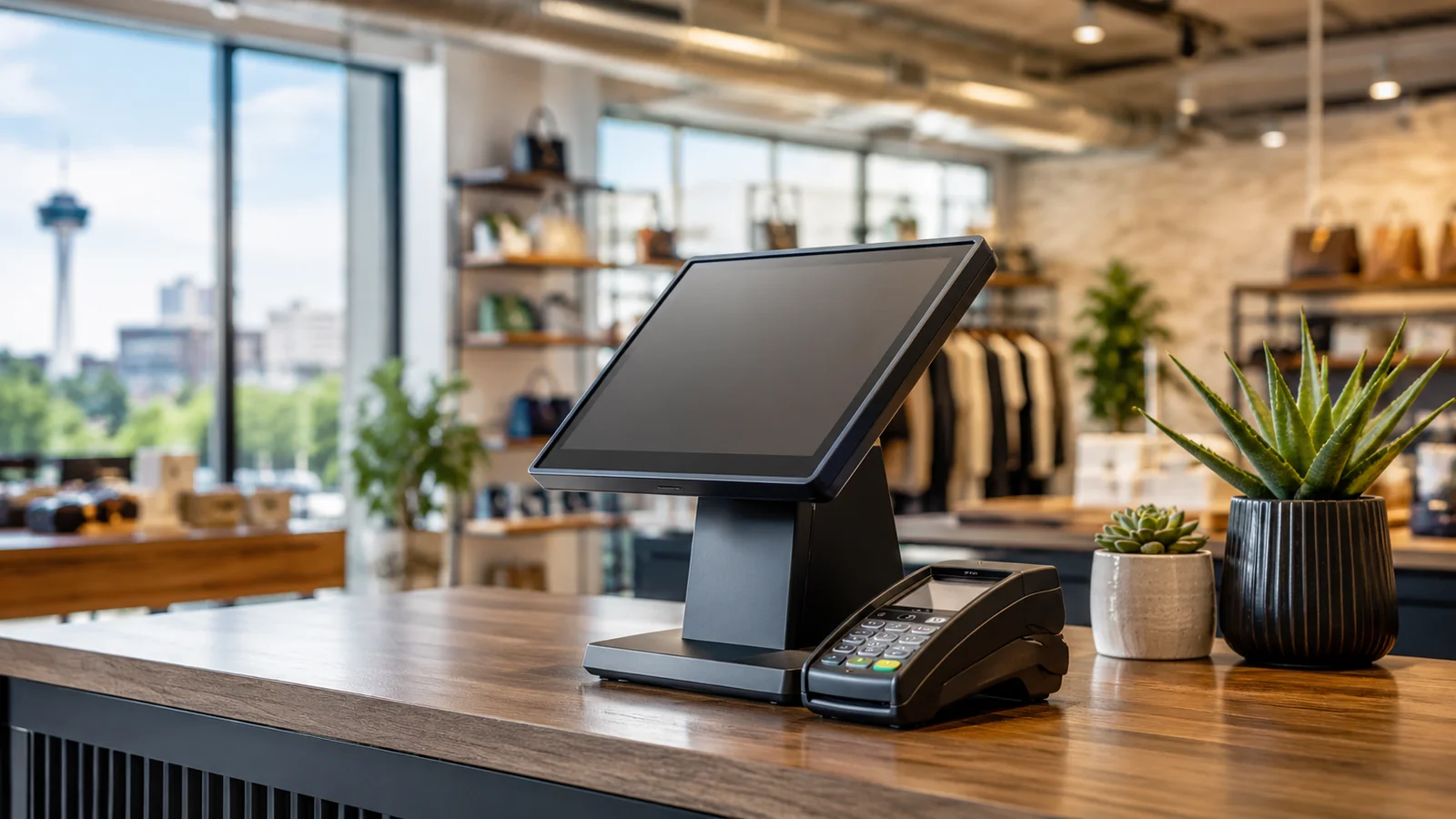
San Antonio has a genuine local presence in the POS and card reader installation market, alongside national providers who service the metro area. This guide ranks the real companies serving POS system sales, installation, and support in San Antonio, based on documented specialty, service scope, and local presence, and explains where a design-build firm like Prestige 360 Design fits into the picture when POS infrastructure is part of a larger commercial buildout.
Quick Answer: San Antonio POS, Inc. is the South Texas source for the Shift4 SkyTab POS System, focused specifically on restaurants and bars. Geeks on Site offers on-demand local technician dispatch for POS installation across the San Antonio metro. Harbortouch provides on-hand local installation specialists serving restaurants, bars, retail, salons, and spas. Merchantek Studio is a locally owned technology provider with decades of experience helping San Antonio businesses select the right POS fit. POS Bargains focuses on affordable Clover, PAX, and Valor systems specifically. None of these providers construct the physical space around the POS station; that construction and infrastructure work is where a design-build firm fits in.
The Companies, Ranked by Evidence
1. San Antonio POS, Inc.
Positioned as the South Texas source for the Shift4 SkyTab POS System, San Antonio POS, Inc. provides local sales and service focused specifically on restaurants and bars. This restaurant-and-bar specialization, rather than a general-purpose POS offering, means deeper familiarity with the specific operational needs of food-service businesses, from kitchen display integration to tab management, than a generalist provider is likely to offer, and it typically translates into faster, more confident troubleshooting when a food-service-specific issue arises during a busy service period.
2. Geeks on Site
Geeks on Site advertises rapid local technician dispatch, with expert technicians able to reach a San Antonio business within minutes across the metro area for POS installation and support needs. This on-demand, rapid-response model is particularly valuable for a business facing an urgent POS issue mid-operation, where waiting days for a scheduled technician visit is not a workable option and every minute of downtime translates directly into lost sales at the register.
3. Harbortouch
Harbortouch maintains on-hand local installation specialists in San Antonio and the surrounding area, serving restaurants, bars, retail stores, salons, and spas with both initial setup and ongoing system navigation support. The breadth of business categories served, spanning food service, retail, and personal-care businesses, makes Harbortouch a reasonable starting point for a business that does not fit neatly into a single specialized category, or one that anticipates expanding into an adjacent business type down the line.
4. Merchantek Studio
A locally owned business with decades of experience, Merchantek Studio focuses on helping San Antonio enterprises find the right technology fit for their specific needs, offering installation, setup, repair, and ongoing maintenance. This consultative, fit-first approach, rather than pushing a single proprietary hardware line, is well suited to a business genuinely unsure which POS platform best matches its operational model and would rather compare options honestly than commit early to whichever platform a single-line reseller happens to sell.
5. POS Bargains
POS Bargains serves San Antonio businesses with a focus on affordable, dependable payment processing tools, offering Clover, PAX, and Valor POS systems specifically. For a cost-conscious business prioritizing straightforward, budget-friendly hardware over an extensive feature set, POS Bargains' explicit affordability positioning is a useful signal of fit relative to competitors emphasizing premium features instead, particularly for a newer business still validating demand before investing heavily in a more elaborate system.
How We Ranked Them
Each provider's documented specialization and stated service scope was verified against publicly available business listings and provider websites. We weighted category-specific focus, a provider explicitly built around restaurant and bar operations, for example, more heavily than broad, generic claims of serving "all businesses," since a genuine specialty typically correlates with deeper platform expertise in that category's specific operational demands than a generalist provider spreading attention across every possible business type.
This ranking weighs three factors: documented business-type specialization (restaurant-specific versus general-purpose), evidence of genuine local San Antonio presence rather than a national provider with a generic metro-area listing, and breadth of ongoing support offered beyond initial installation. We did not rank by price, since POS system pricing depends heavily on hardware selection, software tier, and processing structure, covered in detail in our companion guide to card reader and POS cost in San Antonio.
Which Company Fits Which Job
| Business Type | Best Fit | Why |
|---|---|---|
| Restaurant or bar | San Antonio POS, Inc. | Focused specifically on Shift4 SkyTab for restaurant and bar operations |
| Urgent repair or same-day support need | Geeks on Site | Advertised rapid local technician dispatch across the metro |
| Multi-category business (retail, salon, spa) | Harbortouch | Broad service across restaurants, retail, salons, and spas |
| Uncertain which platform fits best | Merchantek Studio | Consultative, fit-first approach rather than a single proprietary line |
| Budget-conscious hardware selection | POS Bargains | Explicit focus on affordable Clover, PAX, and Valor systems |
Local Installer vs. Hardware Brand: What You're Actually Choosing
A subtlety worth understanding before contacting any of these companies is the distinction between the POS installer or reseller and the underlying hardware or software brand itself. San Antonio POS, Inc. installs and services the Shift4 SkyTab platform specifically, while POS Bargains works across Clover, PAX, and Valor. This means the actual day-to-day software experience a business ends up with is determined as much by which underlying platform a chosen installer represents as by the installer's own local service quality.
A business should research the underlying platform's software reviews and feature set independently, in addition to evaluating the local installer's service reputation, since a highly rated local installer working with a platform poorly suited to a specific business type will still produce an unsatisfying day-to-day experience regardless of how well the initial installation itself goes. Asking a prospective installer directly which platforms they represent, and why they recommend a specific one for your business type, is a more informative question than simply asking for their general reputation or years in business alone. This distinction also affects who you contact when something goes wrong after installation: some issues are genuinely software or platform bugs best resolved through the underlying provider's own support channel, while others are local hardware, network, or configuration issues that the local installer is better positioned to diagnose and fix quickly on-site.
Some installers, including Merchantek Studio based on its stated consultative approach, work across multiple platforms rather than representing a single proprietary line, which can be an advantage for a business wanting genuinely comparative guidance rather than a recommendation shaped by which single platform an installer happens to sell.
Matching Provider to Restaurant, Retail, or Service
A restaurant or bar owner should start the shortlist with San Antonio POS, Inc. given its explicit focus on that category and the Shift4 SkyTab platform's food-service-specific feature set, including tab management and kitchen display integration that a general-purpose retail platform is less likely to handle as smoothly. Harbortouch is a reasonable second option for restaurant and bar operators specifically, given its stated coverage of that category alongside its broader business-type list.
A retail business without food-service-specific needs has more flexibility across this list, since inventory management and barcode scanning capability, the features that matter most for retail, are available across most of these providers' represented platforms. POS Bargains' explicit affordability focus is worth prioritizing for a retail business on a tighter initial technology budget, particularly a new business still validating its concept before committing to a more feature-rich, higher-cost platform.
A salon, spa, or other appointment-based service business benefits most from Harbortouch's documented experience in that specific category, since appointment scheduling integration and client history tracking matter more to that business model than the inventory-heavy features a retail-focused platform emphasizes. A business genuinely uncertain which category best describes its own operational needs, a hybrid retail-and-service concept for example, is well served starting the conversation with Merchantek Studio given its stated consultative, multi-platform approach rather than committing early to a single-platform specialist. Whichever category a business falls into, it is worth confirming a shortlisted provider's actual, current experience with that specific business type through a direct reference rather than relying solely on the provider's own self-description, since marketing copy naturally emphasizes strengths and rarely volunteers where a provider's experience is thinner than advertised.
How to Compare Quotes Between These Companies
When comparing quotes from multiple San Antonio POS providers, separate the comparison into hardware cost, software subscription cost, processing rate, and installation or setup fee, since bundling all four into a single number makes it difficult to identify where one provider's pricing genuinely differs from another's. Ask each provider directly what ongoing support is included in their base pricing versus billed separately for a service call, since a lower upfront price sometimes comes paired with a higher cost for routine post-installation support down the line.
Confirming a provider's typical response time for a support issue, not just their advertised availability, is worth asking directly, ideally by requesting to speak with an existing local client who can describe their actual experience with support responsiveness once a system has been live for several months rather than only during the initial sales and installation period. A provider's behavior months after the sale, not the polish of their initial pitch, is ultimately what determines whether the relationship feels worthwhile a year into using the system.
What to Know Before Switching Providers Later
Businesses frequently outgrow or become dissatisfied with their initial POS provider choice as their operations mature, and understanding the practical realities of switching before signing an initial contract avoids an unpleasant surprise later. Contract length matters enormously here: a provider requiring a multi-year commitment with a significant early termination fee makes switching considerably more expensive than a month-to-month arrangement, and this term length should factor into the initial provider decision even for a business confident in its first choice, since business needs and available alternatives both change over time in ways that are difficult to predict at the outset.
Data portability is a related, often overlooked consideration. Transaction history, customer records, and inventory data accumulated over months or years of operation on one platform do not always transfer cleanly to a new provider's system, and a business switching providers may face a genuine choice between a disruptive data migration effort or simply starting fresh with historical data left behind on the old platform. Asking a prospective provider directly about data export capability and format, before signing an initial contract, is a reasonable diligence step that most first-time buyers skip entirely, focused instead on the immediate features and pricing rather than an exit scenario that may be years away but is still worth understanding upfront.
Equipment compatibility is the final piece of this puzzle: hardware purchased or leased through one provider is sometimes locked to that provider's specific software and processing agreement, meaning a switch to a new provider can require purchasing entirely new hardware even if the existing terminal is only a year or two old and otherwise functioning well. Confirming whether a specific provider's hardware is proprietary and locked, or genuinely portable to a different processor later, is worth asking directly during the initial sales conversation rather than assuming hardware ownership automatically implies full flexibility to switch providers freely down the line. None of this diligence should discourage a business from choosing confidently among the providers ranked here; it simply means going in with clear eyes about contract terms, rather than discovering the fine print only once a switch is actually being considered years down the line.
Red Flags to Watch For
- Pressure to sign a multi-year processing contract before a live product demo. A reputable provider should be comfortable letting you evaluate the actual system before committing long-term.
- Vague or evasive answers about total effective processing cost. A provider unwilling to walk through your specific expected transaction volume and calculate a realistic annual cost estimate is avoiding a genuinely comparable conversation. A trustworthy provider will do this math with you openly, showing their work rather than presenting only a bottom-line monthly figure that obscures how it was calculated.
- No clear answer about equipment ownership if you switch providers later. Leased equipment tied permanently to one processor can strand a business that wants to switch providers down the line.
- Reluctance to provide a reference from a business of comparable type and size. A provider confident in their service should have no hesitation connecting you with an existing local client.
Questions to Ask During the Onboarding Conversation
Beyond the standard questions about hardware, pricing, and contract terms, a handful of onboarding-specific questions reveal how smoothly the actual installation and go-live process is likely to go with a given provider. Asking how long a typical installation takes from contract signing to a fully operational system, and what the provider needs from the business owner during that window, floor plan details, menu items for a restaurant, product catalog for retail, sets realistic expectations rather than assuming installation happens instantly once a contract is signed.
Asking whether the provider offers on-site installation and training, versus a remote setup with the business owner expected to configure the system independently using written documentation or video tutorials, matters significantly for a first-time business owner without prior POS experience. An on-site presence during initial setup and staff training tends to catch configuration issues and answer staff questions in real time in a way that remote-only support cannot replicate as effectively, particularly for a more complex restaurant system with kitchen display integration and menu programming.
Finally, asking what happens if the assigned installer or account representative leaves the company, whether the business is reassigned promptly to a new point of contact or left without clear support continuity, is a practical question that anticipates a scenario every service-based vendor relationship eventually faces. A provider with a clear, established process for this kind of staff transition is signaling an operationally mature support structure that a smaller or less established competitor may not yet have formalized, and this maturity often matters more to a business's long-term satisfaction than any single feature comparison made during the initial sales conversation.
Where Prestige 360 Design Fits
None of the companies above handle the physical construction, electrical, and millwork infrastructure a POS station needs as part of a new commercial buildout; that is a distinct scope of work from POS hardware and software installation itself. Prestige 360 Design plans POS station placement, electrical circuits, network drops, and custom millwork as part of the broader design-build process for San Antonio commercial clients, then coordinates directly with a chosen POS vendor, potentially one of the companies above, so the physical infrastructure is genuinely ready when the POS installation team arrives on site. This sequencing avoids the common and costly scenario where POS equipment arrives at a space that construction has not actually prepared to receive it, an all-too-common gap when a business owner treats POS selection and construction planning as two entirely separate projects handled by parties who never actually speak to one another before installation day.
Key Takeaways
- San Antonio POS, Inc. specializes specifically in restaurant and bar POS via the Shift4 SkyTab platform.
- Geeks on Site and Harbortouch offer broader business-type coverage with local, on-hand technician support.
- Merchantek Studio's multi-platform, consultative approach suits a business unsure which system best fits its needs.
- Comparing quotes requires separating hardware, software, processing rate, and support cost rather than one bundled number.
- None of these providers handle construction infrastructure; that coordination sits with a design-build firm like Prestige 360 Design.
Frequently Asked Questions
Who is the best POS company for a restaurant in San Antonio?
San Antonio POS, Inc. specializes specifically in restaurant and bar POS via the Shift4 SkyTab platform. Harbortouch also serves restaurants alongside retail, salons, and spas.
Does Prestige 360 Design install POS systems?
Prestige 360 Design plans POS electrical, network, and millwork infrastructure as part of a commercial buildout, coordinating directly with a chosen POS vendor for hardware installation.
Should I choose based on installer or hardware brand?
Both matter. Research the underlying platform's software reviews independently, and ask a prospective installer which platforms they represent and why they recommend one for your business.
What should I ask about ongoing POS support?
Ask what support is included in base pricing versus billed separately, and confirm typical response time by speaking with an existing local client.
Planning a new commercial buildout with POS needs? Talk to Prestige 360 Design about coordinating infrastructure with your chosen POS vendor.
Related Services