Insights
Best Commercial General Contractors in San Antonio
July 26, 2026
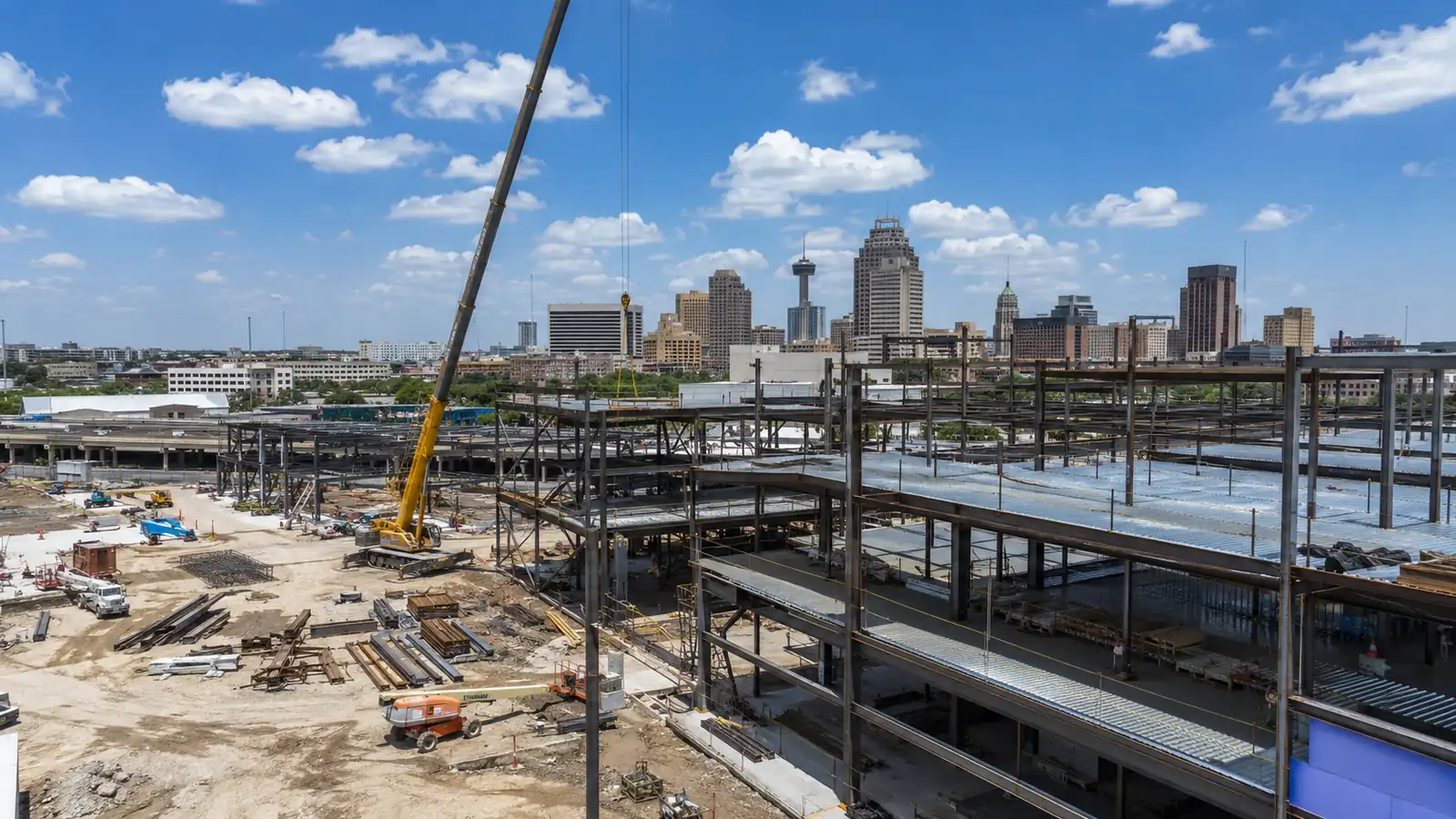
San Antonio has a deep bench of established commercial general contractors, ranging from employee-owned firms with decades of institutional projects behind them to more recently founded specialists focused on retail and finish-out work. This guide ranks the real general contractors serving commercial construction in San Antonio, based on documented tenure, project scope, and industry recognition, and explains where a design-build firm like Prestige 360 Design fits alongside a traditional general contractor on a full buildout.
Quick Answer: Bartlett Cocke stands out for sheer tenure, employee-owned and operating in San Antonio since 1959 with major institutional and commercial projects. Middleman Construction Company brings over three decades of commercial construction experience and multiple industry awards from the ABC South Texas Chapter. Metropolitan Contracting Company has completed more than 4,000 projects across 25 states. Stalwart Contracting focuses specifically on commercial ground-up and finish-out work since 2009. Greystone Construction and O'Haver Contractors round out a strong field covering retail, industrial, and public-sector commercial work. None of these firms provide interior design or space planning as part of their core service; that is where a design-build firm fits into the picture.
The Companies, Ranked by Evidence
1. Bartlett Cocke
An employee-owned general contractor headquartered in San Antonio and operating since 1959, Bartlett Cocke has built major regional projects including the Edwards Aquifer Authority Building, North Park Lexus Dominion, and the KSAT 12 television station headquarters. This tenure, over six decades of continuous operation in the same market, combined with employee ownership, which tends to align long-term incentives around project quality rather than short-term margin, makes Bartlett Cocke a strong choice for institutional and larger-scale commercial work where a contractor's staying power genuinely matters.
2. Middleman Construction Company
Led by Mark Middleman with over three decades of experience across all phases of commercial construction, this firm has become a go-to San Antonio general contractor for high-profile retail and office construction. Middleman Construction has been recognized multiple times by the ABC South Texas Chapter and the American Subcontractors Association San Antonio Chapter, including an Eagle Winner award in the General Contractor and Construction Management category, a level of documented industry peer recognition that few competitors in this list can match.
3. Metropolitan Contracting Company
Metropolitan Contracting has completed more than 4,000 projects, with work extending into 25 states beyond Texas. This project volume and geographic range signal an operationally mature company with the systems and staffing depth to handle a high volume of concurrent projects, a genuine consideration for any buyer worried about a contractor's bandwidth during a busy regional construction period.
4. Stalwart Contracting
Founded in 2009 by University of Texas at Austin Architectural Engineering graduate Alex Whittington, Stalwart Contracting is locally owned and operated with a specific focus on commercial ground-up and finish-out projects. The firm's founder-level technical engineering background, combined with a focused specialty rather than a broad general practice, makes Stalwart a strong fit for a buyer who wants a contractor deeply specialized in exactly the ground-up or finish-out scope their project requires.
5. Greystone Construction
A versatile commercial general contractor serving San Antonio and broader Texas markets, Greystone Construction covers commercial, retail, multifamily, senior housing, warehousing, and industrial project types. This breadth across multiple commercial use categories under one firm is useful for a business with a varied portfolio of property types, or for an owner who anticipates future projects across different building types and wants an established relationship to carry forward.
6. O'Haver Contractors
O'Haver Contractors pursues both private and public-sector commercial work throughout Texas, providing general contracting, construction management, design-build, and construction cost estimating and consulting services. The inclusion of design-build and cost estimating consulting as standalone services, in addition to traditional general contracting, gives a prospective client more flexibility in how early they engage the firm relative to a finalized design.
How We Ranked Them
Each of these six firms was verified against publicly available company information, industry association listings, and, where available, project portfolios documenting completed San Antonio commercial work. We prioritized firms with a clear, documented history of commercial construction specifically, rather than firms whose public information blends residential and commercial work without distinguishing between the two, since the licensing, code, and risk profile differ meaningfully between residential and commercial project categories.
This ranking weighs four factors: documented years in continuous operation as a proxy for market stability and staying power, project volume and scale where publicly documented, industry association recognition such as ABC or AGC awards, and breadth or focus of service offering relative to a given project's specific needs. We did not rank by price, since commercial general contracting pricing depends heavily on project scope, use type, and finish level, covered in detail in our companion guide to commercial general contractor cost in San Antonio.
We deliberately excluded companies that primarily function as commercial real estate brokerages or property management firms from this list, even where they appeared in general search results for "commercial contractors San Antonio," since brokerage and property management are fundamentally different services from construction management, and conflating the two creates confusion for a buyer specifically looking to build or renovate a space.
Which Company Fits Which Job
| Job Type | Best Fit | Why |
|---|---|---|
| Large institutional or public project, long-term relationship | Bartlett Cocke | 60+ years continuous operation, employee-owned, major regional projects |
| High-profile retail or office, quality track record | Middleman Construction | 30+ years, multiple ABC and ASA industry awards |
| High project volume, multi-state operations | Metropolitan Contracting | 4,000+ completed projects across 25 states |
| Focused ground-up or finish-out specialty | Stalwart Contracting | Founder engineering background, specialized commercial focus since 2009 |
| Varied property portfolio, multiple use types | Greystone Construction | Commercial, retail, multifamily, industrial under one firm |
| Public-sector work or early design-build engagement | O'Haver Contractors | Private and public-sector experience, design-build and estimating services |
Why Employee Ownership Matters for Bartlett Cocke
It is worth pausing on why this detail earns its own section in a contractor comparison guide rather than a passing mention. Ownership structure rarely appears in a typical bid proposal, yet it quietly shapes how a company makes decisions under pressure, whether to cut a corner to protect margin on a difficult project, whether to invest in additional training and safety programs, and how aggressively the company pursues rapid growth versus sustainable, well-staffed expansion. A buyer who takes the time to understand a shortlisted contractor's ownership and incentive structure, not just their portfolio, is doing a more complete diligence than most competing bidders will bother with.
Employee ownership structures, where a meaningful share of the company is held by its own workforce rather than outside investors or a small group of founders, tend to correlate with lower staff turnover and a longer-term orientation toward project quality, since the people performing the work have a direct financial stake in the company's long-term reputation rather than only their next paycheck. For a buyer evaluating Bartlett Cocke specifically, this ownership structure is a meaningful, if often overlooked, data point beyond the headline six-decade tenure figure, since it offers some explanation for how a firm sustains that kind of longevity in a competitive regional construction market.
This does not mean employee-owned firms are automatically the right choice for every project. A smaller buildout with a tight budget and fast timeline may be better served by a more specialized, leaner firm like Stalwart Contracting, where overhead structure and focus may translate into more competitive pricing on a straightforward finish-out scope than a larger, more institutionally oriented firm would offer.
Matching Contractor to Project Type
A restaurant buildout involves grease trap installation, commercial kitchen hood and ventilation systems, and specialized plumbing and electrical loads that a firm without recent restaurant experience may underestimate in both cost and schedule impact. Among the firms above, Middleman Construction's documented retail and office focus, and Greystone Construction's explicit inclusion of retail in its stated project categories, make either a reasonable starting point for restaurant or food-service inquiries, though any restaurant owner should confirm recent, specific commercial kitchen project experience directly rather than assuming it from a general retail track record.
A medical or dental office buildout carries its own specialized requirements, including infection control detailing, specific plumbing and gas line configurations for certain equipment, and accessibility compliance that goes beyond standard commercial ADA requirements. None of the six firms profiled here advertise medical construction as a named specialty, which is itself a useful data point: a buyer planning a medical space should ask pointedly about recent medical or dental project experience during the bidding conversation rather than assuming general commercial capability transfers directly.
Warehouse and light-industrial buildouts, by contrast, play directly to Greystone Construction's stated warehousing and industrial focus, and to Metropolitan Contracting's high project volume, which often correlates with the kind of repeatable, efficient process that industrial shell and light buildout work rewards. A public-sector project, a school district facility, a municipal building, or similar, is well served by O'Haver Contractors' explicit public-sector experience, since public projects carry procurement and compliance requirements that differ meaningfully from private commercial work and reward a contractor who has already navigated that process successfully.
How to Compare Quotes Between These Companies
When requesting quotes from multiple firms on this list, confirm each is bidding against an identical scope package, including the same floor plan, finish specifications, and any known equipment requirements, since a bid that appears meaningfully lower is frequently reflecting a lower finish allowance or narrower scope rather than a genuinely better price for equivalent work. Ask each firm directly about current project backlog and realistic start date, since a firm with strong credentials on paper can still be effectively unavailable if their active project pipeline cannot absorb new work on the timeline a business needs.
It is also worth asking each firm how many projects of your specific use type, restaurant, medical office, warehouse, standard retail, they have completed in the past two to three years, since general commercial construction experience does not automatically transfer to every specialized building type's code and sequencing requirements.
Local Firms vs. Larger Regional Operators
Stalwart Contracting's local, founder-led structure since 2009 offers a different working relationship than a larger, more institutionally structured firm like Bartlett Cocke or Metropolitan Contracting. A smaller, locally focused firm often means more direct access to senior decision-makers throughout a project, with the founder or a senior partner personally involved in day-to-day oversight rather than delegated entirely to a project manager several layers removed from company leadership. This can translate into faster decision-making when an issue arises mid-project, since fewer internal approval layers stand between a problem surfacing and a resolution being authorized.
A larger firm with multi-state operations, like Metropolitan Contracting, or a firm with six decades of institutional relationships, like Bartlett Cocke, brings a different advantage: deeper bench strength to absorb staffing gaps, more established relationships with major material suppliers that can help navigate supply chain constraints, and typically more sophisticated internal project management and safety systems refined across a much larger volume of completed work. Neither structure is inherently superior; the right fit depends on project scale, complexity, and how much direct, founder-level access a buyer values relative to the operational depth of a larger organization.
Buyers should also consider bonding capacity as part of this local-versus-larger calculus. A larger, more established firm typically has greater bonding capacity from surety companies, meaning they can take on larger projects or provide bonding on projects where an owner or lender requires it, while a smaller firm's bonding capacity may cap the project size they can realistically pursue. For a project of significant scale where bonding is a requirement, confirming a prospective contractor's actual bonding capacity, not just their willingness to discuss it, is a necessary step before including them in a serious bid comparison.
None of this means smaller is riskier or larger is automatically better; it means the two categories of firm solve for different priorities, and a buyer's own priorities, direct founder access versus institutional depth, should drive which category gets weighted more heavily during the shortlisting process, rather than defaulting to whichever firm has the most polished marketing website.
Red Flags to Watch For
- Unwillingness to provide a certificate of insurance directly from the carrier. A reputable firm should have no hesitation producing this document promptly.
- No verifiable references from projects of comparable size and use type. Vague or unverifiable references are a significant warning sign.
- Reluctance to commit to a written change-order approval process before work begins. This is one of the clearest predictors of billing disputes later in a project.
- An unusually aggressive timeline compared to every other bidder. This often signals corner-cutting or unplanned overtime costs that surface later as change orders.
Questions Worth Asking Every Contractor on This List
Beyond the standard bidding diligence of comparing scope and price, a handful of pointed questions tend to reveal more about a contractor's actual working style than a polished proposal document does on its own. Asking how a contractor handles an unexpected condition discovered mid-project, such as outdated wiring behind an existing wall in a renovation, reveals whether their default process is transparent, written change-order documentation or a more informal, after-the-fact billing approach that tends to produce disputes later.
Asking directly which project manager will be assigned to the job, and how much of that person's current workload is already committed to other active projects, surfaces whether the polished capabilities described in a sales conversation will translate into genuinely attentive day-to-day oversight once the contract is signed. A firm's overall reputation does not guarantee a specific project manager has the bandwidth to give a given project the attention it needs, and this is a detail worth confirming before signing rather than discovering once the project is already underway and a different priority has pulled attention elsewhere.
Finally, asking how a contractor communicates bad news, a schedule slip, a cost increase, a quality issue found during their own internal inspection, is a revealing question precisely because it is uncomfortable to ask and uncomfortable to answer honestly. A contractor who describes a clear, proactive process for surfacing problems as soon as they are identified, rather than waiting until a scheduled update meeting or hoping the issue resolves itself, is demonstrating the kind of operational maturity that correlates strongly with a smoother overall project experience.
Where Prestige 360 Design Fits
None of the companies above provide interior design, space planning, or furniture and finish curation as a core service; that is a distinct discipline from general contracting. Prestige 360 Design operates as a design-build firm for San Antonio commercial projects, handling design and space planning while coordinating construction execution, either through its own general contracting capability or in partnership with an established local general contractor, depending on project scope and complexity. For a business owner who wants design and construction decisions made together rather than sequentially through separate architect and contractor relationships, this integrated model reduces coordination burden and keeps design choices grounded in real construction cost and schedule constraints from the earliest planning stages.
Key Takeaways
- Bartlett Cocke has the longest documented tenure at 65+ years, employee-owned with major regional institutional projects.
- Middleman Construction and Metropolitan Contracting bring strong track records: 30+ years with industry awards, and 4,000+ completed projects respectively.
- Stalwart Contracting offers a focused ground-up and finish-out specialty backed by founder-level engineering expertise.
- Comparing quotes requires confirming identical scope, finish allowances, and realistic contractor availability.
- None of these firms provide interior design; that role sits with a design-build firm like Prestige 360 Design coordinating alongside a general contractor.
Frequently Asked Questions
Who is the best commercial general contractor in San Antonio?
Bartlett Cocke has the longest tenure at 65+ years and is employee-owned. Middleman Construction and Metropolitan Contracting are strong alternatives with documented awards and project volume.
Does Prestige 360 Design act as the general contractor?
Prestige 360 Design operates as a design-build firm, handling design and space planning while coordinating construction execution, either directly or in partnership with an established local general contractor.
How many general contractor bids should I get?
At least three bids from firms evaluated against an identical, clearly defined scope, with references verified from comparable past projects.
What should I ask about a contractor's project backlog?
Ask directly about current active projects and realistic start date. A firm with strong credentials can still be effectively unavailable if their pipeline cannot absorb new work on your timeline.
Planning a commercial buildout in San Antonio? Talk to Prestige 360 Design about a design-build approach that coordinates every trade on one timeline.
Related Services