Insights
Best Commercial Drywall Contractors in San Antonio
July 26, 2026
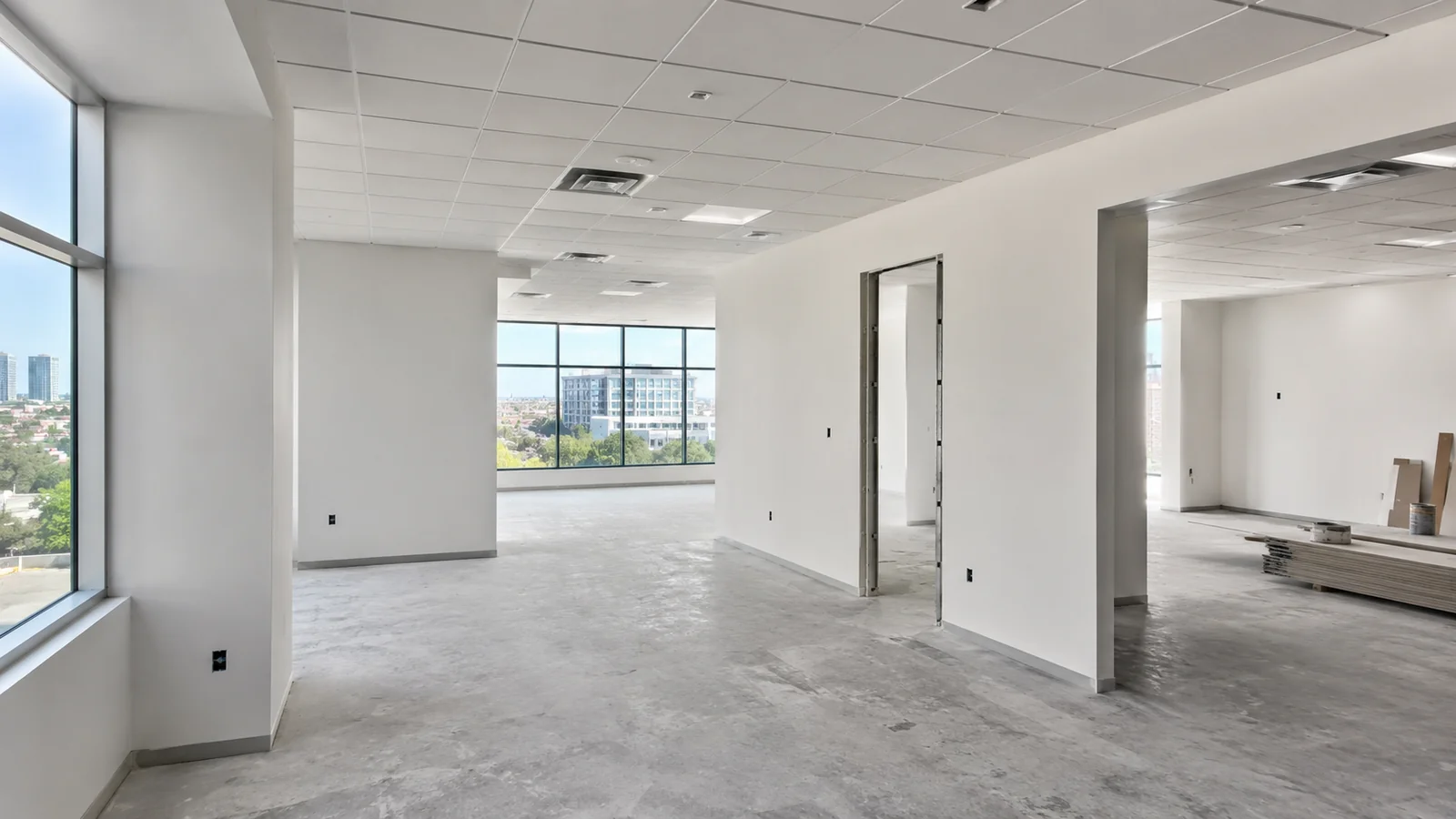
San Antonio's commercial drywall and framing market includes several genuinely established specialty contractors with decades of continuous, uninterrupted operation serving both Central and South Texas throughout that time. This guide ranks the real, verified companies actively serving commercial drywall work throughout San Antonio, based on documented tenure, actual service scope, and specific specialty focus, and clearly explains where a design-build firm like Prestige 360 Design fits into the overall picture on a full commercial buildout project.
Quick Answer: For commercial drywall in San Antonio, GD Interior Construction brings the longest documented tenure at over 35 years in South and Central Texas commercial construction. Walls Across Texas has specialized in hanging, installing, and finishing drywall systems since 1995. SpiderWallSystems is an employee-owned commercial framing, drywall, and ceiling specialty contractor. Genuity Innovations, alongside sister companies Trucrafted and Handwrought, focuses on commercial drywall for builders in San Antonio and Austin. Acoustical Dynamics specializes specifically in acoustical ceilings, drywall, and metal stud framing where sound isolation is a functional requirement. None of these companies design or manage a full commercial buildout; that coordination role sits separately with the general contractor.
The Companies, Ranked by Evidence
1. GD Interior Construction
Doing business in South and Central Texas for over 35 years, offering commercial construction services in metal stud framing, drywall hanging, and ceiling installation. This is the longest documented tenure of the companies reviewed here, and that decades-long track record in the specific combination of framing, drywall, and ceiling work suggests genuine depth across the full scope most commercial projects actually require rather than a narrower single-service specialty. A firm operating continuously through multiple economic cycles across that many years has almost certainly developed relationships with general contractors and repeat clients across the region that a newer company simply has not had time to build.
2. Walls Across Texas
Specializing in hanging, installing, and finishing drywall systems since 1995, giving this company roughly three decades of continuous, dedicated focus specifically on drywall as its core service rather than as one offering among several. A firm this narrowly focused on drywall specifically, rather than treating it as a secondary line item alongside other trades, tends to bring deeper finish-level expertise to the actual taping, mudding, and sanding phase that determines how a finished wall ultimately looks. That specialization matters most on any project where finish quality is a genuine differentiator, a retail showroom or hospitality space under strong architectural lighting, where the difference between a competent Level 4 finish and an excellent one is immediately visible to every customer who walks through.
3. SpiderWallSystems, Inc.
An employee-owned commercial framing, drywall, and ceiling specialty contractor serving Central and South Texas construction markets, positioned to address building requirements quickly and cost-effectively. Employee ownership is a meaningful structural signal in a labor-intensive trade like drywall, since it tends to correlate with lower crew turnover and more consistent quality than a firm relying heavily on subcontracted or transient labor. When the people performing the actual finish work have a direct ownership stake in the company's reputation and long-term success, that alignment often translates into a more consistent quality standard across projects than a purely wage-labor crew structure typically produces.
4. Genuity Innovations
Delivers commercial drywall installation services to builders in San Antonio and Austin, alongside sister companies Trucrafted and Handwrought. Operating across two major Texas metros with a family of related companies suggests a broader operational capacity than a single-location specialty contractor, useful for a project needing to scale crew size quickly or coordinate across both San Antonio and Austin locations. A business with expansion plans between these two specific metros benefits from a single dealer relationship that can maintain consistent specifications and quality standards across both markets rather than vetting an entirely separate contractor in each city.
5. Acoustical Dynamics
Specializes in acoustical ceilings, drywall, metal stud and framing, and wall panels, servicing San Antonio and surrounding areas. The specific acoustical specialty makes this the strongest documented option for any project with genuine sound isolation requirements, private offices, conference rooms, or any space where speech privacy is a functional necessity rather than a nice-to-have finish consideration. This kind of narrow, focused specialization in acoustic systems specifically means the crew has direct, repeated, hands-on experience installing STC-rated assemblies correctly, a meaningful advantage over a generalist drywall contractor encountering that specific requirement only occasionally.
Considerations for Multi-Phase and Growing Businesses
A business specifically planning a multi-phase buildout, or one actively expanding to additional San Antonio locations over time, has a specific reason to weigh contractor consistency more heavily than a single-project buyer does. Standardizing on one drywall contractor across every phase or location keeps finish level specifications, fire-rated assembly documentation, and warranty terms consistent, and lets the same crew build institutional familiarity with the specific buildings and space types involved rather than relearning site conditions fresh with every new project. This consistency compounds over time in a way that is easy to underestimate at the start of a relationship: the third or fourth project with the same contractor typically moves faster and with fewer surprises than the first one did, purely from accumulated direct experience with how that specific business operates and what its spaces actually need.
How We Ranked Them
This overall ranking weighs three distinct factors: documented years in business as a real proxy for stability and accumulated crew experience over time, breadth of service (framing, drywall, and ceiling combined versus a narrower single-trade focus), and any documented specialty relevant to specific project needs, acoustic performance, employee ownership structure, or multi-metro operational capacity. We did not rank by price, since commercial drywall pricing depends heavily on the specific finish level, fire rating requirements, and framing scope of each individual project, covered in detail in our companion guide to commercial drywall cost in San Antonio.
Which Company Fits Which Job
| Job Type | Best Fit | Why |
|---|---|---|
| Full framing, drywall, and ceiling scope | GD Interior Construction or SpiderWallSystems | Documented breadth across the full combined scope, not just drywall alone |
| Finish-critical work, Level 5 or premium paint conditions | Walls Across Texas | Nearly three decades of dedicated drywall finish specialization |
| Multi-location project across San Antonio and Austin | Genuity Innovations | Documented operational presence in both metros |
| Private offices, conference rooms, sound-sensitive spaces | Acoustical Dynamics | Specific documented specialty in acoustic wall and ceiling systems |
Specialty Contractors vs. General Framing and Drywall Firms
The practical distinction between a narrow specialty contractor and a broader combined framing-drywall-ceiling firm genuinely matters more on some specific projects than it does on others. A project with a genuine acoustic requirement or an unusually demanding finish level benefits from a specialist with deep, specific experience in exactly that condition. A more typical commercial buildout with standard finish levels and no unusual acoustic or fire-rating complexity is often served just as well, and sometimes more efficiently, by a broader firm handling framing, drywall, and ceiling as one coordinated scope, since that reduces the number of separate trade handoffs and coordination points a general contractor has to manage.
How to Compare Quotes Between These Companies
Getting written quotes from at least three of the companies above is genuinely worthwhile, provided the quotes actually being compared are truly comparable to one another rather than describing meaningfully different scopes of actual work.
This comparison exercise is worth doing even when one company already seems like an obvious fit based on tenure or specialty, since actual availability and current workload shift quarter to quarter and a company that was the clear best fit six months ago may be fully booked today. Getting current quotes rather than relying on a prior relationship or an old comparison is what actually reflects the market conditions a project faces right now.
The most common mistake in comparing commercial drywall quotes is comparing a per-square-foot number without confirming that each contractor is quoting the same finish level, the same fire-rating scope, and whether metal stud framing is bundled into the price or quoted separately. A quote that looks meaningfully cheaper than the others is frequently quoting a lower finish level or excluding framing, not offering a genuinely better price for the same actual scope of work.Scheduling Reliability: Why It Matters More Than Price
Because drywall consistently sits at a genuine scheduling chokepoint in almost any commercial buildout, unable to start until rough-in inspections pass and blocking every finish trade behind it until complete, a contractor's actual scheduling reliability matters more to overall project cost than the quoted price per square foot. A contractor who quotes a competitive price but consistently shows up late or understaffs a job relative to what was promised can cost a project far more in delay-related expenses, extended rent on an unopened space, contractor mobilization costs sitting idle, than a slightly higher quote from a contractor with a documented track record of hitting committed start and completion dates. Asking each of the companies above for references specifically addressing schedule reliability, not just finish quality, is worth doing before signing a contract on a project with a hard opening date.
Comparing Warranty Terms Across These Companies
Warranty terms for commercial drywall work are simply not standardized in any consistent way across the industry, and the specific coverage each of these companies offers is worth confirming directly rather than assumed to be equivalent. A workmanship warranty specifically covering cracking, popping fasteners, and visible seams should be distinguished clearly from any separate manufacturer warranty on the drywall board itself, since these two things cover entirely different failure modes and are typically the responsibility of different parties involved. Getting warranty terms in writing, including the specific duration and what triggers a covered repair versus a chargeable service call, before signing a contract prevents a disagreement over coverage from surfacing only after a problem actually occurs.
Red Flags to Watch For
- No specific experience with fire-rated assemblies when the project requires one. A contractor unfamiliar with the exact tested configuration required at a given location is a real compliance risk, not just a quality concern.
- Vague finish level language rather than a specific Level 3, 4, or 5 designation in the written scope. "Standard finish" without a number attached leaves too much room for a disappointing result.
- No willingness to discuss how framing and drywall will be sequenced with electrical, plumbing, and mechanical trades. Coordination awareness is a real signal of project management maturity.
- Reluctance to provide a written warranty covering workmanship separately from material defects. These are two different things and should be documented as such.
Licensing and Insurance in Texas
Texas does not require any state-specific license for commercial drywall and framing contractors specifically, which places the responsibility for verifying legitimacy more heavily on the buyer than in a licensed trade like plumbing or electrical. What is worth confirming before signing a contract: general liability insurance covering the work performed on the property, workers' compensation coverage for the installation crew, and, on any project involving fire-rated assemblies, whether the contractor has documented experience with the specific tested configurations the project requires. A reputable commercial drywall contractor provides a certificate of insurance without hesitation, and treats a buyer's request for one as routine rather than an inconvenience worth pushing back on.
For projects involving fire-rated assemblies specifically, it is also worth asking whether the contractor's crew leads have completed any formal training or certification specific to fire-rated wall installation, beyond general drywall experience, since the precision required to maintain a tested assembly's rating is a distinct skill from general finish-quality drywall work.
Why San Antonio Supports This Many Specialty Contractors
San Antonio's genuinely sustained commercial and light-industrial construction growth over the past several consecutive years running, with positive net demand for commercial space recorded across multiple consecutive quarters and a broad base of retail, office, and hospitality buildout activity throughout the metro, has genuinely been enough to support several established drywall and framing specialists rather than just one or two large firms dominating the entire local market. That sustained competition benefits buyers directly: with several firms each having found a viable niche, whether pure finish quality, acoustic specialization, or broad combined framing-drywall-ceiling scope, a business shopping for commercial drywall work has genuine choice rather than being forced to accept whichever single contractor happens to be available.
Verifying Years in Business Before Hiring
Years in business is one of the more reliable signals in this ranking, but it is worth verifying directly rather than accepting a marketing claim at face value. A company's stated founding year should be checkable against Texas Secretary of State business filings, which are public record, and a contractor unwilling to confirm this basic information or whose stated tenure does not match public filings is a legitimate reason for caution before signing a contract. Years in business matters specifically because commercial drywall work, particularly fire-rated assemblies and finish-critical spaces, benefits enormously from crew experience that only accumulates over time, and a newer company, even one with skilled individual tradespeople, has not yet had the chance to build the kind of institutional knowledge of local code requirements and common project pitfalls that a decades-old firm has accumulated through direct experience.
Where Prestige 360 Design Fits on a Full Buildout
None of the companies above design, permit, or manage a full commercial buildout on their own; that broader coordination role is a genuinely different scope of work entirely, requiring architectural and construction management capacity none of them are positioned to provide alongside their specific drywall and framing trade. Prestige 360 Design specifies drywall requirements against actual functional needs, fire rating, sound isolation, finish level, as part of the full buildout process, then coordinates with a drywall and framing contractor, potentially one of the companies above, to execute that specific scope on the same construction schedule as every other trade. This sequencing matters because drywall sits at a genuine scheduling chokepoint, unable to start until rough-in inspections pass and blocking every finish trade behind it until it is complete, making coordination as important as the installation work itself.
Key Takeaways
- GD Interior Construction has the longest documented tenure at over 35 years serving South and Central Texas.
- Walls Across Texas brings nearly three decades of dedicated drywall-specific focus, useful for finish-critical projects.
- SpiderWallSystems is employee-owned, a structural signal correlating with lower crew turnover and more consistent quality.
- Acoustical Dynamics is the clearest specialist for projects with genuine sound isolation requirements.
- None of these companies manage a full buildout; coordinating drywall inside the general contractor's scope keeps sequencing and finish level requirements aligned with the rest of construction.
Frequently Asked Questions
Who is the best commercial drywall contractor in San Antonio?
GD Interior Construction has the longest documented tenure at over 35 years in South and Central Texas commercial construction. Walls Across Texas and SpiderWallSystems are strong alternatives with decades of dedicated drywall and framing experience.
Does Prestige 360 Design install drywall directly?
Prestige 360 Design specifies drywall requirements against actual functional needs and coordinates installation as part of full commercial buildout projects, bringing in a licensed drywall and framing contractor to execute the physical work.
Should I hire a specialty acoustic drywall contractor for a private office project?
If genuine sound isolation is a functional requirement, a specialist like Acoustical Dynamics brings documented specific experience with STC-rated wall assemblies that a general framing and drywall firm may not have to the same depth.
Why do drywall quotes vary so much between San Antonio contractors?
Quotes vary because contractors quote different finish levels, different fire-rating scopes, and sometimes bundle metal stud framing while others price it separately. Confirming these details before comparing quotes avoids an apples-to-oranges comparison.
Is employee ownership relevant when choosing a drywall contractor?
It can be. Employee ownership tends to correlate with lower crew turnover and more consistent quality than a firm relying heavily on subcontracted or transient labor, since the people performing the work have a direct stake in the company's reputation.
Should I verify a drywall contractor's years in business before hiring?
Yes. A stated founding year should be checkable against Texas Secretary of State business filings. Years in business correlates with accumulated crew experience in local code requirements and common project pitfalls.
If your commercial drywall work is part of a larger buildout, talk to Prestige 360 Design about coordinating it alongside every other trade your project requires.
Related Services