Insights
Best Warehouse Racking Companies in San Antonio
July 26, 2026
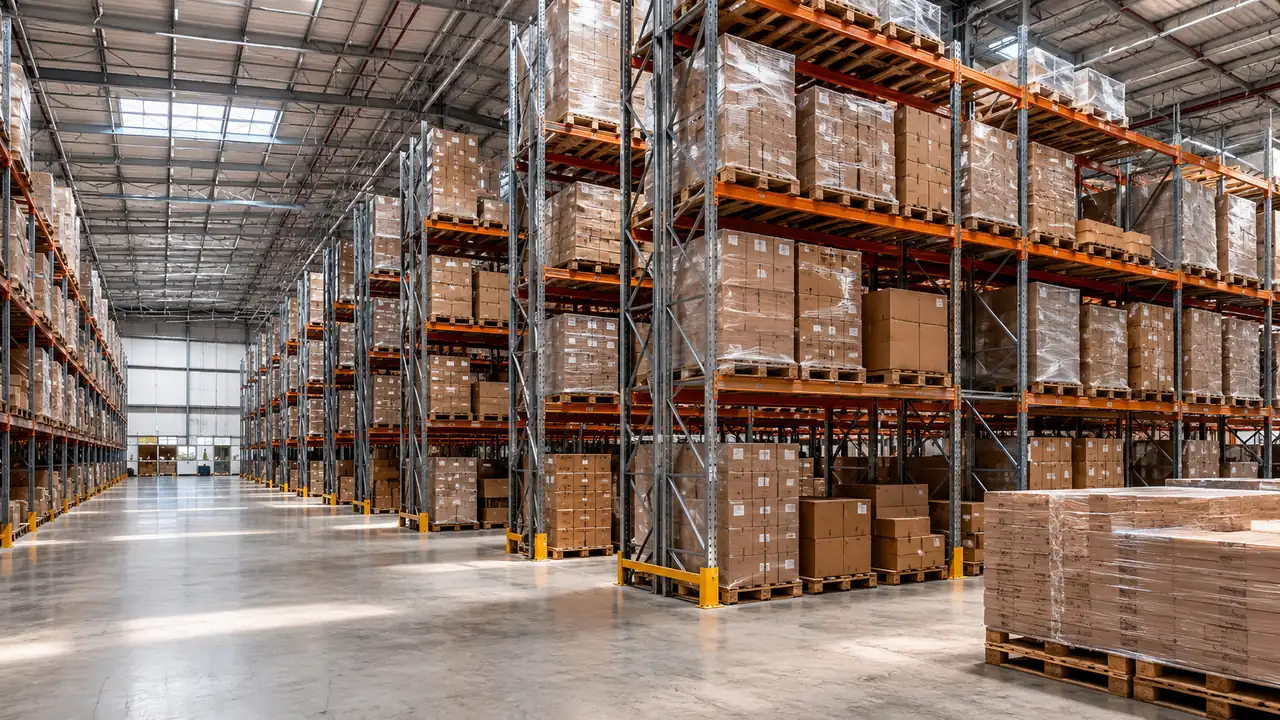
San Antonio's warehouse and industrial storage market includes national suppliers with decades of tenure alongside dedicated local specialists. This guide ranks the real companies serving commercial pallet racking work in San Antonio, based on documented tenure, service scope, and specialty focus, and explains where a design-build firm like Prestige 360 Design fits into the picture on a full warehouse buildout.
Quick Answer: For warehouse racking in San Antonio, Equipment Depot brings over 80 years of experience with 12 locations across Texas. Lone Star Pallet Racks has a dedicated San Antonio distribution location with over 20 years of installation experience and OSHA-trained crews. San Antonio Pallet Racking offers complete warehouse storage solutions including mezzanine installations. Cisco-Eagle covers the full range from standard pallet racks to cantilever racking. Direct Pallet Racking and Simply Rack round out a competitive field with design-to-installation service. None of these companies design or manage a full commercial buildout; that coordination role sits separately with the general contractor.
The Companies, Ranked by Evidence
1. Equipment Depot
With over 80 years of experience and 12 locations throughout Texas, Equipment Depot serves San Antonio with warehouse racking design services and installation oversight. This is the longest documented tenure of the companies reviewed here, and a national footprint of this scale means access to a broader inventory and faster equipment sourcing than a smaller regional supplier can typically match on a large or time-sensitive project.
2. Lone Star Pallet Racks
Maintains a distribution location in San Antonio with crews specializing in installation and removal of all types of pallet racks, fully insured, OSHA safety trained, and carrying over 20 years of installation experience specifically. Two decades of dedicated installation focus, combined with documented OSHA safety training, makes this a strong option for a business prioritizing crew safety credentials as a genuine selection criterion.
3. San Antonio Pallet Racking
Delivers complete warehouse storage solutions including mezzanine floor installations and industrial shelving for distribution centers, manufacturers, and retailers throughout the San Antonio Metro Area, installing selective racking, drive-in systems, and push-back configurations. The breadth here, covering multiple racking types plus mezzanine work under one company, is useful for a project needing more than a single racking type in one coordinated scope.
4. Cisco-Eagle
Positioned as experts in industrial storage solutions in San Antonio, helping with projects ranging from full warehouse pallet racks to heavy duty sheet metal storage and cantilever racking. This range, extending into cantilever and heavy-duty specialty storage beyond standard pallet racking, makes Cisco-Eagle a strong option for an operation with irregular or long-item storage needs alongside standard palletized inventory.
5. Direct Pallet Racking
Works with clients from initial design through final installation, offering a comprehensive range of new and used pallet racking, cantilever racks, and industrial shelving. The design-through-installation model, combined with both new and used inventory options, gives a buyer flexibility across budget tiers within a single vendor relationship.
6. Simply Rack
Serves San Antonio from a location conveniently positioned along the I-35 Corridor extending from Oklahoma City to San Antonio, offering pallet racking and warehouse storage solutions. The I-35 corridor positioning is a real advantage for a business with facilities spanning multiple points along that corridor, since a single supplier relationship can serve locations across a wide geographic range.
How We Ranked Them
This ranking weighs three factors: documented years in business as a proxy for stability and installation experience, breadth of service (racking type variety, design services, and complementary offerings like mezzanine installation), and any documented safety credentials such as OSHA training for installation crews. We did not rank by price, since racking pricing depends heavily on the specific system type, height, and load capacity of each individual project, covered in detail in our companion guide to warehouse racking cost in San Antonio.
A fourth factor worth naming explicitly is documented project scale. A company that has only handled small single-aisle installations is a different vendor than one that has managed multi-bay distribution center buildouts with integrated fire sprinkler coordination. None of the companies in this guide publish exact project counts, so we weighted this factor conservatively, favoring documented years of operation and stated specialty breadth over marketing claims of scale that cannot be independently verified. A buyer evaluating any of these companies for a large project should ask directly for photos or references from a comparably sized job before signing a contract.
We also considered whether each company's published information distinguishes between racking sales and racking installation. Some suppliers primarily sell equipment and subcontract installation to a separate crew, while others handle both under one roof. Neither model is inherently better, but knowing which model a given company follows changes what questions are worth asking before signing, particularly around liability if something goes wrong during the physical installation itself.
Which Company Fits Which Job
| Job Type | Best Fit | Why |
|---|---|---|
| Large project needing fast equipment sourcing | Equipment Depot | National footprint, 12 Texas locations, broad inventory access |
| Safety-critical installation, documented crew training | Lone Star Pallet Racks | OSHA safety trained crews, 20+ years installation-specific experience |
| Combined racking plus mezzanine project | San Antonio Pallet Racking | Documented mezzanine installation alongside multiple racking types |
| Irregular items, cantilever or heavy-duty storage | Cisco-Eagle | Documented specialty in cantilever and heavy-duty sheet metal storage |
| Budget flexibility across new and used equipment | Direct Pallet Racking | Design-to-installation model with new and used inventory options |
| Multiple facilities along the I-35 corridor | Simply Rack | Positioned to serve the full corridor from one supplier relationship |
Local Specialists vs. National Suppliers
The distinction between a national supplier like Equipment Depot and a more locally focused specialist like Lone Star Pallet Racks or San Antonio Pallet Racking matters differently depending on project scale and complexity. A large warehouse project needing rapid equipment sourcing, particularly during a period of high regional construction activity when lead times can extend, benefits from a national supplier's broader inventory access and multiple sourcing points across Texas. A smaller or more customized project, or one where a close, ongoing local relationship for future service and safety inspections matters, is often served just as well or better by a locally focused specialist with dedicated San Antonio presence and crews who already know the local permitting and inspection process.
There is also a service-after-installation dimension to this decision that is easy to overlook while focused on the upfront purchase. Racking systems need periodic safety inspections, particularly in facilities with forklift traffic where a collision can damage upright frames and compromise load capacity without leaving obvious visible damage. A locally based installer is generally easier to bring back for a follow-up inspection or minor repair than a national supplier whose nearest service technician may be dispatched from a different city. Businesses expecting frequent racking reconfiguration as inventory needs shift over time should weigh this ongoing relationship as heavily as the initial installation price.
Pricing structure also tends to differ between the two models. National suppliers often quote from a standardized catalog with published or semi-published pricing tiers tied to specific racking configurations, which can make budgeting more predictable for a straightforward project. Local specialists more frequently custom-quote based on a site visit and specific facility constraints, which can take longer to produce a number but often results in a design better matched to the actual space, particularly in older San Antonio industrial buildings with irregular column spacing or lower-than-standard ceiling clearance.
Permitting and Inspection in Bexar County
Racking installations above a certain height or load threshold typically require a permit review in Bexar County and the City of San Antonio, since a fully loaded racking system represents a genuine structural and fire-safety consideration for the building it sits inside. The specific threshold varies by jurisdiction and by whether the racking interacts with existing fire sprinkler coverage, and a company with genuine local experience will be able to describe this process from memory rather than needing to research it fresh for your project. This is one of the clearest practical advantages of choosing a company with a documented history of local installations over a supplier without prior San Antonio project experience.
Fire marshal review is a related step that often catches first-time commercial buyers by surprise. Racking height above roughly twelve feet frequently triggers a requirement for in-rack fire sprinkler heads in addition to the ceiling-level system already protecting the space, and this requirement can add meaningful cost and lead time if it is discovered late in a project rather than planned for from the start. Asking a prospective racking company directly whether your planned height will trigger in-rack sprinklers, before signing anything, is one of the single most valuable questions a buyer can ask.
How to Compare Quotes Between These Companies
Getting quotes from at least three of the companies above is worthwhile, provided the quotes are genuinely comparable. The most common mistake in comparing racking quotes is comparing a per-position or per-bay price without confirming that each supplier is quoting the same racking type, the same height and load capacity, and whether installation labor, anchoring, and permit coordination are included in the quoted price or billed separately. A quote that looks meaningfully cheaper than the others is frequently quoting a lower load capacity or excluding installation and permit work, not offering a genuinely better price for the same actual scope.
A useful practice when comparing multiple quotes is to build a simple line-item table before making a decision, listing racking type, height, load rating per position, number of positions, whether installation labor is included, whether anchoring and seismic bracing (relevant given Texas's occasional soil movement in clay-heavy areas) is included, and whether permit fees and fire marshal coordination are the supplier's responsibility or the buyer's. Laying quotes out this way, rather than comparing bottom-line totals alone, surfaces scope differences that a quick glance at a total price will not reveal, and it gives leverage in a follow-up conversation to ask a supplier why their price differs from a competitor's on a specific line item.
Financing and payment terms are worth clarifying early as well, since racking suppliers vary in whether they require a deposit before ordering equipment, what percentage is due at delivery versus after installation, and whether a final retainage is held until a walk-through inspection confirms the system meets the agreed specification. A supplier unwilling to put payment milestones in writing before work begins is a signal to slow down and get the agreement formalized before any deposit changes hands.
Questions About Installation Crews Specifically
Beyond the supplier's overall reputation, the specific installation crew performing the physical work matters enormously on a trade this safety-critical. Worth asking directly: are installers company employees or subcontracted labor, what specific OSHA training do they carry, and how many racking installations has this specific crew completed in the past year. A supplier with a strong overall reputation can still assign an inexperienced or newly hired crew to a specific project, and confirming crew-level experience, not just company-level reputation, is a more reliable predictor of installation quality on any individual project.
It is also worth asking how the crew handles an active facility, meaning a warehouse that continues receiving and shipping inventory while racking installation is underway. A crew experienced in phased installation, working section by section while the rest of the facility stays operational, will typically propose a sequencing plan without being asked, while a crew unfamiliar with active-facility work may propose shutting the whole space down, which is a meaningfully more expensive and disruptive approach for a business that cannot afford extended downtime. Asking this question during the quoting stage, before a contract is signed, avoids an unpleasant surprise once work begins.
Finally, ask what happens if damage occurs during installation, whether to the racking itself, to the building structure, or to inventory already stored nearby. A company with a clear, pre-written answer to this question, typically referencing their general liability insurance coverage, is demonstrating an operational maturity that a vague or hesitant answer does not. This is a small question that reveals a great deal about how seriously a company treats risk management on an active commercial job site.
What a Full Racking Project Timeline Looks Like
Understanding the realistic timeline for a racking project helps set expectations before requesting quotes. From initial site visit to final walk-through, a straightforward selective racking installation in an existing building typically runs four to eight weeks, broken roughly into a one to two week design and quoting phase, a two to four week equipment lead time depending on whether the racking is in stock or manufactured to order, and a one to two week physical installation window depending on facility size. A project requiring in-rack fire sprinkler coordination or structural engineering sign-off for taller systems can extend meaningfully beyond this range, sometimes reaching twelve weeks or more when permit review adds its own queue time on top of the physical work.
Lead times for the racking equipment itself have been a genuine variable in recent years, with steel component availability shifting depending on broader supply chain conditions. A supplier quoting an unusually short lead time relative to the others in this guide is worth a direct question about whether the equipment is already in local inventory or whether that timeline assumes favorable manufacturing conditions that may not hold. Building a small buffer into any project schedule tied to a hard deadline, such as a lease start date or a planned inventory receiving date, is a reasonable precaution regardless of which company is selected.
Red Flags to Watch For
- No documented OSHA safety training for installation crews. Racking installation carries genuine safety risk, and a company unable to confirm crew safety training is a real warning sign.
- Vague load capacity language rather than specific, documented ratings for the exact system quoted. A safe racking system requires specific, verifiable load ratings, not general assurances.
- No willingness to discuss anchoring and permit requirements for the specific height being quoted. This signals either inexperience or a corner-cutting approach to a genuine safety and compliance requirement.
- Reluctance to provide references from comparable local warehouse projects. A company with genuine regional experience should have verifiable local references readily available.
Where Prestige 360 Design Fits on a Full Buildout
None of the companies above design, permit, or manage a full commercial buildout; that is a different scope of work entirely. Prestige 360 Design plans racking layout against actual inventory profile, forklift equipment, and fire code requirements as part of the full buildout process for warehouse and light-industrial clients, then coordinates with a racking supplier, potentially one of the companies above, to execute that specific scope on the same construction timeline as the rest of the building. This sequencing matters because racking layout interacts directly with fire sprinkler design, aisle code minimums, and forklift traffic patterns, all decisions that need to be made together rather than racking purchased independently after the building shell is already finished.
Key Takeaways
- Equipment Depot has the longest documented tenure at over 80 years with 12 Texas locations.
- Lone Star Pallet Racks brings 20+ years of dedicated installation experience with documented OSHA safety training.
- San Antonio Pallet Racking and Cisco-Eagle offer the broadest combined service scope, including mezzanine and cantilever specialty work.
- Comparing quotes requires confirming racking type, height, load capacity, and whether installation and permit work are included.
- None of these companies manage a full buildout; coordinating racking inside the general contractor's scope keeps it aligned with fire code, aisle requirements, and forklift equipment planning.
Frequently Asked Questions
Who is the best warehouse racking company in San Antonio?
Equipment Depot has the longest documented tenure at over 80 years with 12 Texas locations. Lone Star Pallet Racks and San Antonio Pallet Racking are strong alternatives with dedicated local experience and OSHA-trained crews.
Does Prestige 360 Design install warehouse racking directly?
Prestige 360 Design plans racking layout against actual inventory and code requirements as part of full buildout projects, coordinating with a licensed racking supplier to execute the physical installation.
Should I choose a national supplier or a local racking specialist?
A large project needing fast equipment sourcing benefits from a national supplier's broader inventory access. A smaller or customized project often benefits from a local specialist's dedicated San Antonio presence and local code familiarity.
What should I ask about a racking installation crew specifically?
Ask whether installers are company employees or subcontracted, what specific OSHA training they carry, and how many installations that specific crew has completed recently, not just the company's overall reputation.
If your warehouse racking is part of a larger buildout, talk to Prestige 360 Design about coordinating it alongside every other trade your project requires.
Related Services