Insights
Warehouse Racking Cost in San Antonio
July 26, 2026
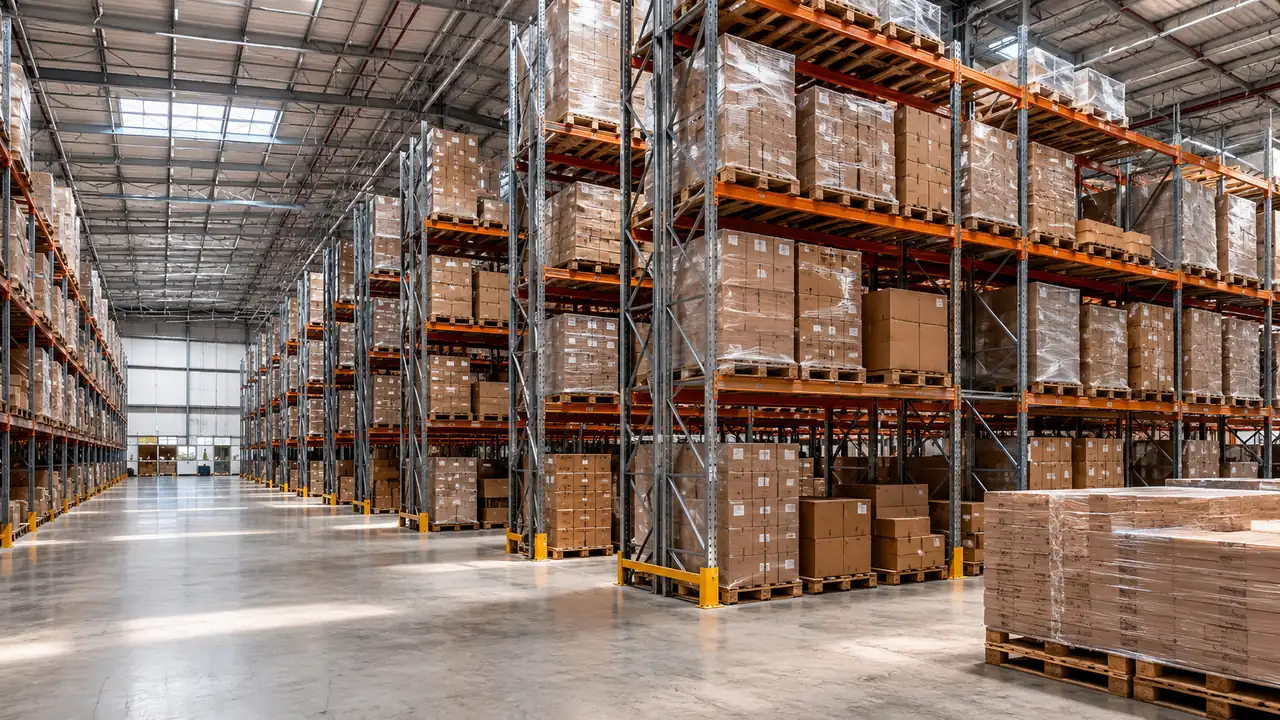
Warehouse racking pricing is quoted per pallet position, which sounds precise and easy to compare until you realize that a "position" actually means something completely different depending on which racking type is being quoted. Selective racking, drive-in racking, and pallet flow racking can carry per-position prices that differ by two to five times for what looks like fundamentally the same storage need on paper at first glance.
This guide breaks down clearly what warehouse pallet racking actually costs in San Antonio in 2026, why racking type matters more than square footage, and how it fits into a full buildout for a warehouse or light-industrial space.
Quick Answer: Warehouse pallet racking in San Antonio typically costs $75 to $200 per pallet position for selective racking, the most common type, and $200 to $500 per position for higher-density systems like drive-in, push-back, or pallet flow racking. A standard installed bay of selective racking commonly runs around $650, though this varies with height, load capacity, and site conditions. Installation labor adds 25 to 35 percent on top of the equipment cost. Selective racking gives the most direct forklift access to every pallet but uses floor space less efficiently than high-density systems, which store more pallets per square foot at a higher cost per position and reduced access to individual pallets. The right choice depends on inventory turnover and SKU count more than on budget alone.
Racking Cost by Type
| Racking Type | Cost per Pallet Position | Best Fit |
|---|---|---|
| Selective racking | $75 to $200 | High SKU count, frequent picking, direct access to every pallet |
| Drive-in / drive-through racking | $200 to $500 | Low SKU count, high volume per SKU, less frequent turnover |
| Push-back racking | $200 to $500 | Moderate SKU count, LIFO inventory rotation acceptable |
| Pallet flow (gravity flow) racking | $200 to $400 | FIFO rotation required, moderate to high volume |
| Cantilever racking | Varies by length and capacity | Long or irregular items: lumber, pipe, furniture |
| Installation labor | 25% to 35% additional | Scales with rack height and site complexity |
San Antonio's Industrial Growth and What It Means for Racking Demand
San Antonio's industrial and light-industrial real estate market has grown steadily, with positive net demand for industrial space recorded across multiple consecutive quarters and average industrial rents running in the $11 to $14 per square foot range, concentrated in submarkets like Brooks and Port San Antonio. That sustained growth has real implications for a business planning a new racking installation: lead times on new racking components can extend during periods of high regional construction activity, and racking installers and suppliers with local inventory and crews tend to serve projects faster than out-of-state suppliers shipping components in from a distant distribution center. Planning racking procurement with awareness of the current regional construction cycle, rather than assuming a national average lead time applies, is a practical consideration for any business timing a warehouse opening around a racking installation.
Racking Types Explained
Selective racking is the default, most common configuration that most warehouses actually use: single-deep rows accessible from an aisle, giving direct forklift access to every pallet position without moving other pallets. This flexibility makes it the right choice for operations with many different SKUs and frequent picking, but it uses floor space less densely than high-density alternatives since it needs an aisle for every row. Drive-in and drive-through racking eliminate most aisle space by allowing forklifts to drive directly into the rack structure, storing pallets several deep, which maximizes density for operations with fewer SKUs and larger quantities per SKU, at the cost of only being able to access the front or back pallet without moving others. Pallet flow racking uses gravity-fed rollers to automatically bring the next pallet forward as one is removed, enforcing first-in-first-out rotation, valuable for perishable or date-sensitive inventory.
What Drives the Price Beyond the Racking Itself
Beyond the base per-position cost, several factors move the total meaningfully, and understanding each one before requesting quotes helps separate a genuinely competitive price from a quote that simply omits scope a buyer will discover is needed later. Overall rack height directly drives both material cost and the engineering requirements for proper anchoring and seismic bracing, with taller systems requiring heavier gauge steel and more robust base plates. Load capacity per individual position, standard pallets versus heavier industrial loads, changes the steel gauge and welding specifications required. Aisle width is a genuine design tradeoff: narrower aisles increase overall storage density but require specialized narrow-aisle forklift equipment, which represents a genuinely separate equipment cost that needs to be planned carefully alongside the racking decision itself, not discovered after the racking is already installed and the existing forklift fleet cannot navigate the new aisle widths.
Permits, Engineering, and Anchoring Requirements
Warehouse racking above a certain height or load capacity typically requires a permit and engineered anchoring to the slab, not just a self-installed system bolted down informally. Most jurisdictions, San Antonio very much included, require racking systems above a specified height threshold to be reviewed formally as a structural system, with anchor bolt specifications and load calculations submitted as part of the permit package. Skipping this step is a real, tangible safety issue, not merely a compliance formality to be worked around, since an improperly anchored, tall racking system carries genuine and serious collapse risk once fully loaded with heavy warehouse inventory, and it is also a real liability exposure that most commercial insurance policies will flag if a claim investigation ever reveals the racking was never properly permitted or professionally engineered.
New vs. Used Racking
Used pallet racking, commonly available through racking dealers who buy back systems from warehouses closing or downsizing, can run 30 to 50 percent below new pricing for comparable capacity, a meaningful saving on a large warehouse fit-out where racking represents a substantial share of the total equipment budget.
Beyond the compatibility concerns already noted, warranty coverage is another real difference between new and used racking worth weighing before deciding purely on price. New racking typically carries a manufacturer warranty covering structural defects for a specified term, while used racking sold through a dealer commonly carries little to no warranty coverage on the components themselves, shifting the risk of a hidden structural issue entirely to the buyer. This does not make used racking a bad choice, but it does mean the upfront inspection process matters considerably more on a used purchase than it does when buying new, and skipping a thorough inspection to save time is a real risk on equipment that will carry significant loaded weight for years to come.
The tradeoff is component compatibility: racking components from different manufacturers are frequently not interchangeable, meaning a used system needs to be sourced as matched, complete sets rather than mixed and matched from different suppliers, and any damaged or bent components, common in used inventory, need careful inspection since a bent upright significantly reduces the actual rated load capacity of that column regardless of how minor the deformation might look cosmetically at a glance.Sourcing Warehouse Racking in San Antonio
San Antonio has a genuinely well-established warehouse racking and industrial storage market serving the metro's steadily growing logistics and light-industrial sector as a whole. A companion guide, the best warehouse racking companies in San Antonio, ranks the real suppliers and installers serving this market in detail.
Mezzanine Storage as an Alternative to Additional Height
When a warehouse needs more storage capacity but cannot add racking height due to sprinkler coverage limits, ceiling clearance, or fire code commodity classification, a mezzanine level is a genuine alternative worth evaluating rather than simply accepting the height ceiling as fixed. A mezzanine adds a fully structurally independent second level entirely within the existing building envelope, typically supported on its own columns rather than relying on the racking structure itself, and can be used for lighter storage, pick-and-pack operations, or overflow inventory without triggering the same fire suppression recalculation that adding racking height would require. The tradeoff is cost: a mezzanine is a larger capital investment than simply adding racking height, and it requires its own structural engineering and permit review, but for a warehouse that has genuinely maxed out its usable racking height within existing code constraints, it can unlock capacity that additional racking alone cannot.
Ongoing Racking Safety Inspections
Racking systems take regular, ongoing impact damage from forklift traffic during normal day-to-day warehouse operation, and a formal, scheduled inspection program, commonly quarterly or semi-annual depending on how heavy the forklift traffic is, catches damaged components before they become a safety failure rather than after. Common damage includes bent or dented uprights from forklift contact, missing or damaged safety pins that hold beams in place, and beams showing visible deflection under load. Many racking suppliers and third-party inspection firms offer a formal racking safety inspection service, producing a documented report that identifies damaged components needing repair or replacement, which is also increasingly requested by commercial insurance carriers as part of warehouse liability coverage. Skipping ongoing inspection in favor of only addressing damage when it becomes visually obvious is a common and preventable path to a serious racking failure.
Installation Timeline
A standard racking installation for a mid-size warehouse commonly takes one to three weeks depending on square footage and racking type, with high-density systems like drive-in racking taking longer to install correctly than standard selective racking due to the more complex structural interconnection between rows. Larger warehouses spanning tens of thousands of square feet can see installation stretch to four to six weeks, particularly when the installation needs to happen in phases around an operation that is already partially running rather than in a fully empty building. Permit review, if racking height triggers the requirement, needs to be factored into the overall project timeline separately from installation itself, since racking installation cannot begin until anchoring and structural plans are approved. Coordinating this permit timeline with the racking supplier's own equipment lead time, rather than treating the two as sequential steps, is what keeps a warehouse opening date from slipping unnecessarily on a project where both processes could realistically run in parallel.
Load Capacity and Beam Deflection: What the Rating Actually Means
Every racking beam carries a rated load capacity, but that number represents the total distributed weight the beam can hold, not a per-pallet guarantee, and confusing these two very different things is a genuinely common source of overloaded, unsafe racking in real warehouse operations. A beam rated for 5,000 pounds of distributed weight can be genuinely dangerous if a single 3,000-pound pallet is loaded off-center rather than evenly distributed, since the failure mode for an overloaded or improperly loaded beam is often gradual deflection, a visible bow in the beam, before an eventual sudden failure. Posting the rated capacity clearly on every rack bay and training warehouse staff to recognize the difference between rated capacity and safe individual pallet weight is a low-cost practice that prevents the single most common cause of racking collapse: not a manufacturing defect, but a beam loaded beyond its actual rated capacity over time.
Load rating capacity plates, physically attached to the racking structure itself rather than only documented on paper somewhere in an office filing cabinet, are considered a best practice by most racking manufacturers precisely because they keep the safe load information visible to the forklift operators actually loading pallets in real time, not just to a facility manager who set the specification months earlier and may not be present when a loading decision is actually made.
How Racking Height Interacts With Fire Sprinkler Coverage
Fire sprinkler system design in any warehouse is calculated against the specific storage height and exact commodity classification of what is actually being stored, and racking taller than what the sprinkler system was originally designed for can create real gaps in fire protection coverage that are not obvious just by looking at the space. In-rack sprinklers, additional sprinkler heads installed within the racking structure itself rather than only at the ceiling, are frequently required once storage height exceeds a certain threshold or the stored commodity carries a higher fire risk classification, and retrofitting in-rack sprinklers after racking is already installed and loaded is significantly more disruptive and expensive than planning for them at the same time the racking layout is designed. This is one of the clearest examples of why racking height should never be decided independently of the building's existing fire protection system.
Why This Belongs in the Buildout Plan, Not a Standalone Purchase
Racking layout interacts directly with forklift traffic patterns, fire sprinkler coverage requirements, and aisle width code minimums, all of which are decisions made during the space planning phase of a warehouse buildout, not after the building is finished. A racking layout finalized in isolation, without input from the fire protection engineer and without confirming the forklift fleet the operation actually uses, is a common source of expensive rework once the mismatch becomes apparent during move-in.
The coordination problem compounds when racking is purchased directly by the warehouse operator on a separate timeline from the rest of the buildout, with no single party responsible for confirming that the racking layout, the fire suppression design, and the loading dock and forklift traffic flow all work together as one coherent system. Managing racking as one coordinated decision within the broader space plan, rather than as an independent equipment purchase made after the building shell is complete, is what prevents a warehouse from opening with a racking configuration that technically fits the floor plan but does not actually support how the operation needs to run.
Prestige 360 Design plans racking layout as part of the full commercial buildout for warehouse and light-industrial clients, coordinating rack height and configuration with the fire suppression design and forklift equipment plan so the racking system fits the operation instead of the operation being retrofitted around a racking layout chosen independently of everything else in the space.Key Takeaways
- Selective racking runs $75 to $200 per pallet position; high-density systems like drive-in and pallet flow run $200 to $500.
- Racking type should be chosen against SKU count and inventory turnover, not budget alone; the wrong type creates real operational inefficiency.
- Racking above a certain height typically requires a permit and engineered anchoring, a genuine safety requirement, not just paperwork.
- Used racking can save 30 to 50 percent but requires sourcing matched, complete sets and careful inspection for damaged components.
- Racking layout interacts with fire sprinkler coverage, aisle code minimums, and forklift equipment, making it a space planning decision, not a standalone purchase.
Frequently Asked Questions
How much does warehouse pallet racking cost in San Antonio?
Selective racking, the most common type, runs $75 to $200 per pallet position. High-density systems like drive-in, push-back, and pallet flow racking run $200 to $500 per position. Installation labor adds 25 to 35 percent.
What is the difference between selective and drive-in racking?
Selective racking gives direct forklift access to every pallet from an aisle, best for many SKUs with frequent picking. Drive-in racking eliminates aisle space by storing pallets several deep, maximizing density for fewer SKUs with larger quantities per SKU.
Does warehouse racking require a permit in San Antonio?
Racking above a certain height or load capacity typically requires a permit and engineered anchoring to the slab, reviewed as a structural system with load calculations submitted as part of the permit package.
Is used pallet racking a good option to save money?
Used racking can run 30 to 50 percent below new pricing, but components from different manufacturers are frequently not interchangeable, so used systems need to be sourced as matched, complete sets and inspected carefully for damage.
How does racking height affect fire sprinkler requirements?
Fire sprinkler design is calculated against specific storage height and commodity classification. Racking taller than the sprinkler system was designed for can require in-rack sprinklers, which are far more disruptive to retrofit after installation than to plan for upfront.
How often should warehouse racking be inspected for safety?
Commonly quarterly or semi-annual depending on forklift traffic volume. Regular inspection catches bent uprights, missing safety pins, and beam deflection before they become a safety failure.
Prestige 360 Design plans warehouse racking layout as part of full commercial buildout projects for light-industrial clients in San Antonio. Talk to our team before racking gets ordered independently of your space plan.
Related Services