Insights
Boutique Retail Interior Design: A Texas Buildout Guide for Independent Brands (2026)
June 9, 2026
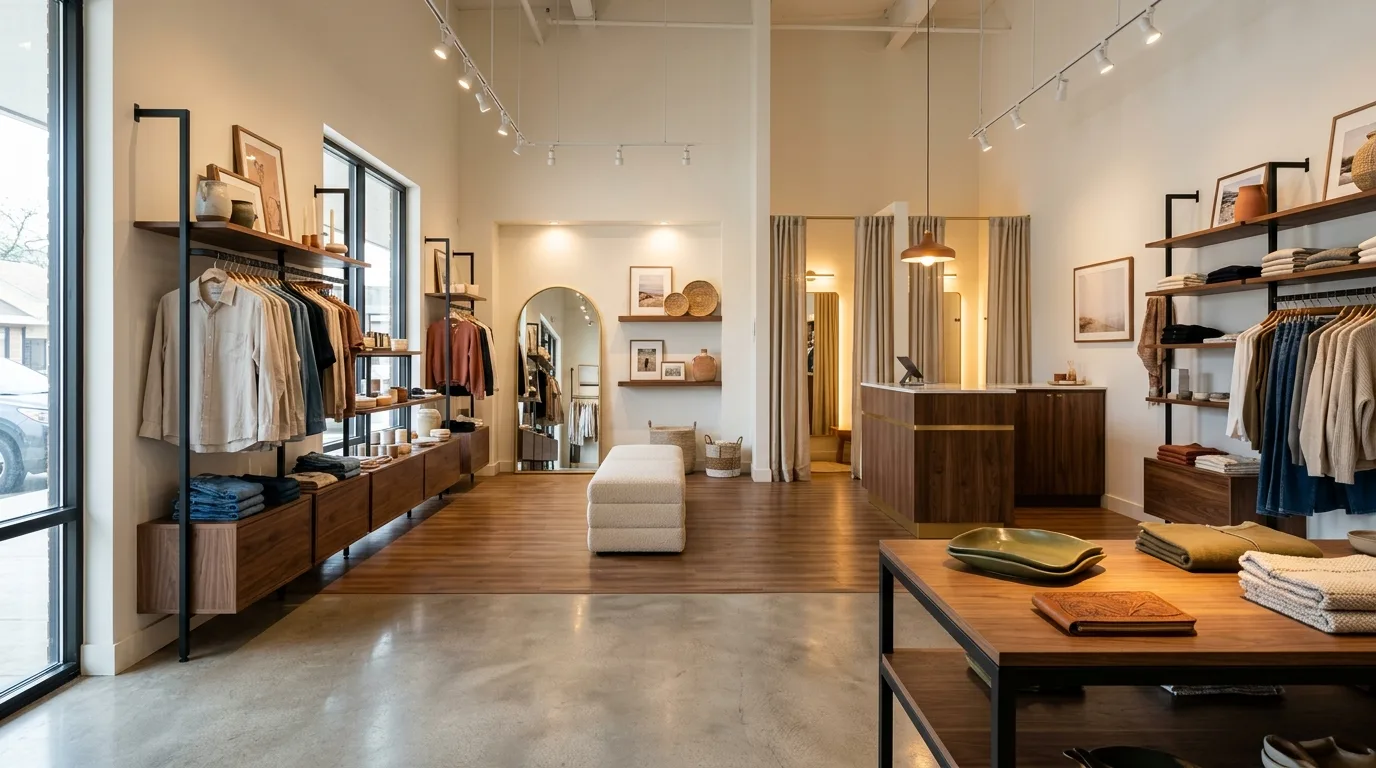
Boutique retail interior design is where brand feeling and sales mechanics meet. For an independent brand, the store is the clearest expression of who you are, and the layout, fixtures, and lighting quietly decide how much each visitor buys. This guide walks Texas boutique owners through the design and buildout decisions that make a small retail space both feel like the brand and perform like a sales floor.
Quick Answer: boutique retail interior design comes down to five decisions:
- The journey: how customers move from entry through the store, with a strong first focal point and a logical path.
- Fixtures and merchandising: flexible displays that show the product well and adapt as inventory changes.
- Lighting: layered lighting that flatters product and creates atmosphere, the most underrated sales tool in retail.
- Fitting rooms and checkout: comfortable fitting rooms and a point of sale placed to encourage add-on purchases.
- Brand translation: materials, color, and detail that make the space unmistakably yours.
Why Boutique Retail Design Is Its Own Discipline
Designing a boutique is not the same as designing a big-box store or a generic retail unit. A boutique trades on intimacy, curation, and brand feeling, the very things that get lost when you apply chain-store design logic to a small independent space. The square footage is limited, so every fixture and sightline has to work harder, and the brand story has to come through in details a large retailer would never sweat.
At the same time, a boutique still has to function as a sales floor. The most beautiful store fails if customers cannot find their way through it, cannot see the product clearly, or never reach the back wall. Boutique design is the discipline of holding both truths at once: it has to feel like the brand and it has to sell. This is the heart of effective retail design for independent brands.
Designing the Customer Journey Through the Store
Every store has an invisible path customers follow, and good design makes that path intentional. In most markets, customers entering a store drift to the right and move counterclockwise, which means the area just inside and to the right of the entry is prime real estate. The decisions that shape the journey:
- The decompression zone: the first few feet inside the door where customers adjust from the street and are not yet ready to shop. Keep it relatively open, with a single strong focal display rather than crowded racks.
- The focal point: a feature display or styled table that catches the eye on entry and signals what the brand is about.
- The path to the back: a clear route that draws customers deep into the store, because the back wall is often the strongest selling surface and customers who reach it browse more.
- Rest and dwell points: a seat, a mirror, a styled vignette that slows people down and increases the time they spend, which correlates with what they buy.
Getting the journey wrong is one of the most common and costly retail mistakes. Our guide on retail layout mistakes that kill sales covers the patterns to avoid.
Fixtures and Visual Merchandising
Fixtures are the working furniture of a boutique. They display the product, define the path, and carry a large part of the brand feeling. For an independent brand, the key qualities are flexibility and quality of presentation.
- Flexibility: a small boutique changes its merchandising constantly as seasons and inventory shift. Fixtures that can be reconfigured, moved, and re-merchandised keep the store fresh without a renovation.
- Density balance: too sparse and the store feels empty and expensive to run; too dense and it feels cluttered and cheapens the product. The right density signals the brand’s price position.
- Feature vs volume display: a mix of feature displays that style a few hero pieces and volume displays that hold depth of stock. Feature displays sell the story; volume displays make the sale.
- The cash wrap as a fixture: the checkout counter is both functional and a final merchandising opportunity for impulse and add-on items.
Strong visual merchandising and fixtures are where a boutique’s personality and its sales performance most directly overlap.
Lighting: The Most Underrated Sales Tool
Lighting does more for retail sales than almost any other design element, and it is the thing independent owners most often under-invest in. Good retail lighting works in layers:
- Ambient lighting: the overall light level that sets the mood. Boutiques often run a slightly lower ambient level than big-box stores to feel more intimate and premium.
- Accent lighting: focused light on feature displays, the entry focal point, and hero product, drawing the eye and creating contrast.
- Task lighting: brighter, accurate light at fitting rooms, mirrors, and the cash wrap where customers evaluate product and complete the sale.
- Color temperature and rendering: light that renders product colors accurately so what customers see in the store matches what they take home, which reduces returns and builds trust.
Flat, uniform fluorescent lighting is the fastest way to make a boutique feel like a discount store. Layered, intentional lighting is one of the highest-return investments in a small retail buildout.
Fitting Rooms and the Point of Sale
For apparel and many lifestyle boutiques, the fitting room is where the purchase decision is actually made, and it is chronically under-designed. A good fitting room is comfortable, private, well-lit with flattering and accurate light, and large enough to move in. Hooks, a seat, and a quality mirror are not luxuries; they are conversion tools. The number of fitting rooms should match your traffic so customers are not waiting in line at peak.
The point of sale should be positioned so staff can see the floor and the entry for both service and security, and so the checkout flow encourages a last add-on without feeling pushy. In a small boutique, the cash wrap location also affects how the whole journey closes, ideally near the natural end of the customer’s path.
Translating Brand Into Materials and Detail
What separates a memorable boutique from a generic one is how completely the brand comes through in the physical space. This is less about a logo on the wall and more about the cumulative effect of material, color, texture, and detail. A brand that is warm and artisanal reads in natural wood, soft textiles, and handmade detail; a brand that is modern and minimal reads in clean lines, restrained palette, and precise finishes.
For independent brands expanding to a second location, consistency of this brand feeling across stores is what makes the brand recognizable. Our work on second-location retail design focuses on translating a brand from its flagship into new spaces that feel unmistakably the same while fitting a different floor plate.
Texas Buildout Realities for Boutique Retail
Turning a boutique design into a built store involves a few Texas-specific realities. None of these are code or legal advice; confirm specifics with your designer, engineer, and the local authority.
- Second-generation retail space: many boutiques take over a previous retail tenant’s space, inheriting their layout, lighting, and fixtures. This can save money or constrain the design depending on condition.
- ADA path of travel and fitting rooms: the accessible route through the store and accessible fitting room requirements should be confirmed with your designer against current standards.
- Electrical capacity for lighting: a layered lighting plan draws more power than a basic retail fit-out, so confirm the electrical service supports it.
- Storefront and signage: many Texas municipalities and shopping centers have their own signage and storefront guidelines to coordinate.
- Permitting and timeline: the buildout permit process varies by city and should be planned into the schedule with help from a contractor experienced in your municipality.
Common Boutique Retail Design Mistakes
- Crowding the entry: filling the decompression zone with product so customers feel pressed the moment they walk in.
- Flat, uniform lighting: the single fastest way to make a boutique feel cheap.
- Under-designed fitting rooms: losing sales at the exact moment of decision.
- Fixtures too dense or too sparse: sending the wrong price signal and making the store hard to shop.
- No clear path to the back: leaving the strongest selling wall unseen.
- Brand feeling that stops at the logo: a space that could belong to any brand because the materials and details say nothing specific.
- Cash wrap in the wrong place: breaking the journey or missing the add-on opportunity.
What a Boutique Buildout Costs in Texas
Boutique buildout cost depends on the condition of the existing space, the level of custom millwork and fixtures, the lighting package, and finish quality. A second-generation retail space in good condition costs less than a bare shell or a space converted from another use. Custom fixtures and a layered lighting plan are where boutiques most often choose to invest, because they directly affect how the brand reads and how the store sells. For working ranges, see our commercial buildout cost guide for 2026 and our overview of commercial remodel cost per square foot.
Opening or relocating a boutique in Texas? Prestige 360 helps independent brands design retail spaces that feel like the brand and sell like a pro. Talk to Prestige 360
Frequently Asked Questions
What makes boutique retail design different from regular store design?
Boutique design trades on intimacy, curation, and brand feeling within a small footprint, where every fixture and sightline has to work harder and the brand story comes through in details a large retailer would skip. Unlike big-box design, it cannot rely on scale or standardized fixtures. At the same time it still has to function as a sales floor, with a clear customer journey, strong product visibility, and a checkout flow that drives add-on sales. Boutique design holds both truths: it has to feel like the brand and it has to sell.
How does lighting affect boutique sales?
Lighting is one of the highest-return investments in a boutique. Layered lighting, combining ambient mood lighting, accent lighting on feature displays, and accurate task lighting at fitting rooms and the cash wrap, draws the eye to product, creates atmosphere, and helps customers evaluate items accurately. Accurate color rendering also reduces returns by matching what customers see in-store to what they take home. Flat, uniform lighting is the fastest way to make a boutique feel like a discount store.
Where should the checkout counter go in a small boutique?
The point of sale should sit where staff can see the floor and the entry for service and security, and ideally near the natural end of the customer’s path through the store so checkout closes the journey. The cash wrap is also a final merchandising opportunity for impulse and add-on items. In a small boutique, its placement affects both how secure the store feels to operate and how effectively the last few feet of the visit convert into add-on sales.
How many fitting rooms does a boutique need?
Enough that customers are not waiting in line at peak, since the fitting room is often where the purchase decision is made. The exact number depends on store size, traffic, and category, but the quality of each room matters as much as the count: comfortable, private, well-lit with flattering and accurate light, with a seat, hooks, and a quality mirror. Under-designed or too few fitting rooms lose sales at the exact moment of decision.
Can I reuse a previous retail tenant’s space for my boutique?
Often yes, and a second-generation retail space in good condition can save significant time and money. The caveats: verify that the existing layout, lighting, and fixtures suit your brand and merchandising, confirm the electrical service supports a proper lighting plan, check that ADA path of travel and fitting room accessibility meet current standards, and assess the condition of finishes and storefront. A second-generation space fits some brands beautifully and constrains others, so evaluate it against your specific design before committing.