Insights
White Box vs Second-Generation Space: How Buildout Costs Change in Texas Commercial Leases (2026)
June 9, 2026
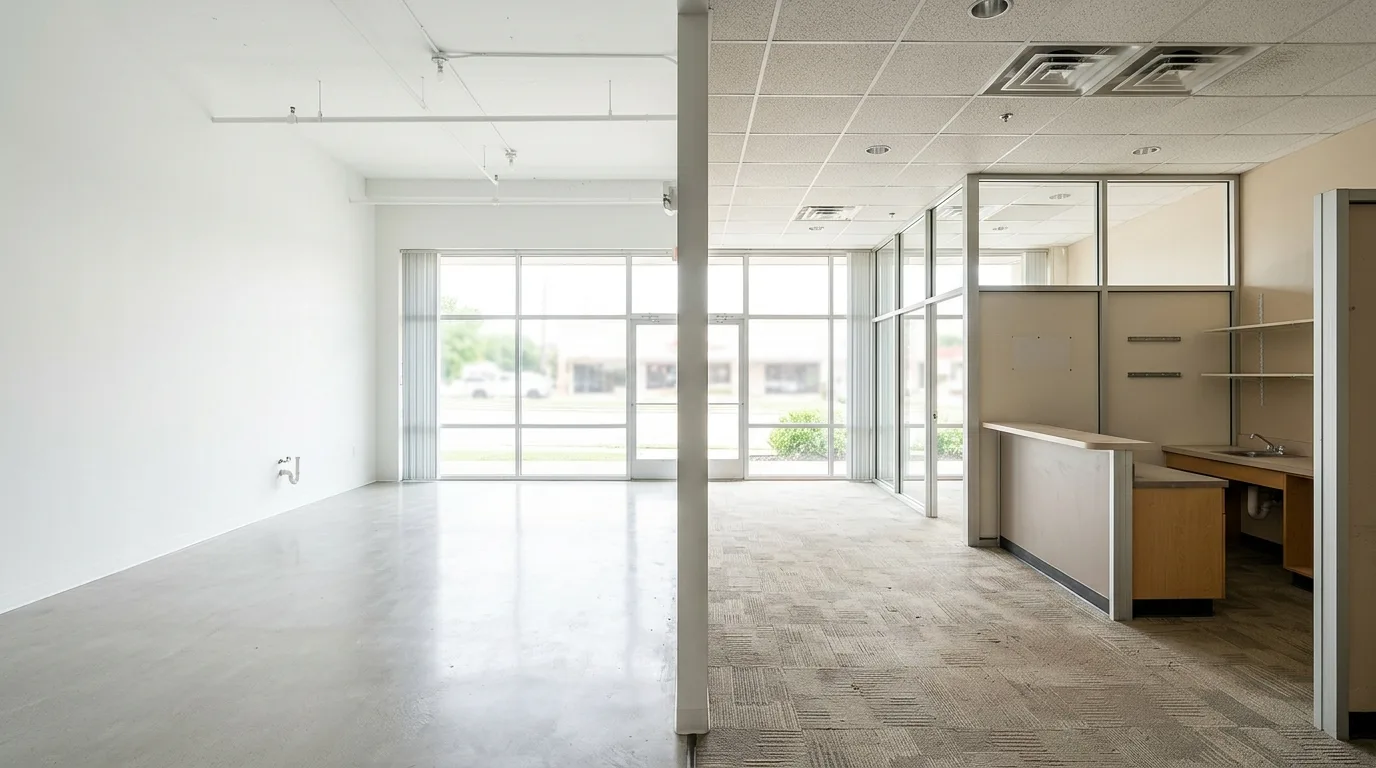
The condition a commercial space is delivered in, white box or second-generation, is one of the biggest single factors in what your buildout will cost and how long it will take. Yet many Texas business owners sign a lease without fully understanding which one they are getting or what it means for their budget. This guide explains both, compares cost and timeline, and helps you decide which delivery condition actually fits your project.
Quick Answer: white box vs second-generation space:
- White box (vanilla shell): a clean, basic finished space, typically smooth walls, a finished floor, basic lighting and HVAC distribution, and capped utilities. A blank starting point you build out from scratch.
- Second-generation space: a space a previous tenant built out and left, with existing walls, finishes, and systems you can reuse, modify, or remove.
- The tradeoff: white box gives a clean slate at higher buildout cost; second-generation can save money and time when the prior buildout fits your use, or create demolition and rework costs when it does not.
The Short Version: Two Very Different Starting Points
When you tour commercial spaces, you are really looking at two categories of starting condition. One is essentially blank, finished just enough to build from. The other carries the bones of whatever business was there before. Neither is universally better. The right choice depends on your use, your budget, your timeline, and how closely the previous tenant’s buildout matches what you need. Understanding the difference is core to commercial buildout planning and to negotiating a lease that works in your favor.
What a White Box (Vanilla Shell) Actually Includes
White box, also called a vanilla shell or vanilla box, refers to a space finished to a basic, neutral, ready-to-build condition. The exact definition varies by landlord and lease, which is exactly why it matters to pin down in writing. A typical white box includes:
- Smooth, finished, often painted demising walls
- A finished or sealed concrete floor ready for your floor covering
- A basic ceiling, sometimes a grid with standard tiles, sometimes open
- Basic overhead lighting distribution
- HVAC distribution to the space, often with basic units and ductwork
- Capped plumbing and electrical stubbed to the space
- A code-compliant storefront or entry and often a basic restroom
What a white box does not include is anything specific to your business: no interior walls beyond the demising walls, no finishes, no specialized equipment, no custom lighting or layout. You build all of that. Because the exact scope of a vanilla shell varies, the single most important step is to get the delivery condition defined in detail in the lease, item by item, so you know precisely what you are inheriting and what you are building.
What Second-Generation Space Means
Second-generation space, often shortened to second-gen, is a space that a previous tenant built out and then vacated. It comes with the prior tenant’s improvements still in place: interior walls, finishes, ceilings, lighting, sometimes specialized infrastructure like a restaurant’s kitchen rough-in or a medical office’s plumbing. A former restaurant space being leased to a new restaurant is a classic high-value second-generation scenario, because the expensive infrastructure may be reusable.
The value of second-generation space is entirely conditional on fit. If the previous tenant’s buildout aligns with your use, you may inherit tens of thousands of dollars of usable infrastructure. If it does not, you may be paying to demolish and haul away someone else’s improvements before you can build your own. The same second-gen space can be a bargain for one tenant and a burden for another.
How Each Changes Buildout Cost
The cost difference between the two conditions can be substantial, and it runs in both directions depending on fit.
| Factor | White Box | Second-Generation |
|---|---|---|
| Starting point | Clean slate, build everything | Existing improvements, reuse or remove |
| Demolition cost | Minimal | Can be significant if prior buildout does not fit |
| Reusable infrastructure | None beyond base building | Potentially high value if use matches (kitchens, restrooms, MEP) |
| Cost predictability | More predictable, fewer hidden conditions | Less predictable, unknown conditions behind existing finishes |
| Best-case total cost | Moderate to high | Low, when prior buildout closely matches your use |
The key insight: a white box has a higher floor but a more predictable cost, because you are building from a known blank condition. A second-generation space has a lower potential cost but a wider range, because the savings depend entirely on how much you can reuse, and the surprises hide behind existing walls and ceilings. For working per-square-foot ranges by scope, see our commercial buildout cost guide for 2026, tenant improvement cost per square foot in Texas, and commercial remodel cost per square foot.
How Each Changes Timeline
Timeline follows a similar logic. A white box has a clean, predictable construction sequence because you are not working around or removing existing conditions. A well-matched second-generation space can be the fastest path to opening, since reusing existing walls, restrooms, and infrastructure removes whole phases of work. A poorly matched second-generation space can actually be slower than a white box, because demolition, discovery of hidden conditions, and rework all add time before the real buildout begins.
When White Box Wins and When Second-Gen Wins
White box tends to win when:
- Your concept is specific and would require removing most of any prior buildout anyway
- You value cost predictability and a clean design canvas
- No suitable second-generation space exists in your target location
- Your brand or operation needs a fully custom layout
Second-generation tends to win when:
- The previous tenant had a similar use (restaurant to restaurant, medical to medical, salon to salon)
- The existing infrastructure, especially expensive MEP and restrooms, matches your needs
- Speed to opening matters and the existing layout is close to workable
- Budget is tight and the reusable improvements offset the constraints
Second-Generation Traps to Check Before You Sign
Second-generation space is where the most expensive lease surprises hide. Before signing, verify these items with your designer, contractor, and the appropriate authorities. None of this is legal or code advice; it is a checklist of what to confirm.
- Condition of existing systems: HVAC, electrical, and plumbing may be at the end of their life or sized for the prior use. Inspect, do not assume.
- Code updates since the prior buildout: a space built out years ago may not meet current ADA, fire, or energy requirements, and your buildout may trigger upgrades. Verify with the local authority.
- Hidden conditions: what is behind the existing walls and above the ceiling is unknown until opened. Budget a contingency.
- Specialized infrastructure fit: a former restaurant’s grease and exhaust, or a former clinic’s plumbing, only saves money if it matches your specific needs and remains compliant.
- Demolition and disposal cost: removing what does not fit has real cost that can erode the apparent savings.
- Lease delivery condition: confirm in writing exactly what condition the landlord delivers and who is responsible for any removal or remediation.
Our broader checklist on what to verify before signing a commercial lease covers these and related lease items in depth.
What This Means for Lease Negotiation
The delivery condition is not just a fact about the space; it is a negotiating point. With a white box, you can negotiate exactly what the vanilla shell includes, since every item the landlord finishes is one less item you build. With second-generation space, you can negotiate who pays to remove unsuitable improvements and what condition the space is delivered in. In both cases, the tenant improvement allowance, the money a landlord contributes toward your buildout, interacts directly with the delivery condition. A space delivered closer to ready may come with a smaller allowance, and a rougher space with a larger one, so evaluate them together, not separately. A design and planning partner who can estimate your real buildout cost in each scenario gives you the leverage to negotiate from facts rather than guesses.
Comparing spaces in Texas? Prestige 360 can assess white box and second-generation options against your concept and budget before you sign, so you know the real buildout cost of each. Talk to Prestige 360
Frequently Asked Questions
What is the difference between white box and second-generation commercial space?
A white box, or vanilla shell, is a clean basic finished space, typically with smooth walls, a finished floor, basic lighting and HVAC distribution, and capped utilities, that you build out from scratch. Second-generation space is a space a previous tenant built out and vacated, with existing walls, finishes, and systems you can reuse, modify, or remove. White box is a blank, predictable starting point; second-generation can save money and time when the prior buildout fits your use, or add demolition and rework cost when it does not.
Is white box or second-generation space cheaper to build out?
It depends on fit. A white box has a higher but more predictable buildout cost because you build from a known blank condition. A second-generation space has a lower potential cost when the previous tenant’s improvements, especially expensive infrastructure like kitchens and restrooms, match your use, but a wider cost range because demolition of unsuitable work and hidden conditions can erode the savings. The same second-gen space can be a bargain for a matching use and a burden for a different one.
What does a vanilla shell include?
A typical vanilla shell, or white box, includes smooth finished demising walls, a finished or sealed concrete floor, a basic ceiling, basic overhead lighting, HVAC distribution to the space, capped plumbing and electrical, and often a code-compliant storefront and basic restroom. It does not include interior walls, finishes, specialized equipment, or custom layout and lighting. Because the exact scope varies by landlord and lease, the delivery condition should be defined in detail in writing, item by item.
When is second-generation space the better choice?
Second-generation space tends to win when the previous tenant had a similar use, such as restaurant to restaurant or medical to medical, so the existing infrastructure and layout are reusable; when speed to opening matters and the existing layout is close to workable; and when budget is tight and the reusable improvements outweigh the constraints. It is most valuable when expensive systems like commercial kitchen rough-in, restrooms, or specialized plumbing match your needs and remain compliant with current code.
How does delivery condition affect a tenant improvement allowance?
Delivery condition and the tenant improvement allowance interact directly and should be evaluated together. A space delivered closer to ready, such as a more complete white box or a well-matched second-generation space, may come with a smaller allowance, while a rougher space may come with a larger one. The right comparison is total out-of-pocket buildout cost after the allowance in each scenario, not the allowance or the delivery condition alone. Estimating your real buildout cost for each option gives you leverage to negotiate from facts.