Insights
How Much Does a Commercial Buildout Cost in 2026? A Real Guide for Retail Owners
May 26, 2026
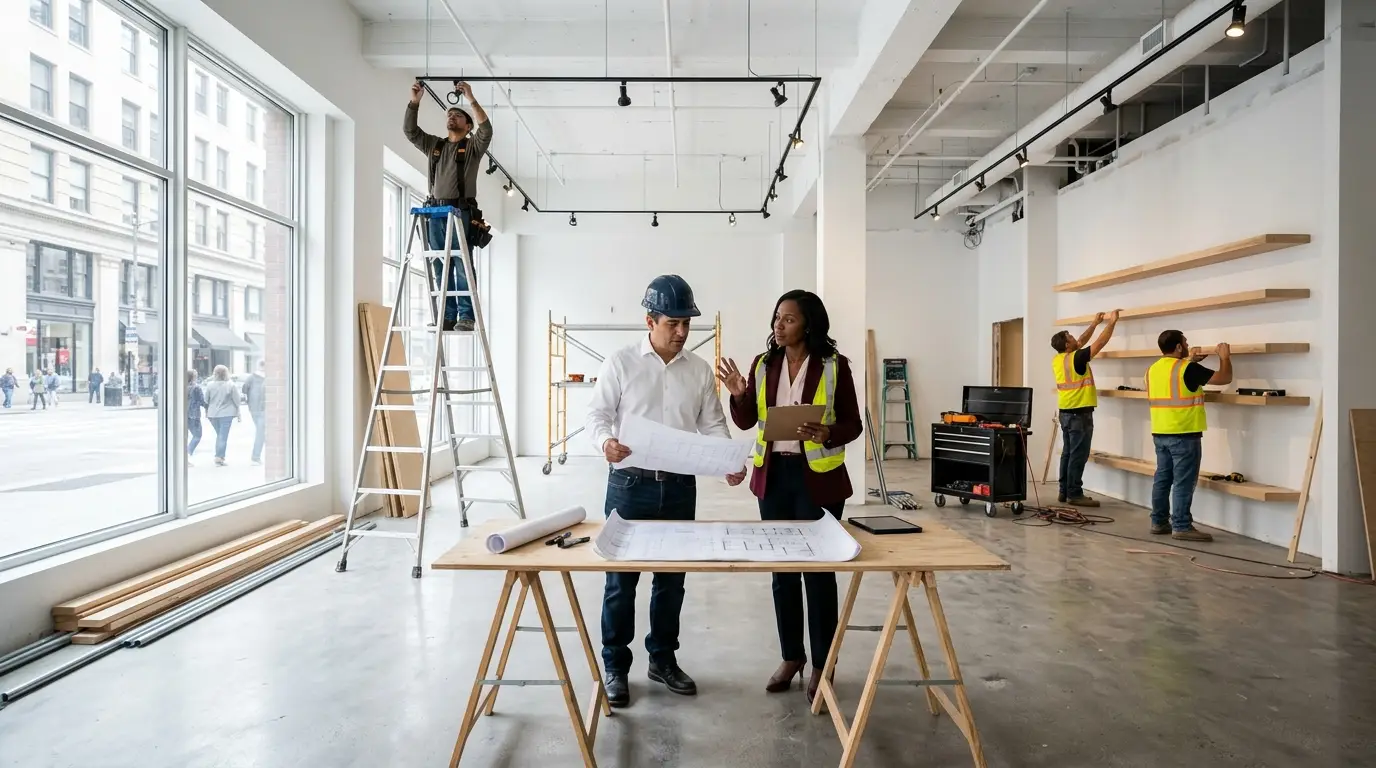
Most retail owners get one number from their contractor and a very different number on the final invoice. This guide breaks down what a commercial buildout actually costs in 2026, by space type, square foot, and hidden line item, so you can budget with confidence before you sign a lease.
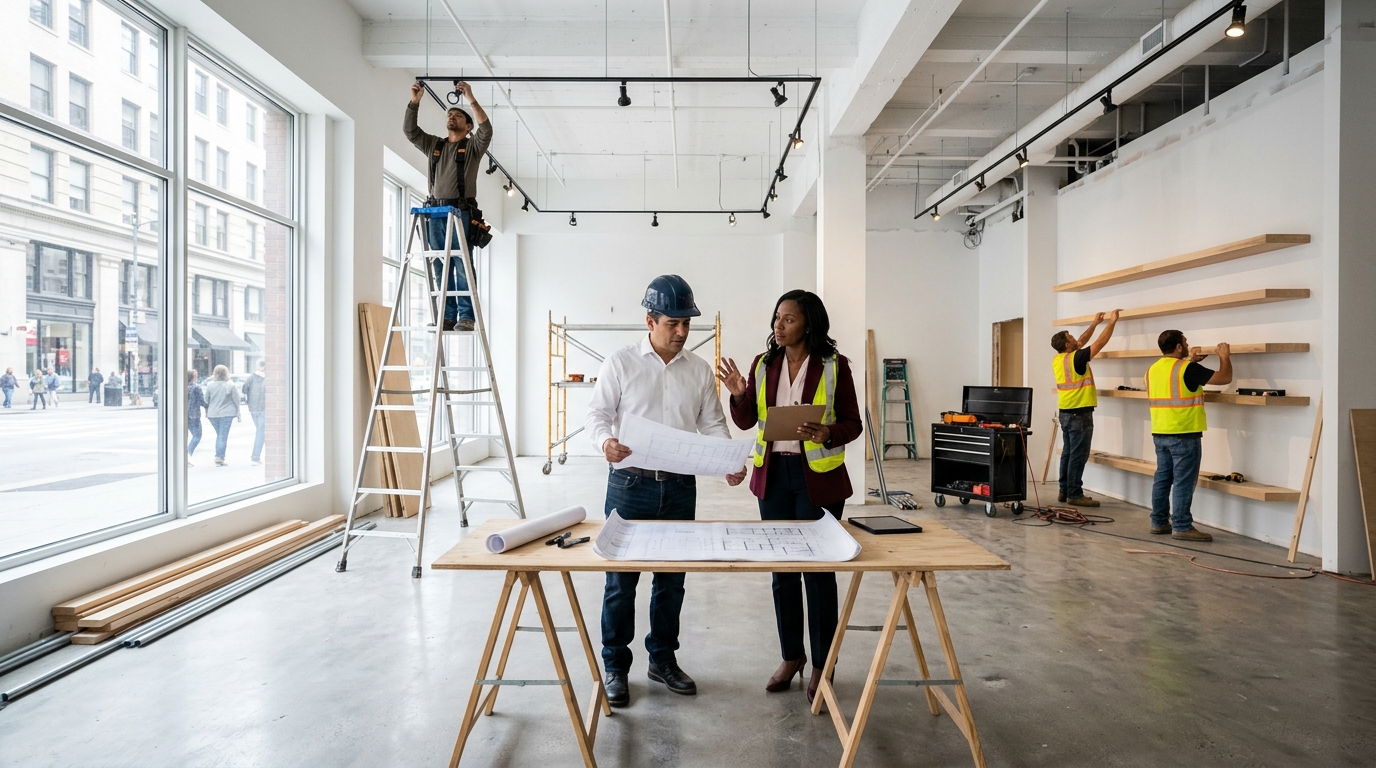
A retail buildout in progress: design, construction, and decisions all happen at once.
Quick Answer: A commercial retail buildout costs between $50 and $300+ per square foot in 2026, depending on whether you are working with a second-generation space, a new white box, or a boutique-level finish-out. For a typical 2,000 sq ft retail space, total project costs land between $140,000 and $200,000 before soft costs and contingency. Boutique owners in the 1,000 to 1,500 sq ft range commonly invest $25,000 to $80,000 when working with a design-build firm that manages scope tightly. The single most important variable is the condition of the space when you take possession, not the size of the space. (Source: Cushman and Wakefield U.S. Retail Fit Out Cost Guide 2025, Prestige 360 Design project experience.)
What “Commercial Buildout” Actually Means
The term “commercial buildout” covers everything required to turn a vacant commercial space into an operating retail store. That includes electrical, plumbing, HVAC, flooring, lighting, framing, drywall, millwork, fixtures, and all associated permits. The scope varies enormously based on one critical factor: what condition the space is in when you lease it.
Most landlords offer space in one of three conditions. Understanding the difference is the first step to building a realistic budget.
Second-Generation Space: $50 – $120/sq ft. Previously built out. Walls, HVAC, and electrical exist. You adapt the existing layout and upgrade finishes.
White Box / Shell Space: $100 – $200+/sq ft. Empty concrete or open framing. All systems must be designed, permitted, and installed from scratch.
Boutique / Luxury Finish: $200 – $300+/sq ft. Custom millwork, high-end materials, premium lighting design, and brand-integrated fixtures at every turn.
Tenant improvement (TI) buildouts, where the landlord contributes an allowance toward construction, fall into any of these categories. The TI allowance reduces your out-of-pocket cost but rarely covers the full scope. We cover TI in detail in a dedicated section below.
Commercial Buildout Cost Per Square Foot: The Real Numbers
The numbers below reflect verified 2025-2026 market data from Cushman and Wakefield’s U.S. Retail Fit Out Cost Guide 2025, cross-referenced with Prestige 360 Design project records and active contractor bids in Texas and Southeast markets. These are all-in construction costs, not design fees or FF&E (furniture, fixtures, and equipment).
| Space Type | Cost Range / Sq Ft | 1,000 Sq Ft Est. | 2,000 Sq Ft Est. |
|---|---|---|---|
| Second-generation (light refresh) | $50 – $80 | $50K – $80K | $100K – $160K |
| Second-generation (full renovation) | $80 – $120 | $80K – $120K | $160K – $240K |
| White box / new shell | $100 – $160 | $100K – $160K | $200K – $320K |
| White box (complex HVAC/electrical) | $160 – $200+ | $160K – $200K+ | $320K – $400K+ |
| Boutique / luxury finishes | $200 – $300+ | $200K – $300K+ | $400K – $600K+ |
| Source: Cushman and Wakefield U.S. Retail Fit Out Cost Guide 2025, Prestige 360 Design project data (Texas and Southeast markets, 2024-2026). Costs exclude design fees, FF&E, and permit soft costs unless otherwise noted. | |||
One context point worth noting: approximately 5,500 new retail stores are expected to open in the United States in 2026, according to industry tracking data. Competition for quality contractors is higher than it has been in five years, and that is exerting upward pressure on labor costs particularly in high-growth markets like Texas, Florida, and the Southeast.
What Drives the Cost Up (or Down)
Once you know the baseline cost range for your space type, the next question is which project variables move that number. In our experience working with boutique and wellness retail owners, these are the factors that consistently shift budgets.
Prestige 360 Project Insight: “In our projects, fixture costs alone often account for 30 to 40% of total budget, yet most owners plan for 10 to 15%. Fixtures are the most underestimated line item in retail buildout.” – Hugo Ramirez, Founder, Prestige 360 Design
- Electrical panel capacity. If the existing panel cannot support your lighting and equipment load, an upgrade runs $8,000 to $25,000 before any other electrical work begins. This is one of the most common surprises in second-generation spaces.
- Custom millwork and fixture design. Standard shelving systems from commercial suppliers cost $8 to $20 per linear foot. Custom millwork costs $60 to $150+ per linear foot. For a boutique with 80 feet of wall fixtures, that difference is $50,000 or more.
- ADA compliance requirements. Any space that triggers a “change of use” permit requires full ADA compliance review. Restroom upgrades alone can add $15,000 to $40,000 depending on existing conditions.
- Flooring material and subfloor condition. Polished concrete runs $3 to $7 per sq ft. Luxury vinyl plank runs $4 to $9. Hardwood or tile runs $10 to $25+. If the subfloor needs leveling or repair, add $2 to $6 per sq ft before any finish material is installed.
- Layout redesign vs. minor modifications. Moving or adding plumbing drains is one of the most expensive modifications possible in a retail buildout, running $5,000 to $20,000 per location. Strategic space planning at the start of design eliminates most mid-project plumbing changes.
The factors that bring costs down are typically: choosing a well-conditioned second-generation space, negotiating a strong TI allowance before signing, locking all finishes and fixture selections before construction begins, and working with a retail fit-out firm that produces a detailed scope of work before the first hammer swings.
The Hidden Costs Most Owners Miss
This is where retail buildout budgets collapse. The Reddit retail community has documented cases where a $200K buildout reached $400K, and the culprits are almost always the same set of costs that were never on the original estimate. These are not rare edge cases. They are standard line items that inexperienced contractors routinely omit from early quotes.
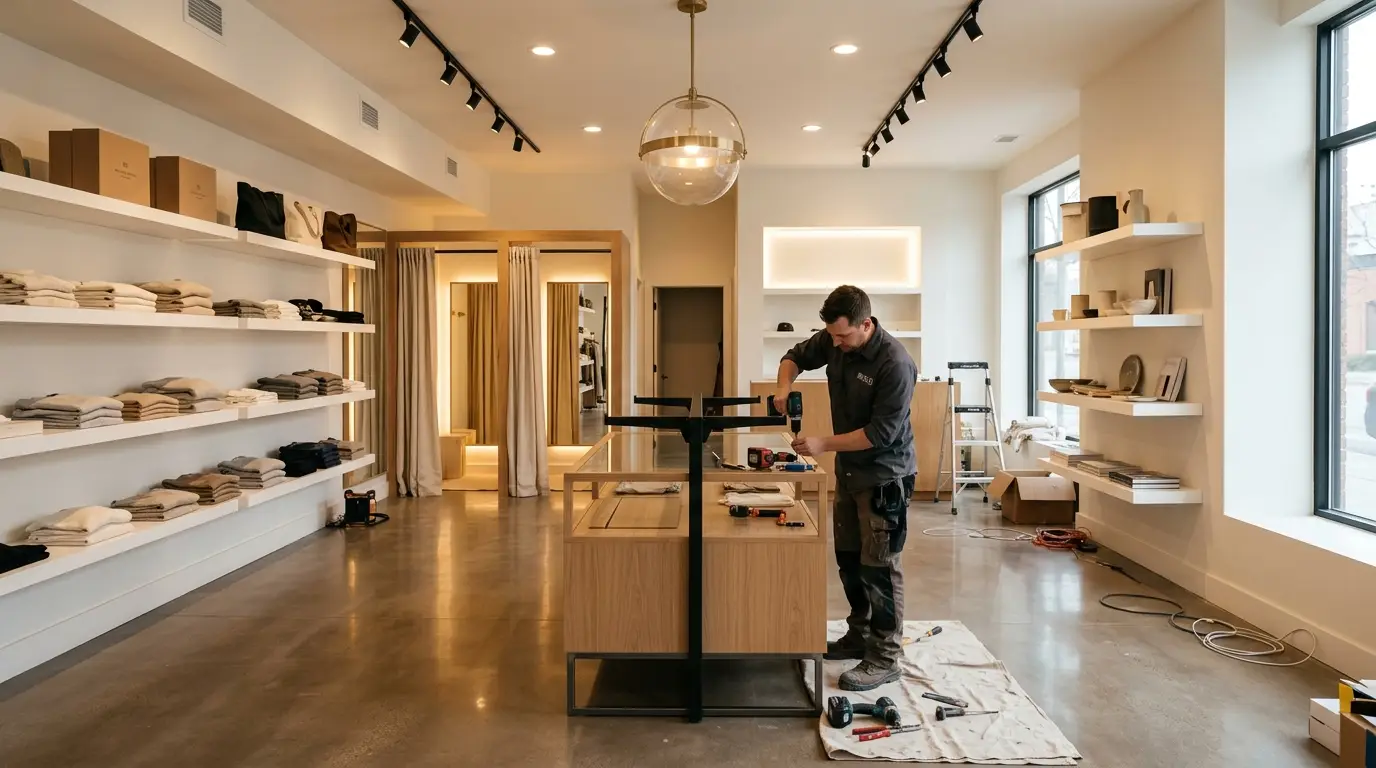
Final stages of a boutique buildout: fixtures in, lighting calibrated, nearly ready to merchandise.
| Hidden Cost Item | Typical Range | Why It Gets Missed |
|---|---|---|
| Permit fees and plan check | $3,000 – $15,000 | Contractors quote construction cost, not permit cost |
| Architectural / engineering drawings | $5,000 – $20,000 | Required for permit submission, often treated as a separate fee |
| Signage (exterior + interior) | $3,000 – $20,000+ | Outside the GC’s scope, always a separate vendor |
| Security and POS systems | $4,000 – $15,000 | Technology installs coordinated separately from construction |
| Rent during construction | 1 – 5 months of lease | Lease clock runs while you have zero revenue |
| Contingency (change orders) | 10 – 20% of hard cost | Owners budget $0; contractors use $10K – $50K+ |
| Opening inventory and FF&E | Varies widely | Not in buildout budget but depletes the same capital pool |
Rule of Thumb: Add 15-20% to Any Hard-Cost Estimate. Whatever the general contractor quotes for construction, add 15% to 20% to account for permits, design fees, and the change orders that will almost certainly come once walls open up and existing conditions are revealed. This is not pessimism. This is the standard industry contingency that every commercial real estate attorney will confirm.
How Tenant Improvement Allowances Work (and When They Are Not Enough)
A tenant improvement allowance is money the landlord contributes toward your buildout in exchange for you signing a lease, typically a multi-year commitment of 3 to 10 years. The allowance is expressed as a dollar amount per square foot and is usually disbursed as reimbursement after construction is complete and inspected, not as upfront cash.
In active retail markets in 2025 and 2026, TI allowances typically range from $20 to $60 per square foot. For a 1,500 sq ft boutique, that translates to $30,000 to $90,000 in landlord contribution.
Example: 1,500 Sq Ft Second-Generation Boutique
- Estimated buildout cost ($80/sq ft): $120,000
- Landlord TI allowance ($40/sq ft): -$60,000
- Permits, drawings, contingency (15%): +$18,000
- Owner Out-of-Pocket: $78,000
Note: TI reimbursed after inspection, so owner must fund full $120K+ upfront and wait for landlord repayment. Cash flow timing is critical.
Two negotiating points that most first-time retail tenants miss: First, TI allowances are negotiable. In markets with high vacancy, landlords will go significantly higher than their initial offer. Second, confirm whether the TI covers design fees and soft costs, or only hard construction costs. The difference can be $15,000 to $30,000.
If you are entering a buildout without TI or with a low TI number, SBA 7(a) loans and USDA Business programs are the most common financing vehicles retail owners use to bridge the gap. Some regional banks also offer tenant improvement lines of credit specifically structured for this scenario.
What Prestige 360 Clients Typically Invest
We work primarily with boutique fashion, wellness, and specialty retail owners opening their first or second location, typically in the 1,000 to 1,500 sq ft range. The following observations come directly from our project records over the past three years.
Understanding what a good outcome looks like in this segment is valuable context before you start collecting contractor bids.
Most boutique clients land between $25,000 and $80,000 all-in. In our projects, well-scoped boutique buildouts in second-generation spaces land between $25,000 and $80,000 total project cost, including design, fixtures, and construction. The owners who stay at the lower end choose their space strategically, specifically second-gen spaces with good bones, and lock down their fixture plan before pulling permits.
The layout pays for itself in the first year. Research consistently shows that a well-designed retail layout produces 7 to 10% higher sustained sales compared to an unoptimized layout, with a 40% spike in the initial weeks following opening when the space is fresh. We see clients regularly attribute 8 to 12% revenue premiums to layout decisions made during buildout design. The investment in design is the highest-ROI line item in the budget.
Scope lock at design sign-off is the best cost-control tool available. We see clients lose $15,000 to $40,000 to change orders in nearly every project where finishes and fixtures were not fully selected before ground broke. When we lock scope at design completion, including every fixture, finish, and mechanical specification, our projects average fewer than 3% in change order costs. That is significantly below the industry average of 10 to 15%.
Clients who rush the lease regret it more than any construction decision. Signing a lease before completing a thorough space assessment is the single most expensive decision we see retail owners make. Once the lease is signed, your negotiating leverage for TI allowance drops dramatically, and you are committed to the cost of whatever condition that space is in. A 30-day delay before signing to do a proper buildout assessment typically saves $20,000 to $80,000 in unexpected costs.
My background in retail project management at Nike trained me to treat the buildout as a revenue-generating asset, not just a cost center. Every dollar spent on layout, lighting, and customer flow has a measurable return. The owners who approach their buildout with that mindset consistently outperform those who simply try to spend as little as possible.
Key Takeaways
- Commercial buildout costs range from $50 to $300+ per square foot in 2026, with space condition being the primary cost driver.
- Hidden costs (permits, drawings, signage, rent during construction, contingency) routinely add 15-20% on top of hard construction costs.
- Tenant improvement allowances of $20-$60/sq ft help but rarely cover full buildout costs, and are reimbursed after completion, not upfront.
- Boutique owners working with a design-build firm typically invest $25,000 to $80,000 all-in for well-scoped second-generation spaces.
- Locking scope at design sign-off, before construction begins, is the single most effective cost-control strategy, reducing change orders from the industry average of 10-15% to under 3%.
Frequently Asked Questions
How much does a commercial buildout cost per square foot in 2026?
$50 to $300+ per square foot, depending on space condition and finish level. Second-generation spaces run $50 to $120/sq ft. New white-box or shell spaces run $100 to $200/sq ft. Boutique and luxury finishes push to $200 to $300+. A typical 2,000 sq ft retail space totals $140,000 to $200,000 before soft costs. (Source: Cushman and Wakefield U.S. Retail Fit Out Cost Guide 2025, Prestige 360 Design project data.)
Does tenant improvement allowance cover the full cost of a retail buildout?
No, TI allowances rarely cover the full buildout cost. Most landlords offer $20 to $60 per square foot in competitive markets. For a standard 1,500 sq ft boutique costing $120,000 to $180,000, a TI of $40/sq ft covers only $60,000. Owners typically fund the remaining $60,000 to $120,000 out of pocket or through SBA or business financing. TI is also reimbursed after completion, not provided upfront, so cash flow management is critical.
What is the biggest cause of retail buildout cost overruns?
Typically, scope creep combined with undisclosed existing conditions in the space. Owners change fixture plans mid-construction, discover HVAC or electrical panel upgrades are required, or underestimate permit timelines. The Reddit retail community documents multiple cases where $200K buildouts reached $400K for exactly these reasons. Locking a detailed scope of work before signing your lease is the single best protection against overruns.
How long does a retail buildout take from permit to opening?
Typically 8 to 20 weeks from permit approval to opening. A 1,000 sq ft second-generation boutique with minor modifications can be ready in 8 to 10 weeks. A 2,000 sq ft new shell with full electrical, HVAC, and custom millwork typically runs 14 to 20 weeks. Permit review timelines vary by city and can add 4 to 8 weeks before construction begins, which is a period during which your lease clock is already running.
Ready to Plan Your Buildout?
Get a Free Buildout Cost Estimate. Tell us your space size, condition, and target opening date. We will give you a realistic budget range and a clear scope of work at no cost.
No commitment. Response within 1 business day.
Hugo Ramirez
Founder, Prestige 360 Design. Former Retail Project Manager, Nike North America.
Hugo has led retail fit-out and store opening projects across North America, including multi-unit rollouts for global brands. He founded Prestige 360 Design to bring enterprise-level retail design and project management to boutique and independent retailers opening their first and second locations.