Insights
Office Renovation Cost Per Square Foot in Texas: 2026 Pricing Breakdown
June 1, 2026
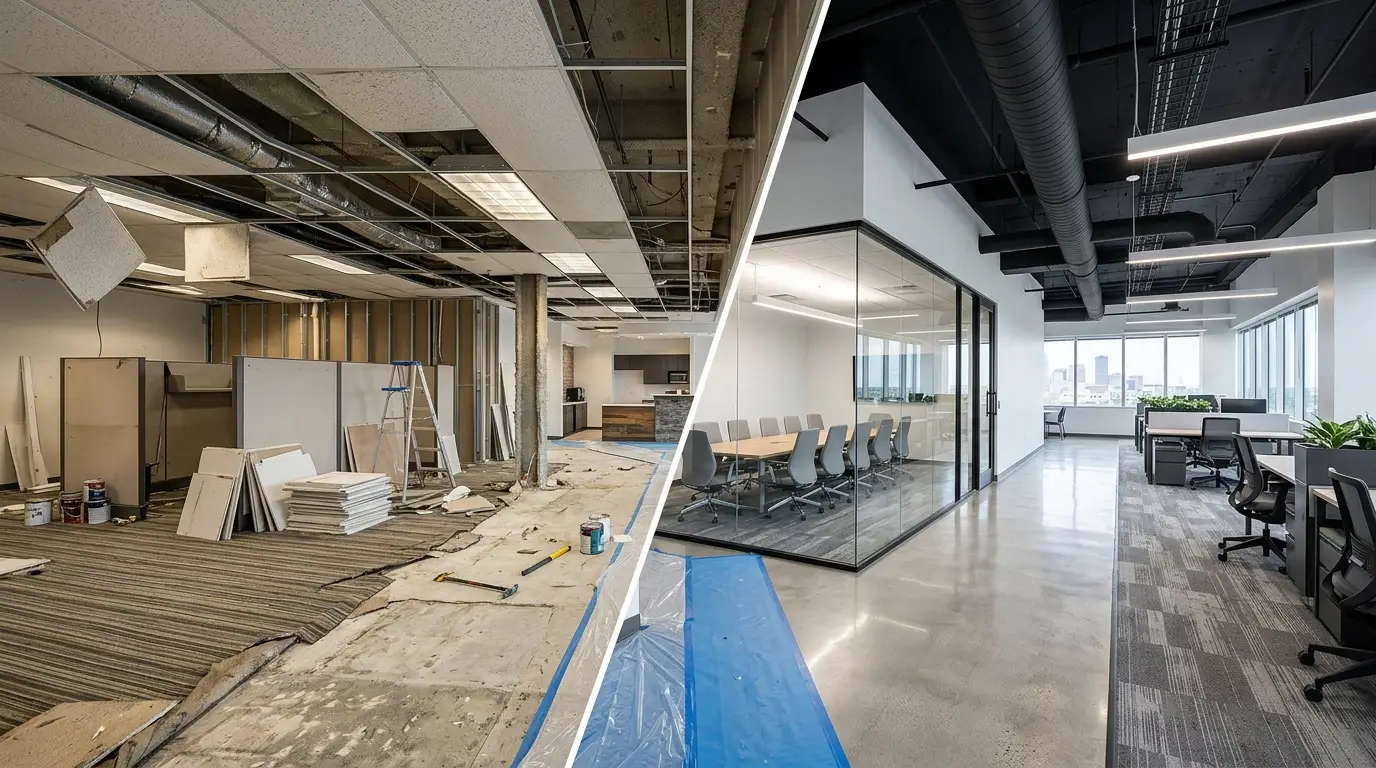
Office Renovation Cost Per Square Foot in Texas: 2026 Pricing Breakdown
Quick Answer: Office renovation in Texas typically costs between $40 and $200 per square foot in 2026, with most projects landing in the $60 to $130 per square foot range. A light cosmetic refresh, new paint, carpet, and lighting, sits at the low end, while a full gut renovation that moves walls, upgrades HVAC and electrical, and adds glass conference rooms and a kitchen reaches the high end. The single biggest factors are how much mechanical and electrical work is involved and the quality of the finishes.
Office Renovation Cost Ranges
Office renovation pricing spreads widely because the word renovation covers everything from new paint to taking a space down to the structure and rebuilding it. The most useful way to budget is to place your project into one of three tiers, then adjust for your market and finish level.
| Renovation Tier | Cost Per Sq Ft | What It Includes |
|---|---|---|
| Cosmetic refresh | $40-$70 | Paint, flooring, lighting, minor repairs |
| Mid-range renovation | $70-$130 | Some wall changes, finishes, light mechanical/electrical updates |
| Full gut renovation | $130-$200+ | New layout, HVAC, electrical, glass rooms, kitchen, high-end finishes |
For a 5,000 square foot office, that translates to roughly $200,000 to $350,000 for a refresh, $350,000 to $650,000 for a mid-range renovation, and $650,000 to over $1 million for a full gut. These are planning ranges, not quotes, and a walkthrough of the actual space is what turns them into a real number.
The most common budgeting mistake is pricing an office renovation off a single per-square-foot figure found online. A national average blends low-cost and high-cost markets and every finish level. Your number depends on your specific space, scope, and city.
What Drives the Cost Per Square Foot
Two offices of identical size can differ in cost by a factor of three. The reasons are predictable, and understanding them lets you control the budget instead of being surprised by it.
The first driver is mechanical, electrical, and plumbing. Moving or upgrading HVAC, adding electrical circuits and data, or relocating plumbing for a new kitchen or restroom are the most expensive line items in any office project. The second is the layout change. Demolishing and rebuilding walls, adding glass partitions, and creating conference rooms all cost more than leaving the shell alone. The third is finish quality, which can double a budget between builder-grade and executive-grade materials.
| Driver | Budget Impact |
|---|---|
| HVAC, electrical, plumbing changes | Highest |
| Wall demolition and reconstruction | High |
| Finish level (flooring, millwork, glass) | High |
| Building age and existing conditions | Medium to high |
| Permitting and code upgrades | Medium |
Building age deserves special attention. An older building may trigger code upgrades the moment you open the walls: ADA, fire sprinklers, or electrical service that no longer meets current standards. These upgrades are not optional and can be a significant share of a renovation budget. Our broader look at commercial buildout cost in 2026 covers how these code-driven items flow into a project number.
Where the Money Goes
It helps to see how a typical mid-range office renovation budget divides. The proportions shift by project, but the pattern is consistent: the systems you cannot see often cost more than the finishes you can.
| Category | Share of Budget |
|---|---|
| Mechanical, electrical, plumbing | 25-35% |
| Walls, doors, framing, drywall | 15-25% |
| Flooring and finishes | 15-20% |
| Ceilings and lighting | 10-15% |
| Millwork and casework | 5-15% |
| Permits, design, contingency | 10-15% |
The lesson owners take from this split is to resist cutting the design and contingency line first. A well-coordinated set of drawings reduces change orders, and a contingency absorbs the surprises that older buildings always hide.
Refresh vs. Full Gut Renovation
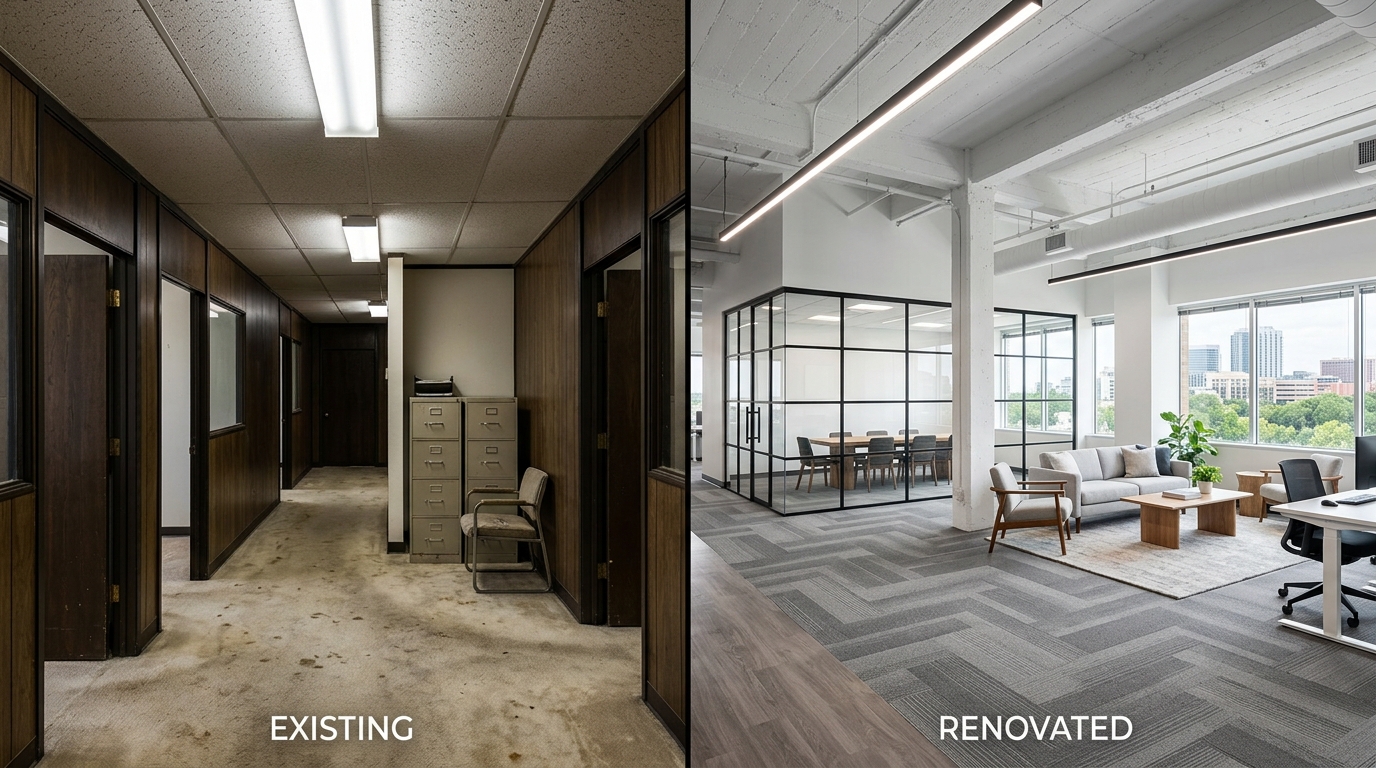
The biggest decision is how deep to go. A cosmetic refresh keeps the existing layout, walls, and systems and updates only the surfaces. It is fast, predictable, and the cheapest path to a more current look. The limitation is that it cannot fix a layout that no longer works or systems that are failing.
A full gut renovation takes the space back to the shell and rebuilds it to a new plan. It costs the most and takes the longest, but it is the only way to truly reconfigure how the office works, modernize the systems, and reset the space for the next decade. Most projects land in the middle: targeted wall changes and system updates combined with new finishes throughout.
Hidden and Often-Missed Costs
The surprises that blow office renovation budgets are usually the same handful of items. Knowing them in advance lets you carry the right contingency and avoid mid-project shocks.
| Hidden Cost | Why It Surprises Owners |
|---|---|
| Code upgrades on older buildings | Triggered by opening walls; ADA, sprinklers, electrical |
| Asbestos or hazardous material abatement | Common in pre-1990 buildings; requires licensed removal |
| After-hours work in occupied buildings | Landlord rules force premium-time labor |
| Data, cabling, and AV | Often excluded from the construction bid |
| Furniture and move costs | Budgeted separately or forgotten entirely |
The lease itself can also dictate cost. Some landlords require union labor, specific hours, or particular materials, and those requirements raise the number before any design choice is made. Reading the work-letter and rules in the lease before pricing is essential, which is why our guide on what to check before signing a commercial lease is worth reviewing alongside any renovation budget.
What We See in Texas Office Renovations
When we price office renovations across Texas, the gap between an owner’s expectation and the real number almost always comes from the systems behind the walls. Owners see paint and flooring and budget for those, then learn that the HVAC cannot support the new layout or the electrical panel is at capacity. We push to investigate the existing mechanical and electrical conditions before setting a budget, because that is where the real money lives.
The second pattern is the older-building surprise. A renovation in a building from the 1980s or earlier frequently triggers code upgrades and sometimes hazardous-material abatement the moment demolition starts. We carry a larger contingency on older buildings and recommend a pre-design investigation so these items are priced, not discovered.
The third is scope creep dressed as small changes. A wall here, an extra glass room there, an upgraded finish in the lobby, each feels minor, but together they move a mid-range project toward a full-gut budget. We hold a clear scope and price changes openly so owners see the cumulative effect before approving.
The fourth is the items left out of the construction bid entirely: data cabling, audiovisual, furniture, and the cost of moving. We make sure these are in the total project budget from the start, because an office that is beautifully renovated but has no working network on move-in day is not actually finished.
How to Budget Your Office Remodel
A reliable office renovation budget follows a simple sequence. Start by classifying the project into refresh, mid-range, or gut, and apply the per-square-foot range. Then investigate the existing conditions, especially HVAC, electrical, and building age, and adjust. Add the often-excluded items: data, AV, furniture, and moving. Finally, carry a contingency of 10 to 15 percent, higher for older buildings.
Budget the project, not just the construction. The construction bid is often only 75 to 85 percent of what it actually costs to deliver a working, occupied office. Design, permits, cabling, furniture, and moving make up the rest.
The most cost-effective renovations are the ones planned thoroughly before pricing. A clear, coordinated design reduces change orders, surfaces the hidden costs early, and gives every bidder the same scope so the numbers are comparable. That planning discipline is the difference between a budget you can trust and a moving target.
Key Takeaways
- Texas office renovation runs about $40 to $200 per square foot in 2026, with most projects in the $60 to $130 range.
- Mechanical, electrical, and plumbing changes are the biggest cost driver, followed by wall reconfiguration and finish quality.
- Older buildings frequently trigger code upgrades and sometimes hazardous-material abatement once walls are opened.
- Data cabling, audiovisual, furniture, and moving are often excluded from the construction bid but belong in the total budget.
- The lease work-letter can dictate labor, hours, and materials that raise cost before any design choice.
- Carry a 10 to 15 percent contingency, higher for older buildings, and budget the whole project, not just construction.
Frequently Asked Questions
How much does office renovation cost per square foot in Texas?
In 2026, Texas office renovation typically costs between $40 and $200 per square foot, with most projects landing in the $60 to $130 range. A cosmetic refresh of paint, flooring, and lighting sits near $40 to $70, a mid-range renovation $70 to $130, and a full gut renovation with new systems and high-end finishes $130 to $200 or more per square foot.
What is the biggest cost in an office renovation?
Mechanical, electrical, and plumbing work is usually the largest single cost, accounting for roughly 25 to 35 percent of a mid-range office renovation budget. Moving or upgrading HVAC, adding electrical circuits and data, and relocating plumbing cost far more than the visible finishes. Layout changes and finish quality are the next biggest drivers.
Why are office renovations in older buildings more expensive?
Opening the walls of an older building can trigger required code upgrades, such as ADA accessibility, fire sprinklers, or electrical service that no longer meets current standards. Buildings from before about 1990 may also contain asbestos or other hazardous materials that require licensed abatement. These items are not optional and can add a significant share to the budget, so older buildings warrant a larger contingency.
What costs are usually left out of an office renovation bid?
Construction bids commonly exclude data and network cabling, audiovisual systems, furniture, and the cost of moving, and they may not include design fees or permits. The construction number is often only 75 to 85 percent of the true cost to deliver a working, occupied office. Always budget the full project, including these items and a 10 to 15 percent contingency.
Get a Realistic Office Renovation Budget
A trustworthy renovation budget starts with a real look at your space, not a national average. Prestige 360 Design plans and budgets office renovations across Texas, investigating existing conditions, coordinating design, and pricing the whole project so there are no surprises mid-build. Contact us for a grounded estimate of your office remodel.