Insights
How Much Does a Restaurant Buildout Cost in Texas? (2026 Guide)
May 28, 2026
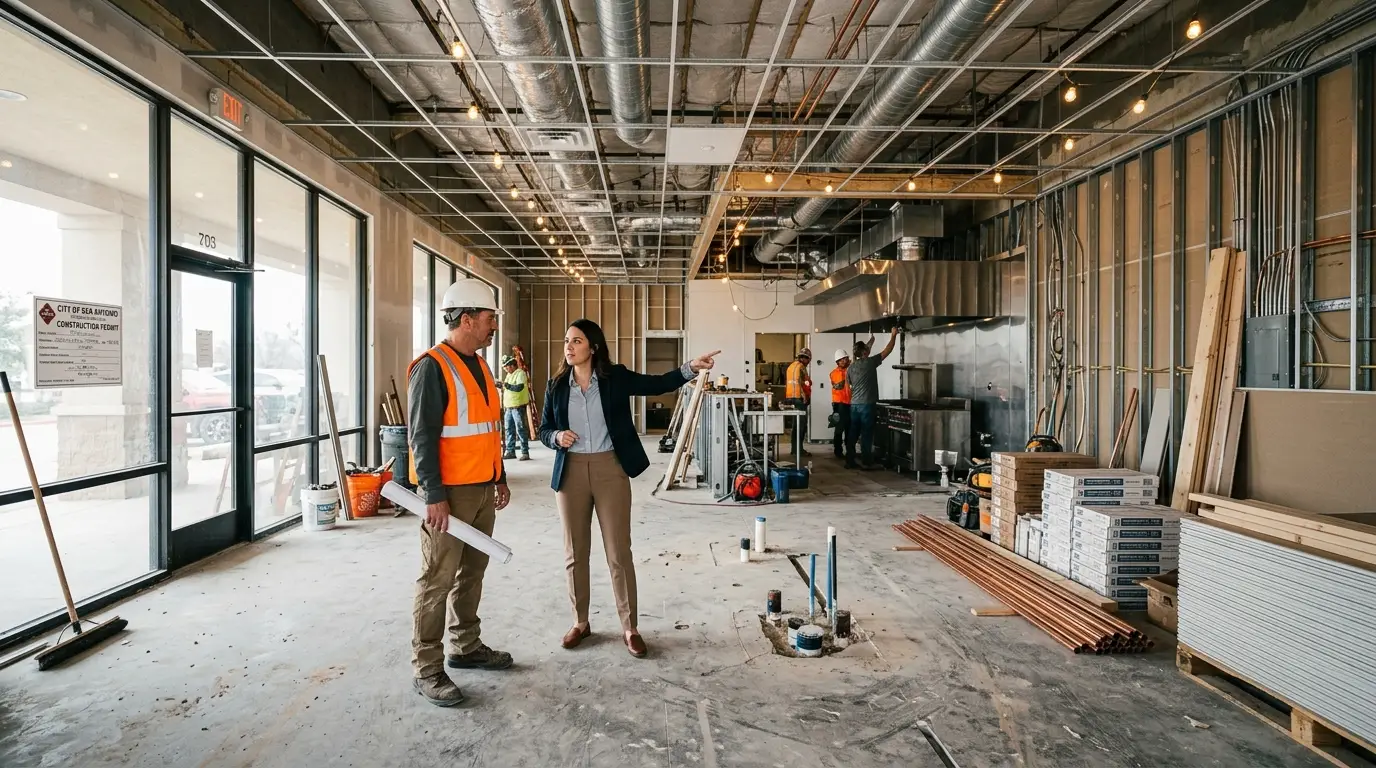
Quick Answer: A restaurant buildout in Texas costs between $150 and $350 per square foot in 2026, depending on concept type and finish level. A 2,000 sq ft fast-casual space might run $300,000 to $450,000 total, while a 3,500 sq ft fine dining restaurant can exceed $1 million. Kitchen buildout alone accounts for roughly 40% of your total budget. Permit timelines in Texas average 4 to 8 weeks, and hidden costs like grease trap installation ($3,000 to $8,000) and Type I hood systems ($15,000 to $40,000) catch most first-time owners off guard.
Opening a restaurant in Texas is expensive. Not “a little over budget” expensive. More like “I wish someone had told me about grease traps six months ago” expensive. The buildout phase, where your lease turns into a functioning restaurant, is where most owners blow through their contingency fund. And in Texas, where commercial construction demand keeps climbing across San Antonio, Austin, Dallas, and Houston, contractor availability and material costs add pressure that did not exist five years ago.
This guide breaks down every major cost category for a restaurant buildout in Texas. We are covering kitchen equipment, dining room finishes, permitting timelines, and the expenses that never show up in early estimates. Whether you are opening a coffee shop in the Pearl District or a full-service restaurant off I-10, the numbers here reflect what Texas operators are actually paying in 2026.
What Determines Restaurant Buildout Cost in Texas
Restaurant buildout cost per square foot in Texas depends on five primary factors: concept type, existing infrastructure, location, finish level, and kitchen complexity. A second-generation restaurant space (one that previously housed a restaurant) can save you 20% to 40% compared to building from a raw shell, because plumbing, electrical, and ventilation infrastructure may already be in place.
Location matters more than most owners expect. A buildout in downtown San Antonio or Austin’s East Side carries higher contractor rates and stricter code requirements than a suburban strip center in New Braunfels or Round Rock. Municipal permitting fees also vary. San Antonio charges between $2,500 and $6,000 for restaurant permits depending on scope, while smaller municipalities may charge under $1,500.
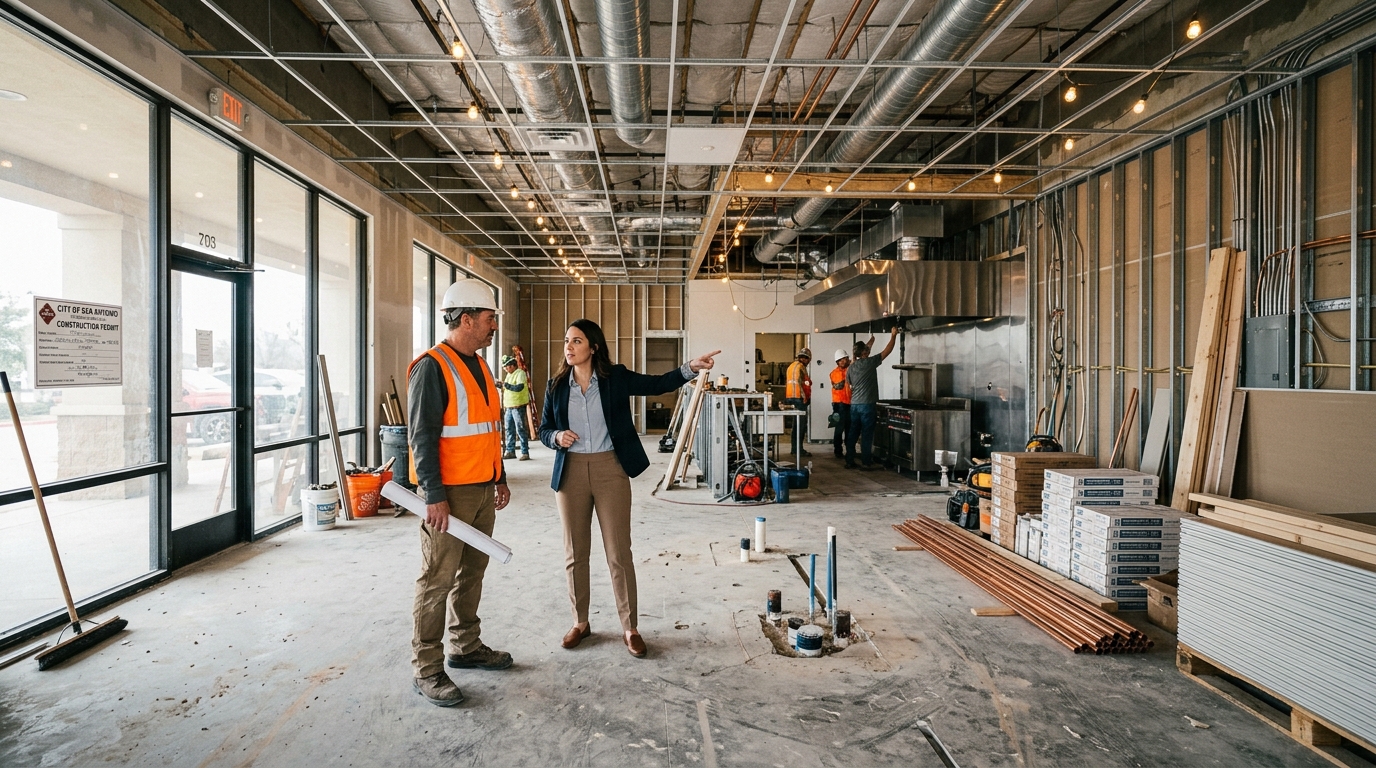
Finish level is the other major variable. A polished concrete floor with exposed ductwork costs a fraction of what imported tile and custom millwork cost. Your concept drives your finishes, and your finishes drive your budget. Getting a clear restaurant layout design locked down before hiring a general contractor prevents the most common budget overruns.
Cost by Restaurant Type
Not every restaurant concept costs the same to build. A coffee shop with a simple espresso bar and minimal kitchen has fundamentally different infrastructure needs than a full-service restaurant with a wood-fired oven and walk-in cooler. The table below reflects 2026 averages for Texas markets, based on industry data from Restaurant Owner magazine, RSMeans construction data, and contractor estimates across major Texas metros.
| Restaurant Type | Cost per Sq Ft | Typical Size (Sq Ft) | Total Buildout Range |
|---|---|---|---|
| Coffee Shop / Cafe | $80 – $180 | 800 – 1,500 | $80,000 – $270,000 |
| Fast-Casual | $150 – $250 | 1,500 – 2,500 | $225,000 – $625,000 |
| Bar / Lounge | $150 – $300 | 1,200 – 3,000 | $180,000 – $900,000 |
| Full-Service Restaurant | $200 – $350 | 2,500 – 4,500 | $500,000 – $1,575,000 |
| Fine Dining | $300 – $500+ | 3,000 – 5,000 | $900,000 – $2,500,000+ |
These ranges assume a mix of new and second-generation spaces. If you are building from a raw shell (no prior restaurant use), add 15% to 25% to the upper end. The biggest cost jumps happen when a concept requires a Type I commercial hood system, walk-in refrigeration, or high-capacity grease interceptors. Those items alone can add $50,000 or more to a project.
Cost Breakdown by Area
Understanding where your money goes inside the four walls helps you negotiate smarter with contractors and avoid paying for overbuilt areas that do not generate revenue. Here is how a typical full-service restaurant buildout breaks down by functional zone.
| Area | % of Total Budget | Key Cost Drivers |
|---|---|---|
| Kitchen / Back of House | 35% – 45% | Hood systems, cooking equipment, walk-ins, fire suppression, plumbing |
| Dining Room / Front of House | 25% – 35% | Flooring, lighting, furniture, millwork, acoustic treatment |
| Bar Area | 10% – 15% | Refrigeration, bar top, plumbing, glass storage, POS |
| Restrooms | 5% – 8% | ADA compliance, plumbing, finishes, ventilation |
| Common / Support Areas | 5% – 10% | Storage, office, employee area, trash/recycling |
Key stat: Kitchen buildout typically consumes 40% of total project cost, according to the National Restaurant Association’s 2025 State of the Industry report. For a $500,000 total buildout, expect $175,000 to $225,000 going directly to back-of-house construction and equipment.
The kitchen-to-dining ratio is critical. A concept that requires extensive prep space (think scratch-kitchen restaurants or bakeries) will push that 40% figure even higher. Conversely, a bar-forward concept with a limited food menu can shift more budget toward the front of house. Working with an experienced space planning and design team before committing to a floor plan helps you optimize this ratio for your specific concept.
Hidden Costs Most Owners Miss
The line items below rarely appear in early contractor estimates. They show up later, usually after you have signed the lease and committed to a timeline. Budget for all of them from day one.
Grease trap installation: Texas health departments require grease interceptors for any restaurant with a commercial kitchen. Installation runs $3,000 to $8,000 depending on size and whether the trap is interior or exterior. Some municipalities require interceptors sized to handle peak flow, which increases cost for high-volume kitchens.
Type I hood systems: If your menu involves cooking that produces grease-laden vapors (fryers, grills, woks, charbroilers), Texas code requires a Type I exhaust hood with integrated fire suppression. Installed cost ranges from $15,000 to $40,000 depending on hood length, ductwork complexity, and rooftop exhaust fan requirements. This is non-negotiable for any concept beyond cold prep and beverages.
Utility upgrades: Many Texas commercial spaces were not built for restaurant-level electrical loads. Upgrading from 200-amp to 400-amp service costs $5,000 to $15,000. Gas line extensions for commercial cooking equipment add another $2,000 to $6,000. Water heater capacity upgrades for a three-compartment sink and dishwasher can run $3,000 to $7,000.
ADA compliance: Restrooms, entrance paths, bar height sections, and server stations all have ADA requirements. Retrofitting a non-compliant space adds $5,000 to $20,000. This is not optional, and inspectors in Texas are increasingly thorough.
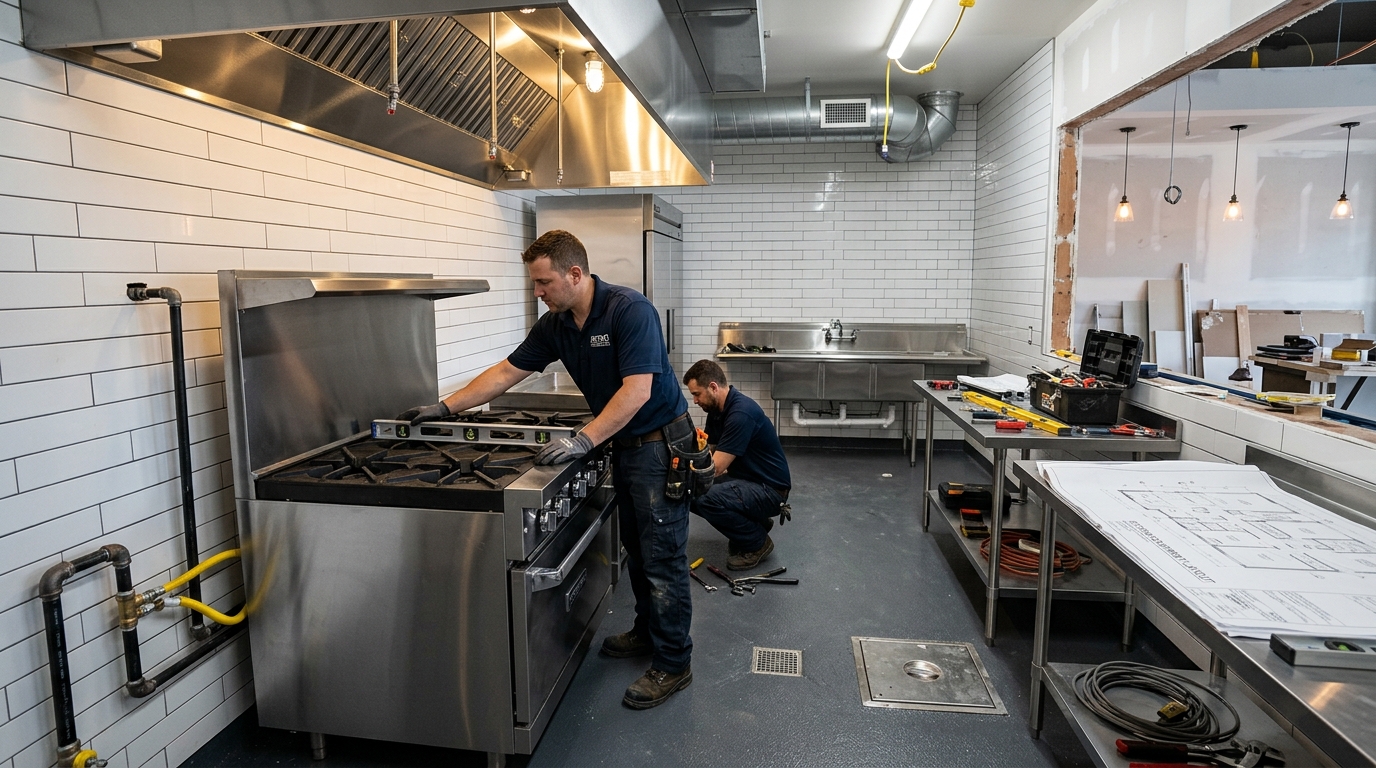
Architect and engineering fees: Structural, mechanical, and plumbing drawings required for permit submission typically cost $8,000 to $25,000 for a restaurant. Some owners skip this step and pay for it later in failed inspections and change orders.
Signage and exterior work: Landlords may require specific signage standards. Monument signs, channel letters, and menu boards can add $5,000 to $30,000 depending on complexity and local sign ordinances.
Texas Permits, Inspections, and Timeline
Texas restaurant permits involve multiple agencies, and the timeline depends on your municipality. In general, expect 4 to 8 weeks from permit application submission to approval. This does not include the time to prepare construction documents, which adds another 3 to 6 weeks on the front end.
Timeline reality check: Most Texas restaurant buildouts take 12 to 20 weeks from permit approval to certificate of occupancy. Add design and permitting time, and you are looking at 5 to 7 months minimum from lease signing to opening day. Plan your rent abatement period accordingly.
Key permits and inspections required in Texas include:
- Building permit: Covers all structural, electrical, mechanical, and plumbing work
- Health department plan review: Required before construction. Reviews kitchen layout, food flow, handwashing stations, and commercial kitchen layout requirements Texas health codes mandate
- Fire marshal inspection: Hood suppression systems, exit paths, occupancy load, sprinkler systems
- TABC license: Required if serving alcohol. Application processing takes 4 to 6 weeks minimum
- Certificate of Occupancy: Final sign-off after all inspections pass
- Sign permit: Required in most Texas municipalities for exterior signage
Working with a design firm that understands Texas restaurant permitting saves weeks. At Prestige 360, we prepare health department-ready floor plans and equipment schedules that pass plan review on first submission. Failed plan reviews can add 2 to 4 weeks to your timeline, and every week of delay costs you rent without revenue.
What We See Across Prestige 360 Projects
At Prestige 360 Design, we work with restaurant owners, franchise operators, and hospitality groups across Texas on tenant improvement projects that include full buildout planning and interior design. Here is what we consistently observe across our projects.
Second-generation spaces save real money, but not always. We have seen clients save $80,000 to $120,000 by taking over a former restaurant space. But we have also seen “great deals” on second-gen spaces turn into nightmares when the existing hood system did not meet current code, the grease trap was undersized, or the electrical panel could not support the new equipment plan. Always get a professional assessment before signing the lease.
Kitchen layout drives the entire project budget. When we design restaurant floor plans, the kitchen layout is the first thing we finalize. Equipment placement dictates plumbing runs, electrical drops, hood length, and ventilation routing. Changing the kitchen layout after construction starts is the single most expensive change order in restaurant buildouts. We have seen a mid-project kitchen redesign add $40,000 to a project that was already over budget.
Owners who skip professional design spend more overall. This is not a sales pitch. It is a pattern we see repeatedly. Owners who bring us in after construction has started, asking us to fix layout problems, spend 15% to 25% more than owners who invested in proper restaurant layout design from the beginning. A $10,000 to $20,000 design investment prevents $30,000 to $60,000 in change orders and rework.
The bar area is where most owners overspend on aesthetics and underspend on function. A beautiful bar top means nothing if the bartender cannot reach the speed well, the ice bin is too small for Friday night volume, or the POS placement creates a bottleneck. We design bar areas that look premium and perform under pressure.
How to Reduce Restaurant Buildout Costs Without Cutting Corners
Cost reduction in restaurant construction is about making smart decisions early, not cheapening materials later. Here are the strategies that actually work.
Prioritize second-generation spaces with matching infrastructure. A former restaurant space with an existing Type I hood, walk-in cooler, and grease trap can save $50,000 to $100,000 compared to building from a raw shell. The key is matching. A former pizza shop’s hood system may not serve a wok-heavy Asian concept. Get a professional to evaluate the existing infrastructure against your specific equipment plan.
Lock your floor plan before hiring a GC. Every change during construction costs 3x to 5x what it would have cost during the design phase. Invest in a complete design and planning process before breaking ground. This means finalized kitchen equipment specs, furniture layouts, lighting plans, and finish selections.
Buy used equipment strategically. Commercial refrigeration, prep tables, shelving, and smallwares hold up well used. Walk-in coolers, ice machines, and dishwashers are better bought new with warranties. Never buy a used hood system. The liability and code compliance risk is not worth the savings.
Negotiate your lease with buildout in mind. Request a tenant improvement allowance ($20 to $50 per square foot is common in Texas), a rent abatement period during construction (3 to 6 months), and landlord responsibility for HVAC and roof. These negotiating points can save $30,000 to $80,000 or more on a typical restaurant lease.
Phase your buildout if cash flow requires it. Open with a focused menu that requires less kitchen equipment, then add capacity as revenue grows. A phased approach requires careful planning so the initial buildout does not block future expansion. Rough in plumbing and electrical for Phase 2 equipment during the initial construction to avoid tearing open walls later.
Key Takeaways
- Restaurant buildout cost in Texas ranges from $150 to $350 per square foot in 2026, with fine dining concepts exceeding $500 per square foot.
- Kitchen construction consumes 35% to 45% of total buildout budget. Finalize your kitchen layout and equipment plan before any other design decision.
- Hidden costs, including grease traps ($3,000 to $8,000), Type I hoods ($15,000 to $40,000), utility upgrades, and ADA compliance, add $30,000 to $80,000 to most projects.
- Texas restaurant permits take 4 to 8 weeks for approval. Total timeline from lease signing to opening day is 5 to 7 months minimum.
- Second-generation restaurant spaces can save 20% to 40%, but only when existing infrastructure matches your concept. Always get a professional assessment first.
- Investing $10,000 to $20,000 in professional restaurant design prevents $30,000 to $60,000 in construction change orders and rework.
Frequently Asked Questions
How much does it cost to build out a restaurant in Texas per square foot?
$150 to $350 per square foot for most restaurant concepts in Texas as of 2026. Coffee shops and cafes with minimal kitchen infrastructure start around $80 to $180 per square foot. Fast-casual restaurants fall in the $150 to $250 range. Full-service restaurants with complete commercial kitchens cost $200 to $350 per square foot. Fine dining concepts with premium finishes and complex kitchen setups can exceed $500 per square foot. These figures include construction, equipment, permits, and professional fees but do not include furniture, smallwares, or pre-opening expenses like staff training.
How long does a restaurant buildout take in Texas?
5 to 7 months from lease signing to opening day is the realistic timeline for most Texas restaurant buildouts. The breakdown: 3 to 6 weeks for design and construction documents, 4 to 8 weeks for permit review and approval, and 12 to 20 weeks for actual construction. TABC alcohol licensing adds another 4 to 6 weeks if you are serving liquor, beer, or wine. Second-generation spaces with minimal renovation can compress the construction phase to 8 to 12 weeks. Raw shell buildouts with extensive plumbing and HVAC work often push past 20 weeks of construction time.
What is the most expensive part of a restaurant buildout?
The commercial kitchen is the most expensive part, consuming 35% to 45% of total buildout cost according to the National Restaurant Association. For a $500,000 total project, expect $175,000 to $225,000 going to the kitchen alone. The biggest individual expenses within the kitchen are the Type I exhaust hood system ($15,000 to $40,000 installed), walk-in cooler/freezer ($8,000 to $25,000), commercial cooking equipment ($20,000 to $80,000), and fire suppression systems ($5,000 to $15,000). Plumbing for the three-compartment sink, handwashing stations, and floor drains adds another $8,000 to $20,000.
Can I save money by using a second-generation restaurant space in Texas?
Yes, second-generation restaurant spaces typically save 20% to 40% on buildout costs compared to raw shell construction. The savings come from existing plumbing infrastructure, electrical capacity, ventilation systems, and potentially usable grease traps and hood systems. A former restaurant with a compatible hood system and walk-in cooler could save you $50,000 to $100,000. However, these savings only materialize when the existing infrastructure matches your concept. A former sandwich shop’s hood system will not support a full grill line. Always hire a professional to assess the existing systems against your specific equipment plan before signing the lease.
Get a Free Restaurant Buildout Estimate
Planning a restaurant buildout in Texas? Prestige 360 Design helps restaurant owners, franchise operators, and hospitality groups plan and execute buildouts that stay on budget and open on schedule. We handle space planning, kitchen layout design, interior design, and construction coordination across San Antonio, Austin, Dallas, Houston, and surrounding markets. Request your free buildout estimate and get a clear picture of what your project will actually cost before you commit to a contractor.
Hugo Ramirez | Former Nike Retail PM, Founder at Prestige 360 Design