Insights
Yoga Studio Design: Layout, Flow, and Texas Buildout Costs (2026)
June 1, 2026
Yoga Studio Design: Floor Plans, Practice Room Sizing, and Texas Buildout Costs (2026)
Quick Answer: A yoga studio practice room should allow about 21 to 30 square feet per student so each person has a mat plus clearance, which means a 20-student class needs roughly 450 to 600 square feet of clear practice floor before accounting for the instructor zone. The practice room flooring, HVAC, and acoustic design carry more weight than aesthetics: hot yoga in particular requires a dedicated heating and humidity system and moisture-resistant materials. Plan the arrival-to-practice transition so that street noise, shoes, and conversation are filtered out before students reach the calm of the room.
Practice Room Sizing and Capacity Math
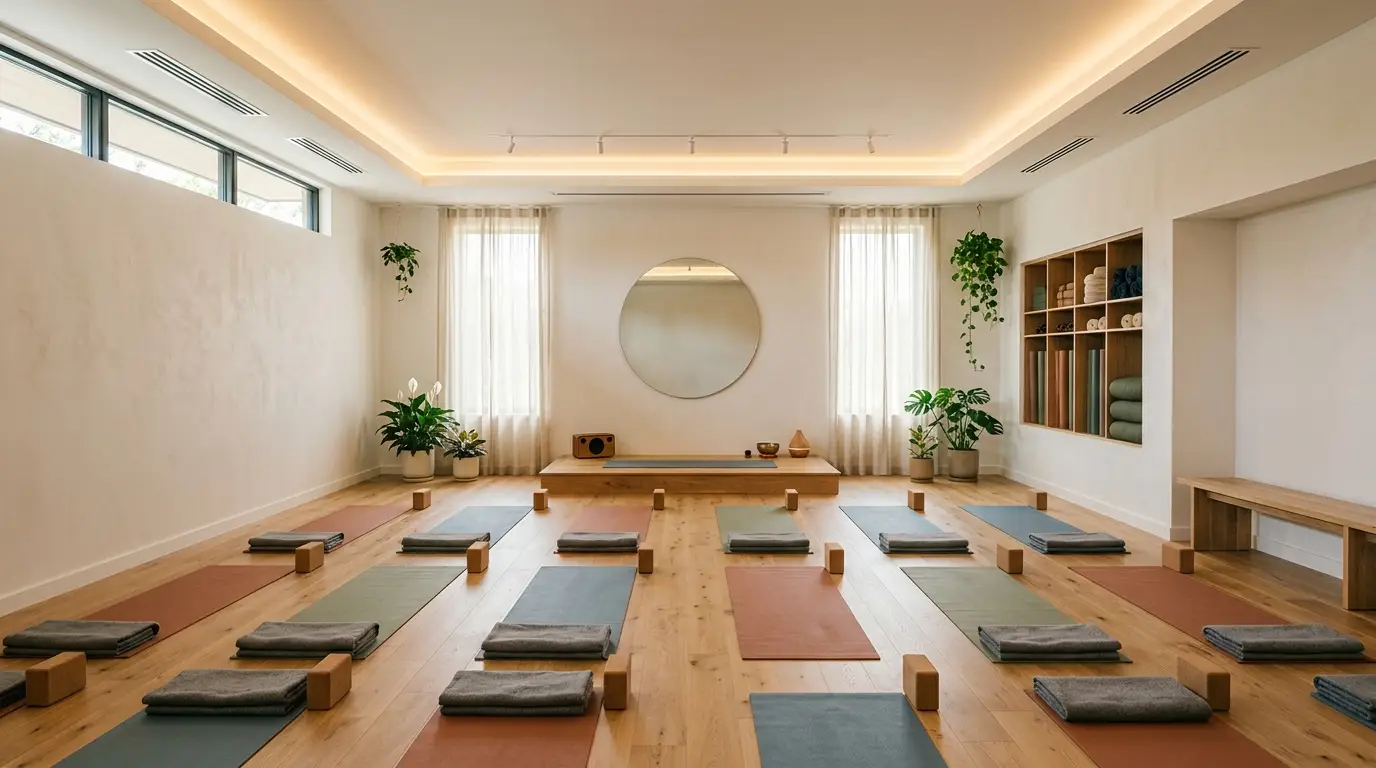
The practice room is the product. Everything else supports it. Sizing starts with how many students you intend to teach per class and the spacing each student needs. A standard yoga mat is 24 inches by 68 to 72 inches. For comfortable practice where students can extend arms and transition without touching a neighbor, plan a footprint of roughly 21 to 30 square feet per student, which includes the mat plus surrounding clearance.
| Class Size | Comfortable Practice Floor | Plus Instructor + Buffer | Suggested Room Size |
|---|---|---|---|
| 10 students | 210-300 sq ft | +60-80 sq ft | 300-400 sq ft |
| 15 students | 315-450 sq ft | +70-90 sq ft | 450-550 sq ft |
| 20 students | 420-600 sq ft | +80-100 sq ft | 550-700 sq ft |
| 30 students | 630-900 sq ft | +100-120 sq ft | 800-1,000 sq ft |
Tighter spacing (closer to 21 square feet per student) is acceptable for gentle or flow classes where students stay on their mats. Wider spacing (closer to 30 square feet) suits power or partner work where people move off the mat. The instructor needs a clear zone at the front, typically a 6-to-8-foot wide band, and many studios add a low platform so students at the back can see demonstrations. Building occupancy limits set by the local fire code will also cap the room, so confirm the occupant load calculation with the city before finalizing capacity.
Studio Flow: Arrival, Transition, and Exit
The emotional value of a yoga studio comes from the transition out of the outside world into a calm practice space. The floor plan should stage that transition rather than dumping students straight from the street into the practice room. A well-designed sequence moves from entry and check-in, to a shoe-removal and cubby zone, to a quiet pre-practice area or hallway, and finally into the practice room. Each step should feel a little quieter and calmer than the last.
Sound separation between the lobby and the practice room is essential. A class in savasana cannot have the front-desk phone, the door chime, and arriving students audible through a thin wall. An acoustic vestibule or double-door buffer between the social front-of-house and the practice room solves this. The exit flow matters too: students leaving one class should not stream past students settling into the next, so a separate exit path or staggered scheduling buffer keeps the energy calm.
Flooring for a Yoga Studio
Yoga flooring has to be comfortable underfoot, warm in tone, slip-resistant when dry, easy to clean, and durable under constant mat friction. Engineered wood and high-quality cork are the most popular choices for traditional studios because they are warm, natural, and have a slight give. Sprung subfloors are usually unnecessary for yoga (unlike dance), but a resilient underlayment adds comfort for kneeling and floor poses.
For hot yoga, the flooring conversation changes entirely. Heat and heavy sweat make moisture management the priority. Many hot studios use specialized cushioned vinyl or rubber surfaces designed to handle moisture, resist mold, and clean easily, sometimes over a waterproof membrane. Standard hardwood in a hot, humid room will cup and fail. The flooring choice has to match the discipline, and getting this wrong is an expensive replacement after opening.
Flooring Match Matters: Installing a beautiful engineered wood floor in a room that will later run as a hot studio is a costly mismatch. The repeated cycle of heat, humidity, and sweat will warp and stain wood within a season, and tearing out and replacing the floor of a working studio costs $8 to $18 per square foot plus the lost class revenue during closure. Decide the practice discipline before specifying the floor.
HVAC, Heat, and Humidity for Hot Yoga
Climate control is the most technically demanding part of a yoga studio, and it is where Texas studios most often need expert help. A standard practice room needs gentle, even ventilation that brings fresh air without blowing a draft across students holding still in a pose. Diffuser placement is deliberate: air is introduced high and slow, away from the mat field, so students never feel a cold stream during savasana.
Hot yoga adds a dedicated heating and humidity system on top of the base HVAC. A typical hot class targets 95 to 105 degrees Fahrenheit with controlled humidity around 40 percent, and the room must reach that setpoint quickly between classes and then dump the heat and moisture before the next non-hot class if the room is shared. This usually requires a separate, dedicated heating and dehumidification system with high air exchange capacity, not just a bigger version of the building HVAC. The system also has to manage the moisture load from a room full of sweating students to prevent mold and protect the building structure.
This dedicated climate system is a major line item and a major reason hot yoga buildouts cost more than gentle-practice studios. It needs to be designed by a mechanical engineer familiar with high-humidity assembly spaces, and the wall and ceiling assemblies need vapor barriers appropriate to the moisture load.
Acoustics, Lighting, and Atmosphere
Atmosphere is what students pay for, and it is built from sound, light, and material. Acoustically, the practice room should be calm and contained: enough soft surface to soften echo without deadening the instructor’s voice, and enough isolation from the lobby, the street, and any adjacent tenant that outside noise does not intrude. A music and voice sound system tuned for even coverage at low volume completes the audio experience.
Lighting should be fully dimmable and warm. The same room hosts an energizing morning flow and a candle-dim restorative evening class, so layered, dimmable lighting on scenes is essential. Natural light is a strong asset when it can be controlled with shades, because raw afternoon Texas sun on a west-facing practice room is harsh and hot. Indirect, diffused daylight is ideal.
Materials carry the brand and the calm. Natural wood, plants, muted earth tones, and uncluttered walls create the sense of retreat that distinguishes a studio from a gym room. The design budget spent on the practice room atmosphere and the arrival sequence does more for retention than money spent on the back-of-house.
Lockers, Showers, and Retail
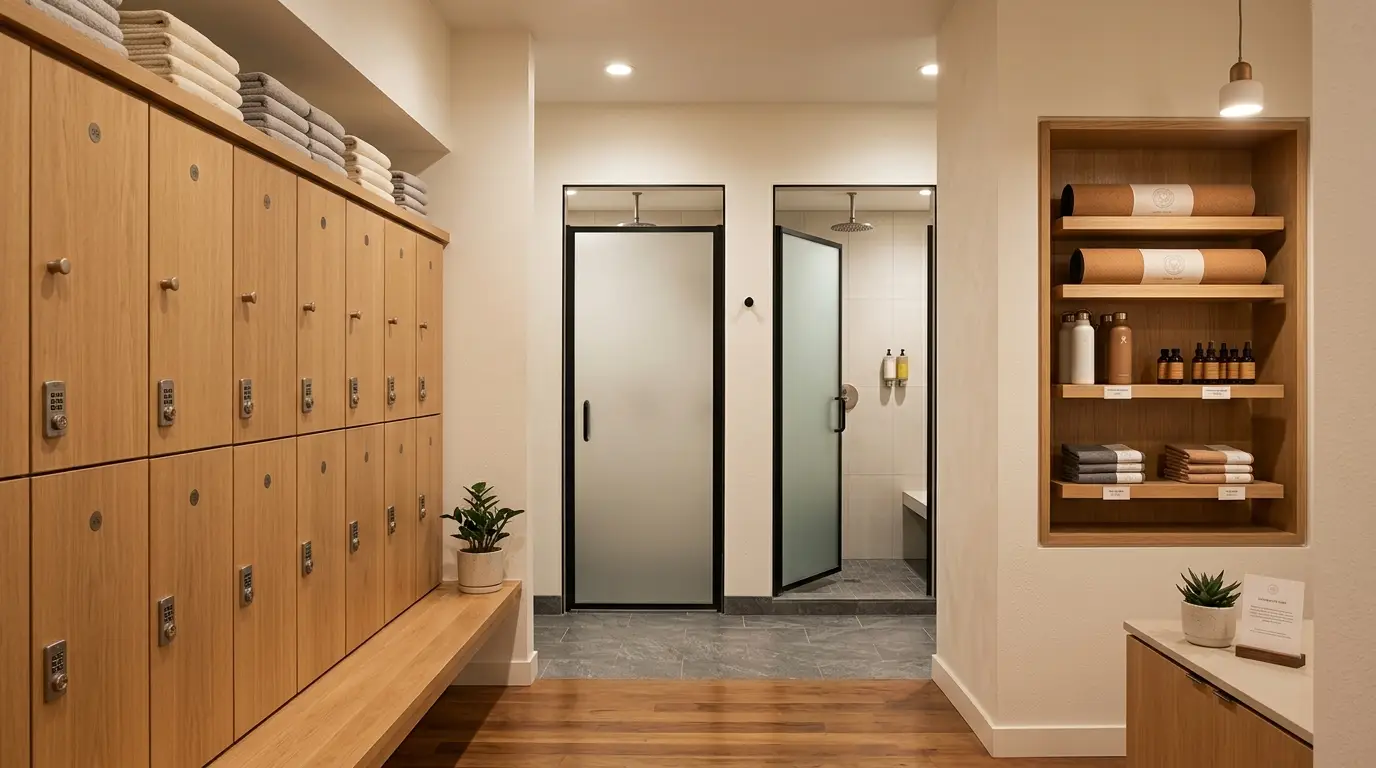
Amenity decisions depend on the studio’s market position and class schedule. A neighborhood studio serving people who practice and go home needs basic cubbies, a couple of changing rooms, and clean restrooms. A premium studio or one with hot classes needs real changing rooms, lockers, and showers, because students who sweat through a hot class will not return to a studio with no shower.
Shower count scales with class size and turnover. For a studio running back-to-back hot classes of 20 students, two to four showers per changing area prevent a bottleneck between sessions. Showers add plumbing cost and moisture management requirements, so they belong in the early plumbing plan. A small retail display near reception for mats, props, and apparel adds a revenue stream and merchandising presence without requiring much floor area.
Accessibility applies throughout. As a place of public accommodation, the studio needs an accessible route, an accessible restroom, and accessible changing facilities under the ADA and the Texas Accessibility Standards enforced by TDLR. The practice room itself should have a clear accessible path to a practice position.
What We See in Texas Yoga Studio Projects
We design studio and wellness buildouts across San Antonio, Austin, and the Hill Country, and several issues recur.
The biggest is underestimating the HVAC for hot yoga. One studio tried to run hot classes on an upsized rooftop unit without a dedicated dehumidification strategy. The room reached temperature but held so much humidity that condensation formed on the windows and the walls began to show moisture damage within months. Retrofitting a proper dedicated heat-and-dehumidification system into an operating studio cost far more than designing it in, and the studio lost weeks of hot classes during the fix. Hot yoga climate control is a design discipline, not an afterthought.
The second is cramming too many students into a room to chase revenue. A practice room that looks roomy empty feels claustrophobic with mats touching. Students notice immediately and it shows up in reviews and retention. We size the room to the class experience the studio wants to be known for, then let that set the capacity rather than the reverse.
The third is skipping the acoustic buffer between the lobby and the practice room. Savasana interrupted by the front-desk chatter undoes the entire experience. A simple acoustic vestibule solves it, and it is far cheaper to build during construction than to chase after opening.
Texas Yoga Studio Buildout Cost Ranges
| Scope | Cost Range | Notes |
|---|---|---|
| Basic studio fit-out (gentle practice, 1 room) | $60-$110 / sq ft | Flooring, lighting, acoustics, basic changing rooms |
| Standard studio with showers | $110-$170 / sq ft | Adds plumbing, lockers, showers, retail nook |
| Hot yoga studio | $160-$240 / sq ft | Dedicated heat and dehumidification, moisture-rated assemblies |
| Dedicated hot-yoga HVAC system | $30,000-$70,000+ | Heating, dehumidification, high air exchange |
| Practice room flooring | $8-$18 / sq ft | Engineered wood, cork, or moisture-rated for hot |
These ranges reflect tenant improvement pricing in the San Antonio and Austin metros and exclude furniture, props, and sound and lighting technology. For broader budgeting context, see our tenant improvement cost per square foot guide and our commercial buildout cost guide, and review the commercial lease checklist before committing to a space, especially for the HVAC and plumbing capacity a studio demands.
Key Takeaways
- Plan 21 to 30 square feet per student in the practice room, so a 20-student class needs roughly 550 to 700 square feet including the instructor zone.
- Stage the arrival sequence to build calm: entry, shoe cubby, quiet transition, then the practice room.
- Put an acoustic buffer between the lobby and the practice room so the front desk never interrupts savasana.
- Match the floor to the discipline. Hot yoga needs moisture-rated flooring, not hardwood.
- Hot yoga requires a dedicated heating and dehumidification system designed by a mechanical engineer, a major line item.
- Use fully dimmable warm lighting so one room can serve morning flow and evening restorative classes.
- Add showers and real changing rooms if you run hot classes. Students will not return without them.
- Confirm the fire code occupant load and provide an accessible route, restroom, and changing facilities.
Frequently Asked Questions
How big should a yoga studio practice room be?
Plan about 21 to 30 square feet per student, which covers a standard mat plus comfortable clearance to extend and transition. A 10-student class needs roughly 300 to 400 square feet, a 20-student class needs about 550 to 700 square feet, and a 30-student class needs 800 to 1,000 square feet once you add the instructor zone. Gentle flow classes can use tighter spacing, while power and partner classes need the wider end of the range. The local fire code occupant load also caps capacity.
What flooring is best for a yoga studio?
For traditional and gentle-practice studios, engineered wood or high-quality cork is ideal because both are warm, natural, slightly resilient, and easy to clean. For hot yoga, avoid hardwood entirely and use a moisture-rated cushioned vinyl or rubber surface over a waterproof membrane, because heat and sweat will warp and stain wood within a season. The flooring choice must match the practice discipline, and replacing it later costs $8 to $18 per square foot plus lost class revenue.
What HVAC does a hot yoga studio need?
A hot yoga studio needs a dedicated heating and dehumidification system on top of the base building HVAC, designed to hold roughly 95 to 105 degrees Fahrenheit at controlled humidity around 40 percent, reach setpoint quickly between classes, and manage the heavy moisture load from sweating students. It must be designed by a mechanical engineer familiar with high-humidity assembly spaces, and the wall and ceiling assemblies need appropriate vapor barriers. This system commonly costs $30,000 to $70,000 or more.
How much does it cost to build a yoga studio in Texas?
In the San Antonio and Austin metros, a basic gentle-practice studio fit-out runs roughly $60 to $110 per square foot, a standard studio with showers and lockers runs $110 to $170 per square foot, and a hot yoga studio runs $160 to $240 per square foot because of the dedicated climate system and moisture-rated assemblies. These figures exclude furniture, props, and sound and lighting technology. The dedicated hot-yoga HVAC alone often adds $30,000 to $70,000.
Planning a Yoga Studio in San Antonio or Austin?
Prestige 360 Design plans and designs yoga, pilates, and wellness studio buildouts across San Antonio, Austin, and the Texas Hill Country. We size the practice room to the experience you want to be known for, coordinate the specialized HVAC and flooring that hot yoga demands, and stage the arrival sequence that turns a tenant space into a retreat.
Schedule a consultation with our team to review your space before you sign a lease or hire a contractor.